x



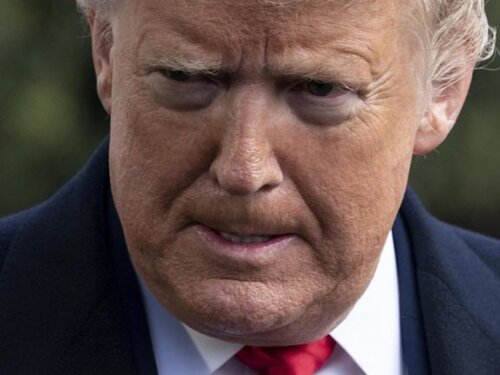
The new trade agreement for North America brings more rights for workers and the environment - and regional foreclosure.
It was an ideological trench war fought with hard bandages when the North American Free Trade Agreement (NAFTA) came into force in 1994. Liberal economists cheered for the world's largest free trade zone and painted blooming landscapes for Mexico on their presentations for investors. Protectionist opponents, on the other hand, feared a tsunami that would put an end to both Mexican farmers and workers - and in the southern state of Chiapas, even the indigenous Zapatista rebels rose against neoliberalism and neo-capitalist exploitation. In the end, the reality looked mixed.
None of this disturbing mood can be felt in early 2020, shortly before the new free trade agreement comes into force - the Mexicans call it T-Mec, the US and Canada the USMCA. When US President Donald Trump put NAFTA at their disposal in 2017, Mexico fell out of the clouds. Understandably, because the country's economy is largely dependent on NAFTA. Over 80 percent of Mexican exports go north, and Mexico regularly posts a trade surplus. Numerous smoke candles were lit in the negotiations, a lot of apocalyptic ink flowed from the pens of the commentators, violent complaints from the entrepreneurs about uncertain future prospects were heard.
Well, two and a half years later, there is a record: $ 614.5 billion worth of goods crossed the borders within the free trade zone in 2019 - more than ever before. Free trade has defied Trump's protectionism and the landslide victory of left-wing nationalist President Andrés Manuel López Obrador in Mexico. And T-Mec, according to analysts, will guarantee the continuation of the success story. It is modernizing an aging agreement - NAFTA 4.0. Indeed, the agreement does away with some weaknesses, such as environmental protection and workers' rights. But it also has pitfalls, and as with Nafta, T-Mec alone will neither modernize nor plunge Mexico, but much will ultimately depend on political decisions and setting the course.
The winners of the agreement include workers and the environment. T-Mec moved Mexico's politicians in 2019 to raise the minimum wage and to reform labor law, which was long overdue.
The winners of the agreement include workers and the environment. T-Mec motivated Mexico's politicians in 2019 to raise the minimum wage and to reform labor law, which was long overdue. It buries the model of corporate unions, dating back to the Mexican revolution 100 years ago, which was initially an extended arm of party politics, corrupt and non-transparent, and which has often served entrepreneurial interests since the opening by NAFTA.
Mexico is now getting modern trade union law. Repeated violations of labor and environmental law standards can be presented to a panel; the burden of proof rests with the accused and there is no longer any possibility for the states to block such a panel. This was a concern of the US unions and the Democrats, without whose approval T-Mec would not have passed through the US Congress. They even asked to be able to send US inspectors to Mexican factories - but Mexico refused to do so. Now it remains with the relevant emissaries at the US embassy in Mexico.
Mexico's industrial workers are also hoping for wage increases because, according to T-Mec, 40 percent of a vehicle's components will have to come from locations where workers earn at least $ 16 an hour in eight years, eight times more than is currently the norm. Trump, on the other hand, assumes that US companies will move their production back to the US without the benefit of Mexican low wages. So far, however, there has been little evidence of this.
Under pressure from the United States, Mexico will have to act harder against product piracy in the future. This could serve to contest the mafia for an important branch of income. But it also jeopardizes many jobs in the informal sector.
The big companies are less enthusiastic. The clauses are unfavorable for Mexico and serve the interests of certain lobbies in the United States, criticized, for example, the Center for Private Economic Studies (CEESP). The head of the Coparmex business association, Gustavo de Hoyos, attested to his government that he had "little negotiating skills". Large companies had distributed their production chains to the three NAFTA countries, taking advantage of the respective location advantages. Mexico stood out for cheap wages, low taxes and lax environmental laws.