x



Federal judge hands down light sentence in latest rebuke of the US government’s China Initiative.
The US Department of Justice asked for a sentence of 2.5 years for Feng Tao, but the judge delivered a light sentence of time served (he spent one week in jail).Credit: Stefani Reynolds/Bloomberg/Getty
A federal judge has sentenced US chemical engineer Feng ‘Franklin’ Tao to time served in a case stemming from the US government’s controversial China Initiative, which sought to protect US laboratories and businesses from economic espionage. Tao, who worked at the University of Kansas (KU) in Lawrence at the time he was arrested, was convicted of failing to disclose ties to China on a university form.
Convictions reversed for US chemical engineer accused of hiding China ties
Prosecutors from the US Department of Justice (DoJ) had asked for a sentence of 2.5 years, saying such a result would send a message to other researchers who might be tempted to engage in deceptive practices. Tao’s attorneys argued that the case had already destroyed his reputation and his career. ‘Time served’ amounted to a week in jail when Tao was arrested. He has been in home detention since August 2019, wearing an ankle bracelet to track his whereabouts.
One of Tao’s attorneys, Peter Zeidenberg, said in an e-mail that his client was “immensely relieved” at the sentence, but nevertheless plans to appeal the conviction. “We were also gratified to hear the judge say, once again, that neither the government nor KU was defrauded or harmed,” Zeidenberg wrote. “And she reiterated that this was never a case about espionage.”
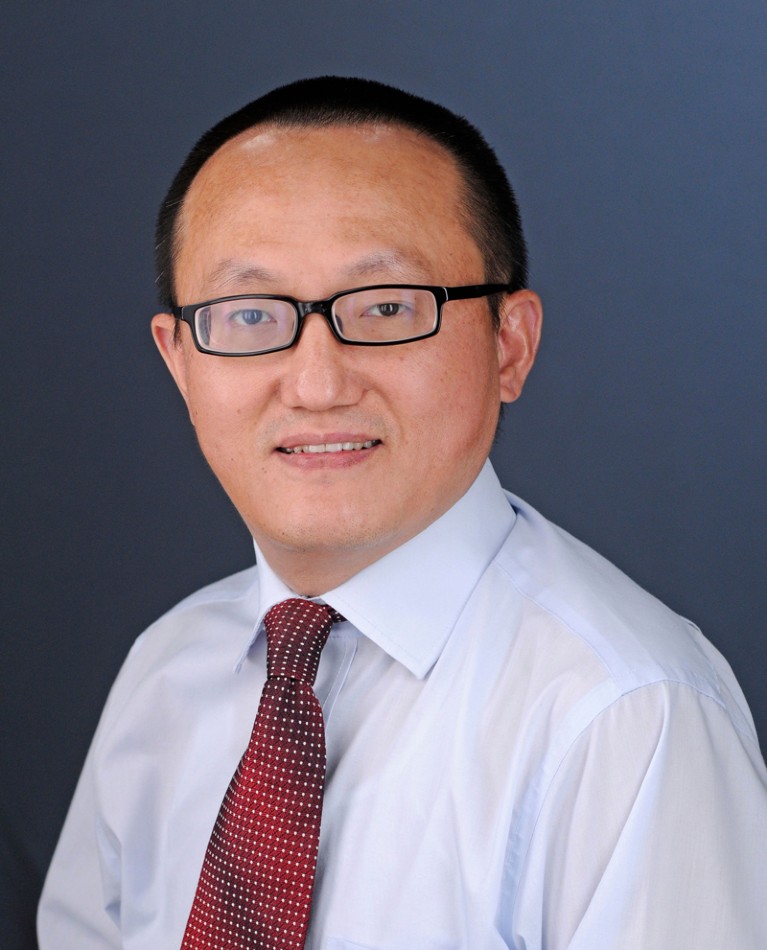
Feng Tao was the first academic scientist prosecuted under the now-defunct China Initiative.Credit: Kelsey Kimberlin/AP/Shutterstock
According to a transcript from the sentencing hearing, US district judge Julie Robinson pointed out that testimony from Tao’s trial indicated his research was not of immediate commercial value, and probably would not be for 20 years or more. Rather than being proprietary — and therefore worth stealing — she said, “it’s the type of research that it’s freely shared in the scientific community”.
Zeidenberg did not comment on Tao’s plans for the future. The prosecutors’ office declined to give a statement to Nature.
The light sentence was probably a relief, not just to Tao, but to scientists of Chinese descent who have felt targeted by the China Initiative and other government policies, says Jenny Lee, a social scientist at the University of Arizona in Tucson who studies research collaborations.
The DoJ had indicted Tao on eight charges, alleging that he was working at Fuzhou University in China while employed at KU, and failed to disclose that fact on a KU conflict-of-interest form. The department also charged him for failing to disclose his ties to China while receiving research funding from the US Department of Defense and the US National Science Foundation, which they said cost the institutions thousands of dollars.
Jury finds University of Kansas chemical engineer guilty of hiding ties to China
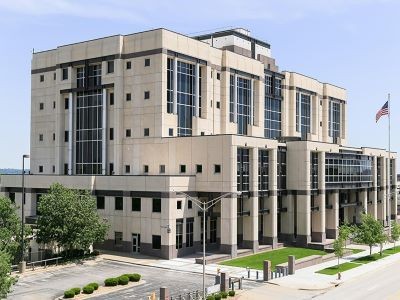
After a two-week trial last April in the District Court of Kansas, the jury dismissed four of the eight charges against Tao, but found him guilty on three counts of wire fraud — financial fraud committed using information and communications technology — and one of making a false statement. After further examining the government’s evidence, however, Robinson overturned the wire fraud convictions in September, saying there was no evidence that Tao obtained money or property through the alleged scheme to defraud.
Robinson noted that he did fail to disclose that he had been named to a Chinese talent programme. As part of the programme, he went to China to explore building a laboratory, but told KU he’d gone to Germany.
Tao had been on unpaid leave from KU at the time of his trial. But he no longer works there, according to KU spokesperson Erinn Barcomb-Peterson, who declined to give further details owing to it being a personnel matter.
Tao, who was born in China but immigrated to the United States in 2002, was one of several researchers, many of Chinese descent, charged under the China Initiative, created by the DoJ under former president Donald Trump in 2018. The programme was widely criticized as promoting anti-Asian racism.
The controversial China Initiative is ending — researchers are relieved
Frank Wu, a legal expert on the programme and president of Queens College at the City University of New York, calls the China Initiative “an abysmal failure”. Although the DoJ typically wins the vast majority of cases it brings, the China Initiative produced few results, with several cases dismissed and other researchers who had been charged reaching plea agreements with prosecutors. In February 2022, the department announced it was ending the programme. “They really spent years and a lot of effort ruining a bunch of people’s lives, and they did not win very many cases,” Wu says.
“I don’t know if racism was the reason for the China Initiative, but race was part of it, and the effects are real,” he adds. “Respected scientists of Chinese background, including American citizens, feel targeted.”
Lee’s research has backed this up. One study, which has been submitted for review at a journal but not yet published, found that Chinese and Chinese American scientists in the United States are now less likely to collaborate with colleagues in China, and are even shying away from applying for big research grants for fear of being punished for not correctly filling out disclosure forms. Disclosure policies have been vague and inconsistent, she says, and have typically not been viewed by busy scientists as worth much time, but now are increasingly being seen as potential traps. Even after the end of the China Initiative, there is still “real concern” among scientists that they could be unfairly punished to warn off others, Lee says.