x





Scientists expected a surge in respiratory disease, but what is happening in China is unusual.
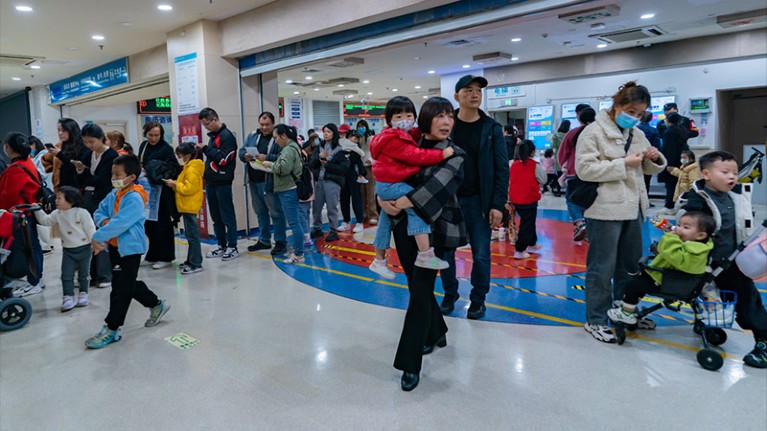
Credit: Costfoto/NurPhoto via Getty
China is grappling with a surge in respiratory illnesses, including pneumonia, in children. The World Health Organization (WHO) said last week that common winter infections — rather than any new pathogens — are behind the spike in hospitalizations. A surge of infections was expected in the country this winter, China’s first without COVID-19 restrictions since the pandemic began in 2020. What is unusual, say epidemiologists, is the high prevalence of pneumonia in China. When COVID-19 restrictions were eased in other countries, influenza and respiratory syncytial virus (RSV) mostly drove spikes in illness.
The WHO requested information, including laboratory results and data on recent trends in the spread of respiratory illnesses, from China’s health authorities last week. This followed reports from the media and the Program for Monitoring Emerging Diseases — a publicly available system run by the International Society for Infectious Diseases — about clusters of “undiagnosed pneumonia”.
In a 23 November statement, the WHO said that China’s health authorities have attributed the rise in hospitalizations since October to known pathogens, such as adenoviruses, influenza virus, and RSV, which tends to cause only mild, cold-like symptoms. However, an increase in children being admitted to hospital since May, particularly in northern cities such as Beijing, is mainly due to Mycoplasma pneumoniae, a bacterium that infects the lungs. It is a common cause of ‘walking pneumonia’, a form of the disease that is usually relatively mild and doesn’t require bed rest or hospitalization, but that is hitting children hard this year.
Benjamin Cowling, an epidemiologist at the University of Hong Kong, is not surprised by the wave of illness. “This is a typical ‘winter surge’ in acute respiratory infections,” he says. “It is happening slightly earlier this year, perhaps because of increased population susceptibility to respiratory infections resulting from three years of COVID measures.”
The rebound in common respiratory diseases during the first winter after the loosening of pandemic measures — such as mask-wearing and travel restrictions — has been a familiar pattern in other countries. In November 2022, the number of people hospitalized with flu in the United States was the highest it had been for that time of year since 2010.
Nationwide lockdowns and other measures implemented to slow the spread of COVID-19 prevented seasonal pathogens from circulating, giving people less opportunity to build up immunity against these microorganisms, a phenomenon known as ‘immunity debt’, said Francois Balloux, a computational biologist at University College London, in a statement to the UK Science Media Centre. “Since China experienced a far longer and harsher lockdown than essentially any other country on Earth, it was anticipated that those ‘lockdown exit’ waves could be substantial in China,” said Balloux.
However, the Chinese wave of illness differs from that seen in other countries. Some nations grappled with flu and RSV infections during their post-COVID winter surges, but in China, M. pneumoniae infections have been common. This is surprising because bacterial infections are often opportunistic and take hold after viral infections, says Cowling.
Although pneumonia caused by the bacterium is usually treated with antibiotics known as macrolides, an overreliance on these drugs has led to the pathogen developing resistance. Studies show that resistance rates of M. pneumoniae to macrolides in Beijing are between 70% and 90%1. This resistance might be contributing to this year’s high levels of hospitalization from M. pneumoniae, because it can hinder treatment and slow recovery from bacterial pneumonia infections, says Cowling.
Winter surges are always a challenge, but health-care systems in China are better placed to mitigate them now than they were before the pandemic, says Christine Jenkins, a respiratory physician at the UNSW Sydney in, Australia. She says that better national disease-monitoring systems, diagnostic tests and measures for impeding transmission and preventing deaths are now in place.