x



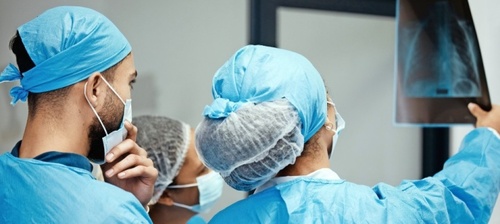
Those who suffer from advanced stages of COPD often have such damaged lungs that they can hardly breathe normally. But there are ways to alleviate the symptoms
Dhe world of his patients has often become very small. From the sofa to the bathroom - and back again. More is not possible. And with great effort. Anyone suffering from an advanced stage of chronic obstructive pulmonary disease (COPD) often has such damaged lungs that it is almost impossible to breathe normally.
According to Rohde, up to ten million people in Germany suffer from COPD, 80 percent of them are heavy smokers. That is why the doctor, who is giving an online lecture on this Thursday (January 26) at 6.30 p.m. on the subject of “COPD – what to do when the medication no longer helps” , would like to give the audience just one tip: “Stop smoking early stop. So that you can still experience the advantages that this entails.”
The lecture is part of an offer accompanied by the FAZ that the Frankfurt University Clinic makes to patients, relatives and interested parties. Each month, a different main topic is selected and the latest scientific findings are shared with a broad
Because of the frequency with which it is diagnosed, COPD is well on the way to becoming a widespread disease , says Rohde. One that has not yet been cured. "Each alveolar alveolar that is broken stays broken," says the fifty-one-year-old. Most COPD sufferers only realize too late what they have done to their bodies by consuming cigarettes, often for decades. "When they see a CT scan with the holes in the lungs for the first time, they are negatively impressed," says Rohde.
It often takes a long time before the COPD diagnosis is made. The general practitioners are well trained in the field, but according to Rohde it is often the patients who cannot identify and name the symptoms as such. Because too often, coughing up in the morning or being out of breath faster than others is accepted as a normal side effect of smoking. "But of course all this is not normal."
At least in the early stages, medications that “expand the airways” can help to alleviate the symptoms. But a cure remains impossible. It is always about alleviating the symptoms and giving the patients the opportunity to expand their radius of life again. Every meter that a patient can walk independently again is a gain.
In some cases, depending on the physical condition of the mostly older patients, an operation can be considered in which the lung volume is reduced by an endoscopic procedure. "You can only do this in certain districts that hardly have any function anyway," says Rohde, who wants to inform relatives and those affected about the risks and opportunities of such an operation in the lecture.
Another method is to insert valves into the airways. The air can escape through them when you exhale without new air flowing in. Another help can be artificial breathing support, which does not require an operation, but which nevertheless involves a major intervention in people's everyday lives. Because the patients have to wear the tight-fitting breathing mask permanently. The device, which works with overpressure, supports the patient's breathing and increases the oxygen content in the body, improving the quality of life. The mask must be removed to speak or eat. "You have to have confidence. Then you can benefit a lot from it,” says Rohde.