
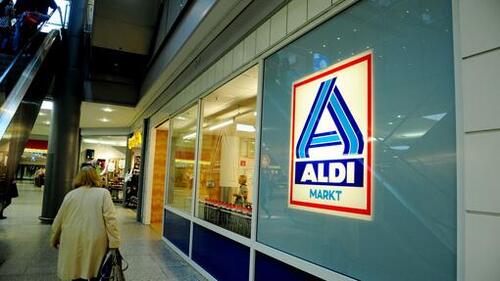

At Aldi, many a previously iron principle has been abolished. While fresh milk was previously in short supply at the discounter , it is now as common here as in any supermarket. Once the customers had to literally fetch their goods from the wholesale boxes under cold neon light, today the branches lure with wood design and lush fruit shelves .
And soon another feature of Aldi could be a thing of the past. Because Aldi Süd ventures into reusable glass bottles in its range of drinks. As the company confirmed to the Tagesspiegel, in some branches in the Bingen and Eschweiler area there are reusable glass bottles for the first time, such as beer from Krombacher and Bitburger or water from Gerolsteiner and Hochwald.
70 percent returnable rate as the goal
Aldi had previously relied entirely on cans and PET bottles; Disposable bottles with a deposit of 25 cents. No wonder, since reusable means considerable logistical effort for the dealers. The beer from plastic bottles was quite a reason for some beer connoisseurs to stay away from the discounter.
However, it can now be assumed that it was not the taste of the customers but rather stricter environmental regulations that prompted Aldi to take this step. The packaging law, which has been in force since the beginning of 2019, aims for a returnable quota of 70 percent. But the beverage trade is still a long way off. According to the Federal Environment Agency, the value was 42 percent in 2017 - and the trend is even falling.
Aldi Süd's test should therefore be seen as a courtesy in order to avoid possible sanctions - which are not defined in the law. In fact, beer is probably the easiest organizational step to start with, because the reusable quota in this segment is around 82 percent. When asked by Tagesspiegel, Aldi Nord announced that it would not be planning a similar test run. Both Aldi Nord and Süd also emphasize that the environmental impact of their PET bottles has improved significantly in recent years. In this way, the weight and thus the CO2 emissions of the transport had dropped. Most of the bottles are also made from recycled plastic.
Is reusable really more environmentally friendly?
The Federal Consumer Association (vzbv) also determined at the end of last year that reusable packaging for beverages was increasingly disappearing from the shelves. Consumer advocates drew attention to the fact that not only the discounters miss the legally required quota, but also higher-priced providers. According to vzbv, the reusable share was 21 percent in Edeka stores at the end of 2019 and 35 percent at Rewe. Even organic supermarkets only reached 57 percent - far less than the law wants. For Lidl and Aldi, the vzbv noted a return rate of zero percent.
However, reusable systems do not necessarily have a better environmental balance than one-way systems with a deposit. According to the Nabu conservation association, reusable systems are advantageous "if the bottles are rinsed and reused many times and the transport routes are short". It is difficult to determine from which delivery distance the ecological advantage of returnable bottles made of PET or glass compared to single-use PET bottles will disappear. In a study by the management consultancy PwC for Deutsche Umwelthilfe , it is assumed that reusable systems up to a transport distance of 600 km are advantageous.