x




Wie groß ist die Ansteckungsgefahr?
This group of viruses is considered to be significantly less infectious than influenza viruses (details are given by the renowned virologist John Oxford in an interview). It has not yet been finally clarified whether this also applies to 2019-nCoV. Experts are still controversial as to whether the currently known facts indicate particular virulence.
Until Monday, it was not even reliably proven that the virus was transmitted from person to person at all. However, this is now considered to be proven, also due to the hospital employees, for whom the pathogen has now been proven.
However, many of the patients have apparently become infected in a market that offers fish and meat. According to information from the authorities, some of the people who were now ill had no such contact, which already indicated transferability from person to person.
How could the virus get to Germany?
All infected and suspected cases previously reported from countries other than China had previously been in Wuhan. A spokesman for the Federal Foreign Office pointed out on Monday that, according to the current state of knowledge, there is above all a risk for regions that have "a lot of travel traffic" with Wuhan.
In the travel information from the Federal Foreign Office, even the risk of infection for German travelers in Wuhan is "rated as moderate". You are advised to avoid contact with sick people and animals as well as markets with animal products and to "pay more attention to adequate hand hygiene". The World Health Organization (WHO) has so far not recommended any travel restrictions.
What risk does the virus pose for Germany?
Even though China's National Health Commission has now confirmed the transferability of the virus from person to person, the German Robert Koch Institute assumes that there are individual cases. There is still "no evidence of continued human-to-human transmission," it says.
The federal authority also refers to a current risk assessment by the European Center for Disease Prevention and Control (ECDC), according to which the risk of further spread within the EU should a case be identified as "low to very low".
Accordingly, the German Robert Koch Institute assesses the risk to the health of the population in Germany "currently as very low". However, this assessment could change at short notice based on new knowledge.
What precautions are there?
The Robert Koch Institute monitors developments in the novel virus and is in contact with the WHO. According to its virulogen Christian Drosten, the Berlin Charité has already "started up all test systems" in order to be able to quickly detect an infection with the new corona virus if necessary.
"We have to expect that we will get cases to Germany," Drosten said on "Deutschlandfunk" in the morning. "German clinics should already be preparing to treat such patients." In the event of a larger spread of the corona virus - from today's perspective very unlikely - Germany could implement its National Pandemic Plan.
Germany's largest airport in Frankfurt am Main currently sees no need for protective measures, especially since no direct flights from Wuhan land there. According to his spokeswoman, the airport operator is "in close coordination with the authorities" and in exchange with other airports.
Due to past epidemics, the airport is very well prepared for a possible occurrence of the new infection. If the lung disease continued to spread, airport rescue workers would be trained in how to recognize symptoms.
Charité expert Drosten believes that temperature measurement for passengers, as is currently practiced as a precautionary measure at airports in other countries, makes little sense. After all, sick people with symptoms were more likely not to travel, he said on Deutschlandfunk. In contrast, there is still no fever in those infected with whom the virus is still in incubation. Fever fairs at airports therefore have a "psychological" effect.
How can I protect myself from infection?
No cases are known beyond Asia. Anyone visiting markets in Asia where raw meat and live animals are sold should pay attention to hygiene anyway. This is generally helpful, especially in the flu season, to ward off all possible viruses and bacteria. Washing hands with soap reduces the germ load by several orders of magnitude.
Unwashed hands that may have touched contaminated surfaces or people should stay away from the mucous membranes of the nose and throat area, which includes the eye. You should stay away from obviously sick coughing and sneezing people.
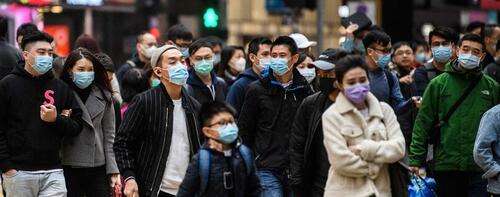
The face masks that are ubiquitous in Asia can reduce the risk of infection, if only because it