x




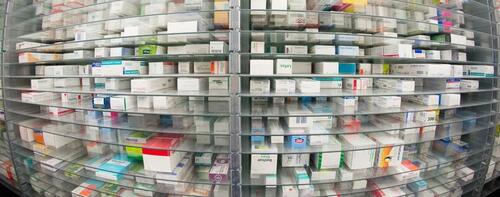
Worldwide supply of pharmaceuticals is under threat
Worldwide supply of pharmaceuticals is under threat
Germany imports 48 active substances from central China, which are considered to be relevant to supply in Germany. Dependency could become a problem
It has long been warned that global drug production depends on China. Now the problem is becoming tangible: while the coronavirus continues to spread, supply shortages of medicine are threatening worldwide because China is being sealed off from trade. As Tagesspiegel Background learned, there are 17 active ingredients that are manufactured in Wuhan and classified as relevant to supply. In the entire central Chinese province of Hubei, there are 48 active ingredients that are relevant to supply.
The Federal Institute for Drugs and Medical Devices (BfArM) is still calm. When asked how the current danger situation should be assessed, spokesman Maik Pommer said: "So far there are no indications that the corona virus will lead to short-term supply or supply shortages". However, the authority is in close contact with the European Medicines Agency (EMA) and has also actively included the jour fixe on delivery and supply bottlenecks in order to receive reliable information, whether it is due to "forced holidays" in the region concerned, quarantines or interruptions delayed delivery routes to supply shortages of supply-relevant medicinal products.
Great dependence on China
The BfArM receives support in the collection of information from, among others, the Federal Association of the Pharmaceutical Industry (BPI), which addresses its member companies. Information should be bundled in order to better assess the danger situation. However, this should take some time because you have to rely on feedback from many companies - some of them groups with international structures.
The extent to which Germany is dependent on China's active pharmaceutical ingredient production was last shown in 2018. At that time, the manufacturer Zhejiang Huahai Pharmaceutical Co found contaminations of the active ingredient valsartan with N-nitrosodimethylamine. This led to a drastic increase in the reported supply bottlenecks in Germany. Michael Horn, head of the approval department at the BfArM, recently spoke at a forum of 118 initial reports in 2018, which only related to the Valsartan case. At that time, only one manufacturer was affected - but with it a full 40 percent of all patients on Valsartan.
The rapporteur of the CDU / CSU parliamentary group for drug policy and pharmacies, Michael Hennrich, said with a view to a possible worsening of the drug supply bottlenecks: “At the moment these are only speculations. However, it shows that the topic is picking up speed. ”Wolf-Dieter Ludwig, chairman of the drug commission of the German medical profession, has been concerned about the situation not only since the outbreak of the coronavirus. The oncologist reports of postponed stem cell transplants because medications were not delivered on time and the currently biggest problem with the antidepressant venlafaxine. Because it has been difficult or not available in various strengths for several months, it must be replaced with Trevilor from the original manufacturer Pfizer. For the patients, this means not only an additional payment of around 150 euros for 100 capsules, but also health risks. The exchange is not so easy, says Ludwig. He therefore calls, among other things, for an assessment system for the robustness of the supply chains.
The United States also fear supply shortages
Not only in Germany, you are currently on alert. The United States also fear impending supply shortages of active pharmaceutical ingredients from China. According to the Food and Drug Administration (FDA), 13 percent of all pharmaceutical raw material producers that are sold in the United States are located in China. In addition, the United States imports 40 percent of generic drugs from India. India, in turn, is said to get about 70 percent of its raw materials from the Middle Kingdom.
The transport routes also play a role here: The Deutsche Verkehrszeitung reports that the Russian cargo airline Airbridgecargo (ABC) is the first pure all cargo carrier to cut all scheduled connections from Europe to China because of the corona virus. The European shippers association ESC meanwhile warned of capacity bottlenecks and price increases.
Lufthansa Cargo had already published a very restricted special flight schedule for cargo aircraft to and from China on Friday. The extent to which pharmaceutical deliveries are affected is still unclear. The BfArM promises transparency: “If there are indications that medicinal products are unavailable due to the outbreak of the coronavirus, the BfArM will