x




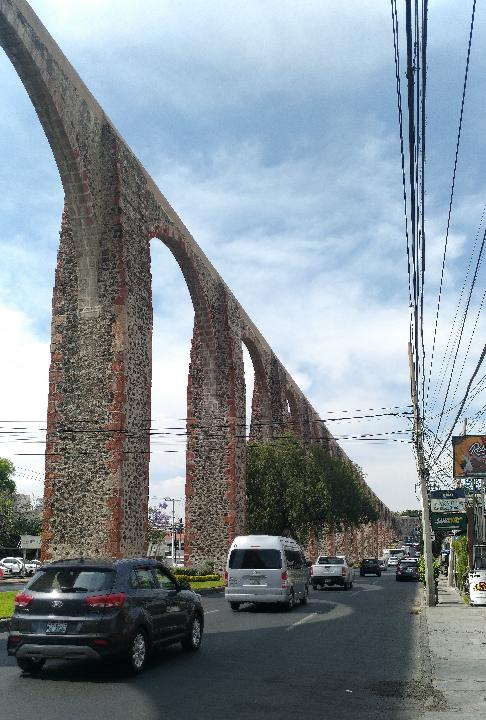
A couple of pictures from my trip to Querétaro Aqueduct – Santiago de Querétaro, Mexico.
IN THE MIDDLE OF SANTIAGO de Querétaro, Mexico, sits an amazing feat of engineering that provided water to the city starting in 1738. Its construction started just 12 years earlier on the orders of Juan Antonio de Urrutia y Arana, Marquis of Villa del Águila. With 75 massive arches, the tallest of which stands at 75 feet (23 meters), the aqueduct was utilized to bring clean drinking water to the city.
The construction of the aqueduct, built out of pink cantera stone and rubble-work, was the result of a series of incidents of Queretanos becoming ill from drinking unclean water. However, according to local folklore, the Marquis’s decision to fund and design the aqueduct was truly motivated by his love for a Capuchin nun by the name of Sister Marcela (sometimes called Clarissa).
However, the Marquis was married at the time and Sister Marcela was committed to the convent of Santa Clara. Their love was not to be. Regardless, as a tribute to his love, he constructed the aqueduct to the great benefit of Querétaro’s population.
The actual construction of the aqueduct was mostly done by Chichimeca and Otomí indigenous workers. The water was sourced from the Ojo de Agua del Capulín spring located in the town of San Pedro de la Cañada, nearly 6 miles (10 kilometers) away from the center of Querétaro. Nowadays, the aqueduct no longer carries water but is a distinct heritage and tourist attraction of Querétaro. It’s also part of the UNESCO World Heritage site that encompasses the historic city center.
Know Before You Go
Due to its total length of almost 1.3 kilometers, the aqueduct can be appreciated at any time of day and from many points across the city. In the historic center, one can even drive under some of the tallest arches.
A good place from which to view the arches, especially at sunset, is the terrace on Ejército Republicano street, near the Panteón cemetery, behind Plaza Fundadores.
"AND THEN THIS ONE I JUST HAD TO TAKE A PHOTO OF!"