x




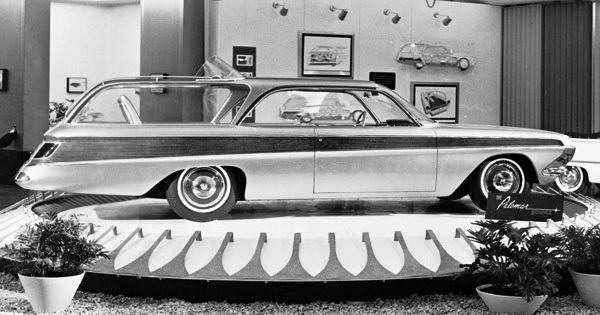
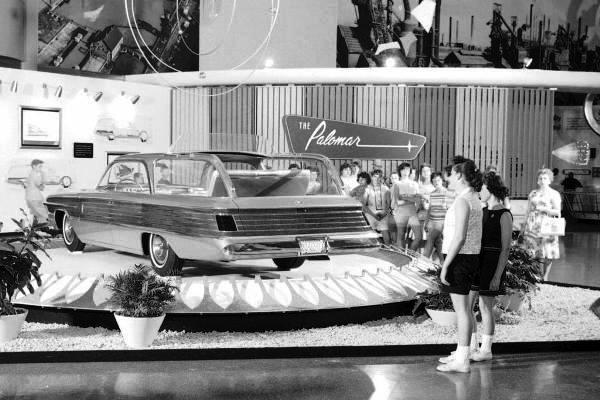
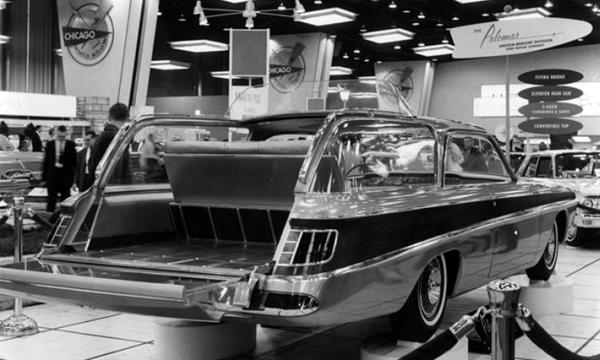
In the golden age of Detroit dream cars, station wagons were not so common. The 1961 Mercury Palomar was especially unusual—for example, check out the seating arrangement.
As we’ve noted here before at Mac’s Motor City Garage, station wagons were never terribly plentiful in the glory days of the Detroit show car scene. For the most part, the automakers concentrated their attention on the more glamorous body styles—mainly, the two-door coupes and convertibles. If and when a station wagon concept vehicle appeared, it was likely to be something special, presenting a distinctive feature that allowed it to stand out in the crowd.
The 1961 Mercury Palomar’s name, we might safely assume, was inspired by the Palomar Observatory in Southern California, and it was a reference to the vehicle’s novel seating arrangement. The two-door pillarless wagon included a mini-observatory, if you will. The rear roof section opened up (like the Studebaker Wagonaire—see our feature here) and there was a modest windscreen at the leading edge of the opening. Meanwhile, the second row of bench seating could be elevated to form a viewing platform a bit like the flying bridge on a cabin cruiser.
The observation deck was an entertaining idea, if not terribly practical for actual touring or likely to attract real car buyers. In a more marketable form, a germ of the concept was found a few years later in the Olds Vista Cruiser and Buick Sport Wagon with their glass skylight roof sections.
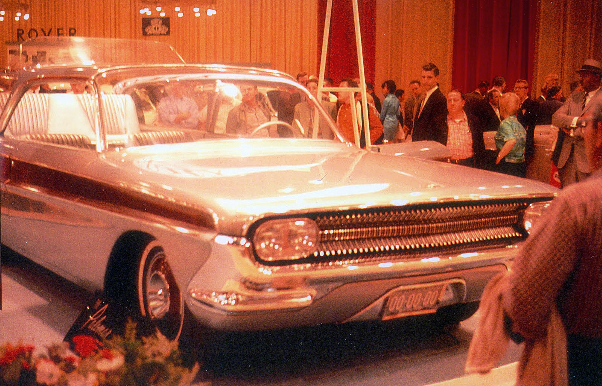
Otherwise, the Palomar was a remarkably clean and straightforward design: The key visual element was a stylized woodgrain spear that ran from front to back and wrapped around the tailgate. A simple oval grille contained a standard quad headlight setup, later replaced by twin oval lamps from the ’61 Ford Taunus.
Display venues for the Palomar dream wagon included the Chicago Auto Show and the Ford Rotunda exhibition center in suburban Dearborn, below. While the eventual fate of many Motor City dream cars is often unknown, we know exactly what happened to the Palomar, unfortunately. It was destroyed when the Rotunda burned to the ground on November 9, 1962.