
Bitcoin surges into state-level finance as two U.S. states legalize strategic bitcoin reserves within 48 hours, signaling unstoppable bipartisan momentum and a new financial era.

Bitcoin Breaks Through Politics: Two States Flip in 48 Hours With Explosive Moves
Momentum behind strategic bitcoin reserves surged this week as two U.S. states enacted legislation within 48 hours to create state-held bitcoin reserves, with a third poised to follow closely. New Hampshire, led by Republican Governor Kelly Ayotte, signed House Bill 302 into law on May 6, officially becoming the first state in the nation to establish a Strategic Bitcoin Reserve (SBR). On May 7, Arizona Governor Katie Hobbs, a Democrat, signed House Bill 2749, making Arizona the second state to take this step. The developments reflect rare bipartisan consensus around BTC as a tool for modernizing state financial strategies.
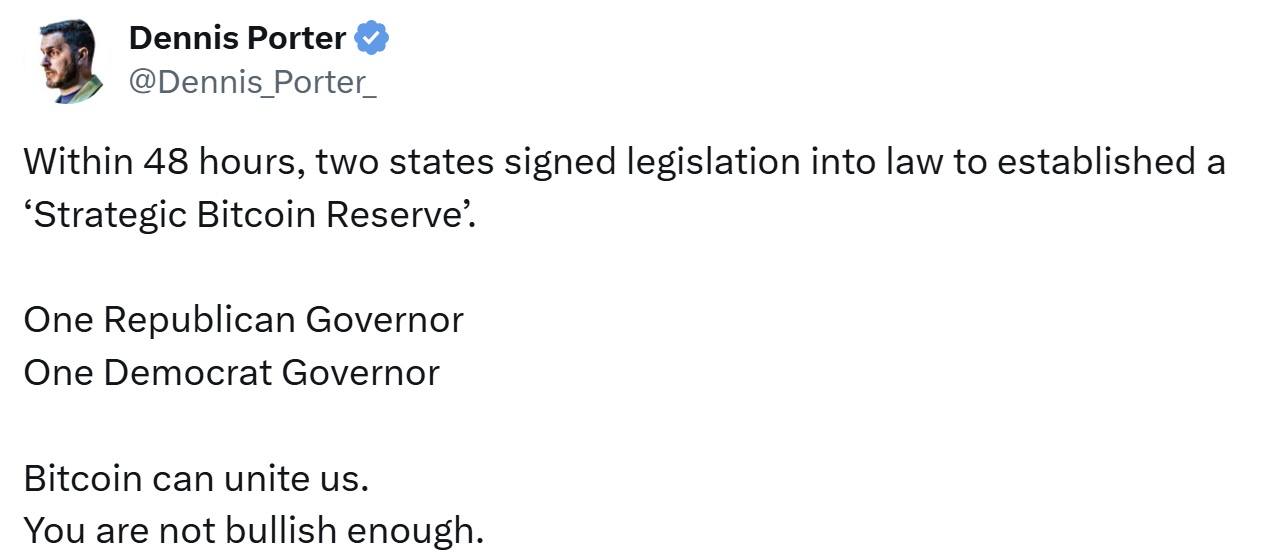
Dennis Porter, CEO of the Satoshi Action Fund, pointed out on X that two states signed laws within 48 hours to establish a Strategic Bitcoin Reserve. He noted that one governor was Republican and the other Democrat, emphasizing bitcoin’s ability to bridge political divides. “Bitcoin can unite us. You are not bullish enough,” he wrote, underscoring the growing momentum behind state-level bitcoin adoption.
Arizona’s adoption of HB 2749 comes less than a week after Hobbs vetoed a similar proposal, Senate Bill 1025. Her shift in position coincided with New Hampshire’s pioneering move. HB 2749 establishes the Arizona bitcoin and digital assets reserve, allowing the state to convert unclaimed property funds into BTC and other top-tier digital assets. The measure mandates U.S.-regulated custody, ensures diversification, and keeps native bitcoin in digital form to return assets as BTC rather than dollars.
New Hampshire’s HB 302 was the first to be signed into law, setting a precedent for other states. Meanwhile, Texas is on the brink of becoming the third. The Texas House Committee on Delivery of Government Efficiency passed Senate Bill 21, which now only awaits a full House vote before proceeding to the governor’s desk.
These fast-moving developments indicate a growing trend among states seeking to integrate BTC into their financial planning. House Commerce Committee Chairman Jeff Weninger, sponsor of Arizona’s HB 2749, credited the support of advocates, thanking Porter and Eric Peterson for their work on “helping get this and other bitcoin bills to the finish line.” He wrote on X: “Your advocacy as well as the thousands of people interacting with you is making a huge difference in the state legislatures.” Porter further clarified the legislative landscape:
There are 4 bills for SBR in AZ. SB 1025 was vetoed. HB 2749 was signed into law.
While some policymakers remain skeptical, bitcoin advocates see the reserves as a forward-looking hedge against inflation and a method to leverage idle assets for the public good. The growing list of state-level legislative efforts suggests bitcoin reserves could become a trend in state finance.