x




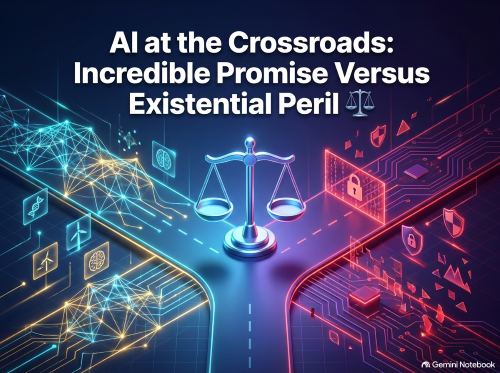
We find ourselves standing at one of the most consequential tipping points in human history. Artificial intelligence is accelerating human capability at a breathtaking pace, reshaping how we diagnose diseases, manage global supply chains, and build sustainable energy systems. The sheer speed and accuracy that modern AI models deliver—when guided by responsible human oversight—is nothing short of revolutionary.
Yet, as we peer over the opposite side of the fence, the view grows unsettling. The very same capabilities driving scientific breakthroughs can be weaponised by bad actors. From complex cryptocurrency heists to covert physical sabotage—such as manipulating industrial fridge temperatures across supermarket networks to spoil food supplies—the threat landscape is expanding rapidly. We are balancing on a knife-edge where our digital future could lead to unprecedented human flourishing or catastrophic disruption.
Across virtually every sector, artificial intelligence is proving to be far more than an automation tool; it has become an indispensable multiplier of human potential. By synthesising massive datasets and identifying patterns invisible to the naked eye, machine learning algorithms allow professionals to work smarter, faster, and with remarkable precision.
In healthcare, doctors are leveraging digital assistants to transcribe consultations automatically, freeing up precious time to focus on patient care while boosting diagnostic accuracy. In agriculture, AI-driven precision farming and autonomous tractors optimise water usage, reduce chemical pesticides, and safeguard global food supplies against climate volatility. Meanwhile, industrial manufacturing is embracing digital twins—virtual replicas of entire factory ecosystems—to predict equipment failures before they happen and eliminate costly downtime.
Beyond operational efficiency, the economic and social benefits are profound. Experts highlight the wide-ranging benefits of artificial intelligence, projecting that AI could add trillions to the global economy by 2030 while addressing pressing challenges like carbon emission tracking and renewable energy grid management.
Crucially, this progress does not replace human judgement. Whether analysing financial markets, assisting software engineers, or modelling complex proteins, AI systems function best when backed by human expertise. As explored in recent analyses of AI trends transforming key industries, the goal is augmentation—pairing human ingenuity with machine processing speed.
The creative and scientific frontiers are opening up just as dramatically. Generative models accelerate drug discovery from years to weeks, while open-source geospatial tools track deforestation and environmental changes in real time. As detailed in research on the positive social impact of AI, these technologies are removing technical barriers, allowing researchers, educators, and entrepreneurs to solve complex societal problems. Looking ahead at the emerging trends shaping the future of AI, multimodal systems and specialised micro-models will only make these capabilities more accessible and energy-efficient over the next decade.
While the benefits are inspiring, ignoring the darker realities of AI is a risk we cannot afford. Because artificial intelligence is a dual-use technology, powerful algorithms are equally available to malicious entities, criminal syndicates, and hostile state actors.
Over the past few years, we have witnessed a sharp rise in AI-enabled cybercrime. Bad actors use generative AI to clone voices, engineer highly convincing phishing campaigns, and automate the discovery of software vulnerabilities within minutes. In the crypto world, automated bots inspect smart contracts at lightning speed to exploit code flaws, resulting in high-profile digital asset thefts.
Even more alarming is the convergence of AI with physical infrastructure. Connected Internet of Things (IoT) devices in commercial logistics—such as central temperature control systems in major supermarket chains—present tempting targets. By covertly altering refrigeration settings, malicious actors can cause widespread inventory loss, disrupt critical supply chains, and threaten public health without ever stepping foot inside a building.
The broader security implications extend even further. Leading safety analysts warning about the catastrophic risks outlined by safety experts highlight systemic dangers ranging from automated biosecurity threats to lethal autonomous weapon swarms and AI-driven disinformation campaigns that destabilise public trust. Furthermore, corporate and military arms races can pressure organisations to prioritise deployment speed over rigorous safety testing.
Unsecured enterprise environments remain particularly vulnerable. As outlined in comprehensive studies on managing core AI dangers and cybersecurity threats, organisations face severe hurdles including algorithmic bias, data privacy breaches, intellectual property infringement, and opaque "black box" models that lack explainability. Without stringent safeguards, the potential for chaos remains very real.
Fortunately, the battle for a secure AI ecosystem is actively underway. Behind the scenes, engineers, intelligence agencies, and policy makers are building sophisticated defences to stay ahead of malicious actors.
A core strategy revolves around protecting national infrastructure and critical assets. Frameworks designed for protecting critical infrastructure in the AI era emphasise Zero Trust architecture—where no user, device, or system is automatically trusted. By unifying data visibility across networks and deploying autonomous security operations, organisations can detect anomalous behaviours—such as unauthorised access to industrial control systems—and isolate threats within seconds.
Government agencies are also establishing robust protective protocols. In the UK, official protective security guidance from the NPSA outlines essential strategies for organisations to defend against AI-enabled adversaries. This includes rigorous pre-employment screening to catch AI-generated candidate fraud, managing the security risks of unauthorised "Shadow AI" tools, and enforcing continuous human oversight over automated decision-making processes.
At the organisational level, safety preparations are becoming a boardroom priority:
We are undeniably sitting on a fence where things could go either way. Artificial intelligence holds the key to solving some of humanity’s greatest challenges—from curing disease to halting climate change. But left unchecked or exploited by bad actors, its destructive potential is immense.
The path forward requires neither blind techno-optimism nor paralysis through fear. By pairing ambitious innovation with relentless cybersecurity, proactive governance, and unwavering human oversight, we can tip the balance firmly toward progress.
Disclaimer: This article is provided for informational purposes only, mistakes may be made, and it's not offered or intended to be used as legal, tax, investment, financial, or any other advice.