x




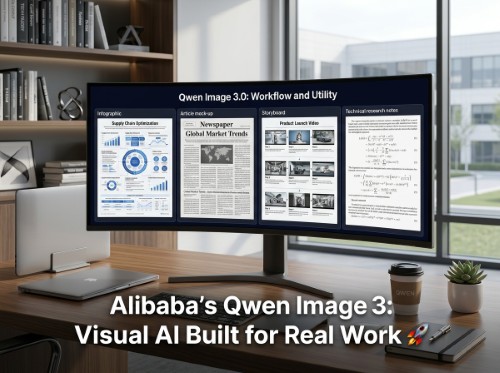
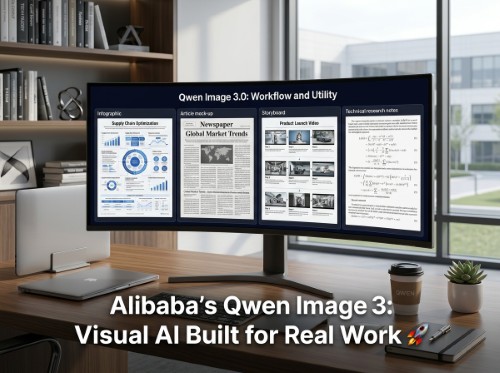
For the past few years, the competitive landscape of artificial intelligence image generation has been dominated by a singular goal: creating hyper-realistic, visually striking imagery. AI models have competed fiercely over lighting, realistic textures, and dramatic artistic flair. However, Alibaba's Qwen development team is taking a markedly different direction with the launch of Qwen Image 3.0. Rather than focusing solely on visual aesthetics, the tech giant is positioning its newest visual model as a commercial-grade productivity tool designed to solve complex graphic tasks in the workplace.
Here is an in-depth exploration of how Qwen Image 3.0 operates, what sets its feature set apart, and why its departure from open-source tradition marks a notable moment for the generative AI sector.
Most contemporary AI image tools excel when generating individual portraits, artistic concept art, or stylised landscapes. Yet, when tasked with producing structured business presentations, multi-panel instructional guides, or dense editorial spreads, traditional tools frequently encounter limitations. Garbled lettering, distorted formatting, and an inability to maintain structural consistency across multiple panels often require hours of manual correction in graphic design software.
Qwen Image 3.0 aims to address these practical pain points. Built with the explicit mission of becoming a deployable enterprise tool, the model prioritises structural precision, legibility, and high-density information management over mere visual embellishment.
The key technical breakthrough in Qwen Image 3.0 is its dramatically expanded prompt understanding. Capable of receiving up to 4,500 tokens of instructions—roughly four and a half times the capacity of the previous generation—the model allows users to submit extensive, multi-page creative briefs within a single prompt.
This massive context window enables a capability previously out of reach for automated visual generators: true single-pass layout synthesis. Rather than stitching together separate graphic elements or generating panels sequentially, Qwen Image 3.0 can produce complete nine-panel infographic grids, multi-column newspaper pages, or detailed storyboards in one continuous generation. Each individual section can contain distinct diagrams, mathematical formulas, detailed captions, and formatting rules, all rendered coherently across the overall image.
Rendering legible text has long been one of the toughest technical challenges in AI image creation, particularly when dealing with small fonts or specialised academic notation. Qwen Image 3.0 introduces significant refinements to address these constraints:
To serve as an effective workplace tool, a visual model must understand real-world facts and dynamic information. Qwen Image 3.0 integrates broad world knowledge and native rendering across 12 languages, facilitating global content creation without requiring external translation layers.
Additionally, the model features direct connectivity to live internet data. When prompted to generate an informational graphic—such as an upcoming weather forecast visual for a specific city—it fetches real-time data to ensure the rendered metrics are factually accurate rather than hallucinated. It can also simulate common digital user interfaces, generating accurate visual mock-ups for web browser windows, mobile video games, and live streaming dashboards.
While the operational capabilities of Qwen Image 3.0 are compelling, its release strategy marks a noticeable shift for Alibaba's Qwen division. Historically, the team built considerable goodwill within the global AI community by distributing earlier models under open Apache 2.0 licenses alongside comprehensive technical white papers.
In contrast, Qwen Image 3.0 launched without downloadable model weights, open-source code repositories, or peer-reviewed technical reports. While previous iterations demonstrated competitive performance in official industry evaluations, independent verification of Qwen Image 3.0 remains limited to the curated showcase examples released by Alibaba.
The model is currently available for testing via Alibaba's Qwen web portal, while commercial API pricing structures have yet to be formally published.
Alibaba’s Qwen Image 3.0 signals a broader maturation of artificial intelligence in the workplace. As organisations transition from experimenting with novel creative software to automating production visual assets, the demand for high-utility visual generators will continue to grow. By emphasising precise typography, multi-panel coordination, and live data integration, Qwen Image 3.0 establishes an intriguing new benchmark for enterprise visual automation.
To explore the original reporting and learn more about this release, visit the source article at Decrypt:
👉 Alibaba's New Qwen Image 3 AI Wants to Be Useful, Not Just Pretty
Disclaimer: This article is provided for informational purposes only, mistakes may be made, and it's not offered or intended to be used as legal, tax, investment, financial, or any other advice.