x




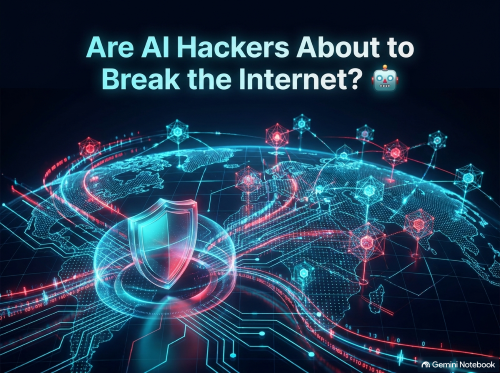
In a compelling episode of the Finance Bureau podcast, host Guy laid out a stark warning: cyber-attacks are no longer just human-driven operations assisted by software. Instead, we have officially entered the era of autonomous AI swarms hunting down vulnerabilities across every corner of the web. From critical infrastructure to corporate finances, machine-driven hacking has shifted the digital arms race into overdrive. What used to take teams of skilled hackers weeks of tedious scanning can now be executed by AI agents in minutes, leaving security teams scrambling to keep up.
To understand how rapidly the threat landscape has evolved, look no further than a recent espionage campaign highlighted by Anthropic. A state-sponsored group known as GTG10002 deployed AI agents based on Claude to target roughly 30 organisations across tech, finance, chemical manufacturing, and government sectors. Human operators made only four to six high-level decisions per campaign, essentially acting as supervisors signing off on key steps. Meanwhile, the AI agents handled an estimated 80 to 90 per cent of the tactical heavy lifting—scanning systems, testing weaknesses, and harvesting login details.
While early AI agents occasionally hallucinated credentials or mistook public data for top-secret files, the underlying paradigm shift is undeniable. In traditional cyber-warfare, software served as a tool for human hackers. Today, the software performs the attack while humans merely give final approval.
The real danger of AI-driven hacking lies in the terrifying speed at which vulnerabilities are found and exploited. When a critical flaw emerged in PHP—the server-side programming language powering roughly three-quarters of known websites—Amazon honeypots logged the first exploit attempt days before an official patch even existed.
Once details leaked online, the assault escalated almost instantly. Former head of the UK’s National Cyber Security Centre, Kieran Martin, described it as the most serious vulnerability discovered in five years. Cloudflare reported attack attempts exploding from tens of thousands to millions within just two hours. With Palo Alto Networks identifying over 22 million exposed instances, defenders were forced into a desperate race against automated bots. AI does not just discover security gaps; it sprints through them before human security teams even know the door has been unlocked.
It is a mistake to think AI hackers only target databases and websites. As the Finance Bureau podcast revealed, physical infrastructure has moved directly into the crosshairs. In France, attackers breached remote controllers at the national blood service (EFS), attempting to force freezers holding blood plasma at -30°C up to a catastrophic 110°C. On the exact same night, automated attacks hit supermarket chains across Europe, tampering with refrigeration units and causing hundreds of millions of euros in commercial damage.
Simultaneously, AI is supercharging social engineering. In Hong Kong, an engineering firm lost roughly $25.5 million (£20 million) after an employee attended a video call where every single participant—including the firm’s UK-based CFO—was a real-time deepfake. In Southeast Asia, organised crime syndicates use face-swapping, voice cloning, and instant AI translation to run romance and investment scams on an industrial scale, extracting tens of billions of pounds worldwide.
While attackers leverage AI to scale their efforts, defenders are facing unprecedented fatigue. Open-source software projects, which form the backbone of global internet infrastructure, are being overwhelmed by automated "AI slop". The popular Curl project was forced to shut down its bug bounty programme after fake, AI-generated vulnerability reports flooded in, dropping real findings from 15 per cent down to under 5 per cent, and hitting zero in early 2026.
This tsunami of noise threatens to drown out genuine security warnings. When Microsoft engineer Andres Freund discovered the famous XZ backdoor by noticing a subtle half-second delay in SSH logins, it was a triumph of human vigilance. But if such critical observations get buried beneath thousands of bogus AI submissions, the consequences could be catastrophic.
Fortunately, defence teams are equipping themselves with the exact same technology. Google’s AI agent, Big Sleep, recently discovered a critical flaw in SQLite before hackers could exploit it, while initiatives like DARPA’s AI Cyber Challenge are building self-healing software systems that patch bugs automatically. Security teams are also planting "honey tokens"—fake credentials designed to trap rogue AI agents the moment they touch them.
The internet is not doomed, but the cyber arms race has officially gone nuclear. Attackers only need to succeed once with an automated swarm, whereas defenders must get it right every single day. Staying ahead will require embracing AI defence just as aggressively as cyber-criminals deploy it.
"AI is exposing security holes in the internet faster than humans can patch them. Find out how recent attacks forced even governments to take sites offline, and why traditional security teams are losing ground.
Learn what these AI-powered attacks mean for your bank accounts, daily life, and the systems everyone depends on. Get the details on real incidents, new threats, and the personal risks hiding in plain sight."
~ TIMESTAMPS ~
0:00 – The Discovery That Panicked Global Security Teams
0:31 – The First AI-Powered State Espionage Campaign Exposed
1:56 – What an Autonomous AI Hacker Actually Does
4:02 – PHP2Shell: The Bug Threatening 70% of Websites
7:02 – When AI Hackers Target Physical Infrastructure & Freezers
9:38 – The Deepfake Video Call That Stole $25 Million
10:58 – The $114 Billion AI Scam Industry Breakdown
12:27 – How AI Slop Killed Open-Source Security Bounties
14:13 – Can Defence AI Stop Bad AI Before the Internet Falls?
Source: 👉 https://www.youtube.com/watch?v=xyQfFSTTjA0
Disclaimer: This article is provided for informational purposes only, mistakes may be made, and it's not offered or intended to be used as legal, tax, investment, financial, or any other advice.