x




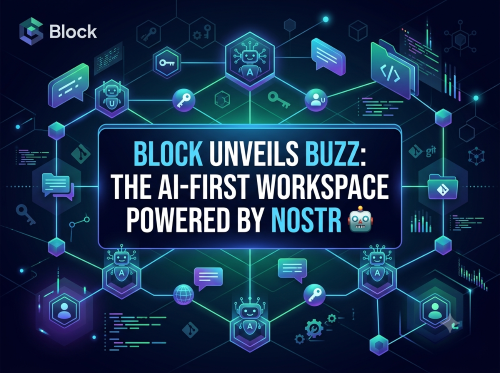
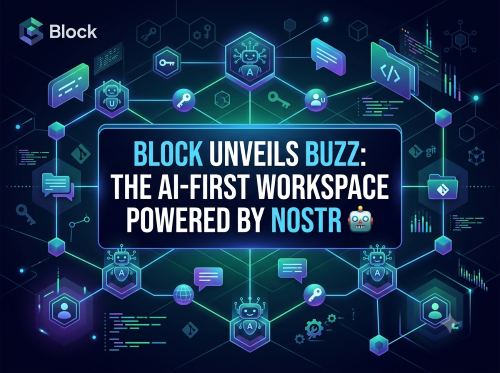
The boundary between human workers and artificial intelligence is dissolving rapidly. As AI transforms from passive query-and-response tools into active, autonomous agents, traditional workplace platforms are struggling to keep pace. Enter Buzz, a free and open-source workspace platform launched by Jack Dorsey’s fintech giant, Block.
Designed to challenge legacy enterprise platforms such as Slack and GitHub, Buzz introduces a shared digital office where human employees and AI agents collaborate side-by-side with equal cryptographic standing. Built upon the open Nostr protocol, the platform offers a decentralised, self-sovereign approach to team collaboration in an AI-driven era.
At its core, Buzz is an all-in-one collaboration suite. It bundles team channels, direct messaging, threaded conversations, voice chats, code repositories, and automated workflows into a single, unified interface.
Rather than treating AI as an external integration or a basic chatbot, Buzz elevates software agents to first-class citizens within the workspace. In Buzz, AI agents can:
Crucially, Buzz is model-agnostic and agent-agnostic. Organisations are not locked into a single AI model or provider. Instead, teams can deploy agents powered by Anthropic's Claude Code, OpenAI's Codex, or Block's own open-source framework, Goose.
One of the most significant technical choices behind Buzz is its reliance on Nostr—a lightweight, relay-based open protocol funded extensively by Jack Dorsey.
In traditional enterprise software, permissions and identities are locked inside proprietary corporate servers. If a company switches tools, its history, permissions, and agent identities are lost. Buzz solves this fundamental identity challenge through public-key cryptography.
Self-Sovereign Cryptographic Identities
Every participant in Buzz—whether a human developer or an autonomous AI agent—holds their own cryptographic keypair. This design choice carries major operational benefits:
While Buzz is in its early stages (shipping as version 0.4.21 with desktop apps for macOS, Windows, and Linux), its architectural foundation is built explicitly to avoid corporate lock-in.
The launch of Buzz reflects a broader shift in how modern software teams structure their daily operations. Historically, project management tools like Jira, Asana, and Linear imposed rigid structures—such as two-week sprints and Kanban boards—onto enterprise workflows.
Block’s product strategists argue that these legacy frameworks constrained productivity by forcing work into isolated silos. With Buzz, a single thread can encompass the initial problem diagnosis, task assignment, code repair, and surrounding discussion. By consolidating context into a single record, teams reduce operational friction and eliminate endless context switching.
Block revealed that Buzz itself was developed using AI agents. Rather than following traditional top-down UI design processes, the interface was progressively sculpted over time through continuous interaction with autonomous coding agents.
The introduction of Buzz fits into a broader strategic trend at Block and across Jack Dorsey’s recent initiatives. Since departing Twitter and stepping down from the board of Bluesky, Dorsey has consistently championed open, censor-resistant protocols that prevent single corporate gatekeepers from controlling communication channels.
This open-source push comes alongside major structural shifts at Block. In February 2026, Block restructured its operations by reducing its workforce by over 40 per cent (cutting more than 4,000 roles). At the time, Dorsey highlighted that autonomous AI fundamentally redefines what it takes to build, scale, and run a modern fintech company. Buzz represents the software infrastructure designed for this leaner, AI-augmented operational model.
As organisations globally evaluate how best to integrate AI agents into daily operations, a central question emerges: will the workplace of the future remain enclosed inside proprietary silos, or will it be built upon transparent, open protocols?
By publishing Buzz under an open-source Apache 2.0 licence, Block is betting heavily on open, self-sovereign infrastructure. While mobile clients and multi-relay decentralisation remain under active development, Buzz offers a compelling preview of how human talent and machine intelligence will co-exist in the digital workplace.
For additional technical details, project repositories, and background reporting on this launch, read the full original article on Decrypt:
👉 Jack Dorsey's Block Launches Buzz, a Nostr-Based Slack and GitHub Rival for AI Agents
Disclaimer: This article is provided for informational purposes only, mistakes may be made, and it's not offered or intended to be used as legal, tax, investment, financial, or any other advice.