x




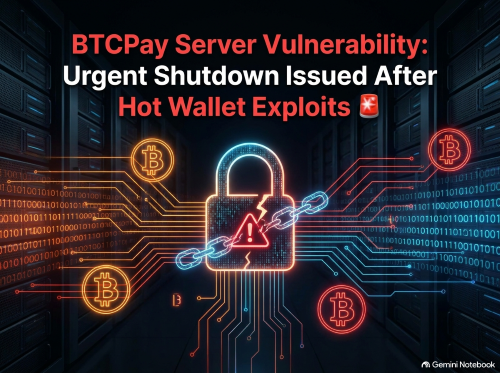
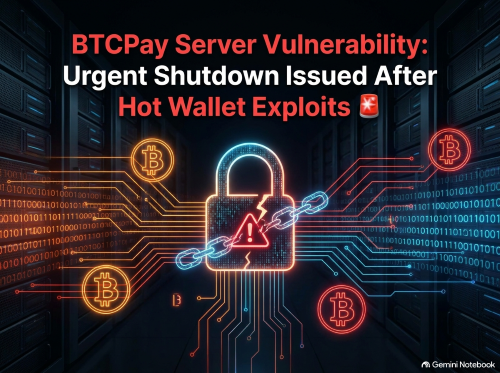
Self-hosted cryptocurrency payment infrastructure faces a sharp reminder of the importance of timely maintenance. Operators running older instances of BTCPay Server have been hit by unauthorized sweeps of their hot wallets, prompting project maintainers and hosting providers to take immediate emergency measures.
If you manage a merchant setup or run a payment gateway powered by BTCPay Server, ensuring your software is up to date is no longer just good hygiene—it is critical to protecting your funds. Initial reports confirmed that attackers actively targeted unpatched servers, as detailed in Cointelegraph's coverage of the hot wallet thefts.
The trouble began when multiple operators noticed balance discrepancies and unexpected outbound transactions draining Bitcoin and Litecoin from their hot wallets. Because a hot wallet stores private spending keys directly on the server to facilitate automated, real-time checkout processing, any underlying server compromise exposes those funds to risk.
In response to the initial wave of reports, the maintainers issued an urgent call to action, urging node operators to immediately run the shutdown script (./btcpay-down.sh) while an incident response team investigated the breach. The urgency was reflected in BTCPay Server's announcement on X, which advised everyone to halt operations until the attack vector was fully confirmed.
To contain the spread of the attack, major virtual private server (VPS) providers—including LunaNode—collaborated with the team to temporarily bring vulnerable self-hosted instances offline as a precautionary measure.
Subsequent investigation revealed that the vulnerability strictly impacts instances running BTCPay Server version 2.4.1 or earlier.
Interestingly, the underlying security flaw is not entirely new. It is the same underlying bug that maintainers originally patched in version 2.4.2 back in August. However, attackers devised a novel exploitation technique to bypass earlier defences and directly extract keys from hot wallets.
This follows an earlier security event where attackers leveraged the flaw to compromise Lightning node credentials, leading to a temporary patch where BTCPay restricted remote Lightning access to safeguard Lightning Network Daemon (LND) macaroons. While that previous exploit focused primarily on Lightning credentials, the new iteration specifically targets onchain hot wallet balances.
Operators who had already upgraded to version 2.4.2 or later prior to the November incident—including those running version 2.4.7—have shown no signs of compromise. Full technical details and an event timeline are documented in the project's official [security advisory on versions 2.4.1 and earlier]([suspicious link removed]).
Understanding your risk exposure depends on how your wallets and keys are configured:
Because BTCPay Server is completely open-source and self-hosted, the core team does not collect telemetry or track deployment numbers. Consequently, exact loss totals across affected operators cannot be centrally calculated.
If your server was running version 2.4.1 or earlier—even if you have not noticed any stolen funds—simply updating the software on your current server is insufficient. An attacker may have already extracted sensitive credentials or established persistent access.
To ensure your infrastructure is clean and secure, follow this step-by-step remediation plan:
1. Secure Remaining Funds
Immediately sweep any remaining balance from your hot wallet into a newly created wallet generated on a trusted, uncompromised device. Do not reuse your old seed phrase, as doing so leaves your new server exposed.
2. Take the Vulnerable Machine Offline
Shut down the affected virtual machine completely (./btcpay-down.sh). Preserve your system and application logs if you intend to conduct a forensic investigation or report the incident.
3. Provision a Fresh Virtual Machine
Build a clean server environment from scratch on a new virtual machine. Install the latest stable release of BTCPay Server directly from trusted official sources. Avoid restoring full server backups from the old machine, as this can reintroduce compromised files.
4. Rotate All Exposed Credentials
From a secure device, revoke and replace all credentials associated with your old setup. This includes SSH keys, API tokens, hosting account passwords, and Lightning macaroons.
5. Report Unauthorised Activity
If you suffered a loss or identified suspicious destination addresses, submit your logs, version history, and relevant transaction IDs to security@btcpayserver.org. You should also report any theft to local law enforcement authorities.
Self-sovereignty in payment processing brings freedom from intermediaries, but it also places full responsibility for server maintenance on the operator. Keeping self-hosted software updated is an ongoing security requirement.
Moving forward, merchants are strongly encouraged to connect hardware wallets for receiving funds whenever feasible, keeping only minimal operational balances in hot wallets. By combining off-server key storage with prompt software patch updates, operators can maintain robust defence against automated exploits.
Disclaimer: This article is provided for informational purposes only, mistakes may be made, and it's not offered or intended to be used as legal, tax, investment, financial, or any other advice.