x




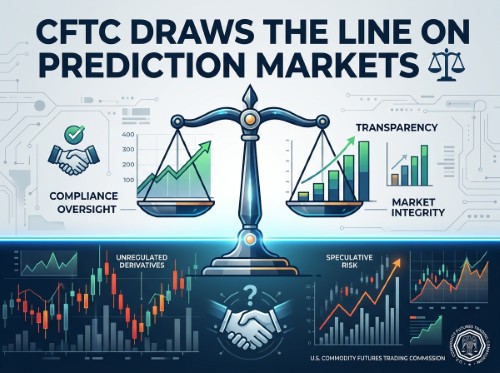
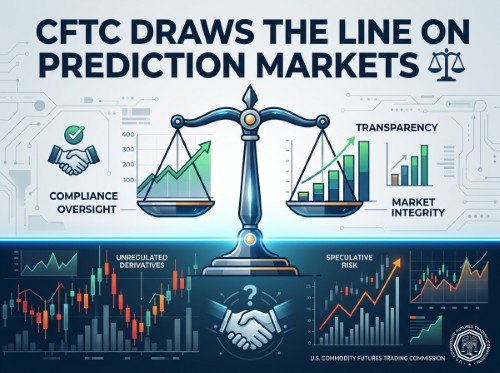
The regulatory landscape for prediction markets is undergoing a seismic shift. The US Commodity Futures Trading Commission (CFTC) has stepped decisively into the fray, issuing a pair of pivotal rules designed to clearly demarcate the boundaries between federally regulated financial derivatives and traditional gambling. This latest manoeuvre aims to settle mounting ambiguity, asserting the agency's exclusive jurisdiction over event contracts while explicitly carving out casino-style gaming.
At the heart of the CFTC’s recent announcements is a proposed rule open for public comment, which formally expands the legal definition of a “swap” to encompass event contracts. Under this updated framework, financial agreements tied to outcomes in sports, politics, cultural milestones, and even weather patterns will be classified as commodity derivatives.
According to CFTC Chairman Michael Selig, these products are financial instruments long recognised within the trade as swaps. By formally incorporating them into federal rules, the agency is claiming unambiguous authority over platforms offering such contracts. Selig emphasised that these instruments fall squarely within the CFTC’s regulatory remit under the Commodity Exchange Act, cementing the agency's stance that it holds exclusive oversight.
While event contracts are being brought firmly into the fold of federal financial regulation, the CFTC has taken simultaneous action to draw a sharp boundary elsewhere. Alongside the proposed rule, the commission issued an interim final rule—effective immediately upon publication—which codifies the agency’s longstanding position that traditional casino-style gambling products are entirely separate from swaps.
This means that sportsbook wagers, slot machines, and standard casino games are formally excluded from the definition. As Selig noted, casino-style products are not derivatives. By clarifying the strict limits of its regulatory remit, the agency is attempting to prevent regulatory overreach while simultaneously defending its core territory.
Both measures carry 30-day comment windows, but their introduction intensifies an already high-stakes turf war. For months, prediction market operators like Kalshi and Polymarket have found themselves caught in a crossfire between federal regulation and state-level scrutiny. Multiple US states have launched lawsuits against these platforms, alleging that they operate illegal gambling hubs. In response, the CFTC has countersued, staunchly defending its jurisdiction.
By formalising these rules, the agency is attempting to bypass legislative gridlock, taking matters into its own hands rather than waiting for Congress to act. This proactive posture aligns with the commission's recent pro-industry approach, which has included no-action relief allowing crypto applications to offer regulated derivatives.
The legal stakes could hardly be higher. The question of whether event contracts qualify as federally regulated swaps has already sparked profound division within the legal system. A notable court split—pitting major sports organisations like the NFL against exchange platforms like Kalshi—has even drawn the attention of the Supreme Court.
Ultimately, while the CFTC’s new rules represent a major push to codify federal oversight, the final say may rest with the nation's highest justices. For investors, traders, and platforms alike, the outcome of this legal and regulatory showdown will shape the future of prediction markets for years to come.
Disclaimer: This article is provided for informational purposes only, mistakes may be made, and it's not offered or intended to be used as legal, tax, investment, financial, or any other advice.