x




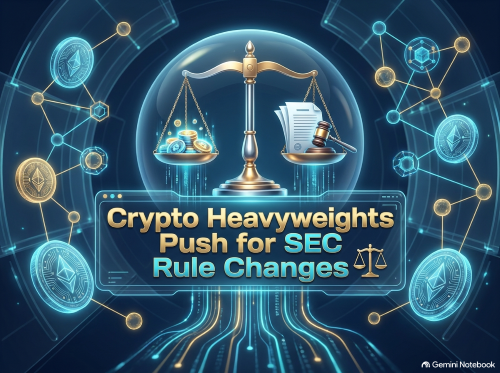
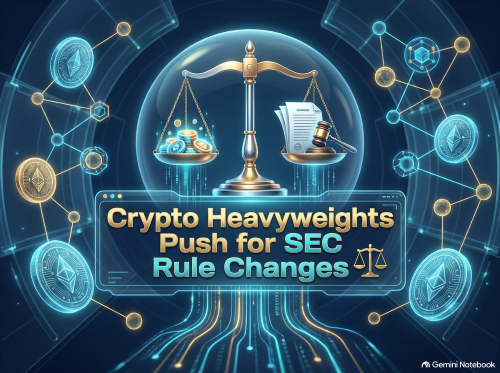
The digital asset ecosystem stands at a critical juncture as regulatory authorities in the United States attempt to overhaul how digital tokens, blockchain protocols, and financial market intermediaries are governed. At the heart of this evolution is the US Securities and Exchange Commission's proposed "Regulation Crypto Assets" framework, published under Release File Number S7-2026-27. Designed to establish tailored fundraising exemptions and a conditional safe harbour for qualifying crypto assets, the proposal aims to replace years of regulation-by-enforcement with codified guidelines. However, as the official public comment window reaches its conclusion, leading digital asset institutions are voicing strong demands for greater legal clarity, objective definitions, and operational certainty.
Prominent among these industry voices are Bitwise Asset Management and the Hyperliquid Policy Center, both of which have submitted detailed comment letters urging substantial revisions before the proposed rules are finalised. Their interventions highlight a shared concern across the sector: without precise, workable criteria, the SEC's proposed exemptions could create fresh regulatory ambiguities rather than resolving existing friction. A thorough The Token Press analysis of the SEC crypto token rules illustrates how institutional asset managers and decentralised protocol architects are uniting to demand an observable, standardised framework for digital token classification and secondary market trading.
Bitwise Asset Management, a premier digital asset manager sponsoring crypto index funds, exchange-traded products, and institutional investment vehicles, approaches the SEC proposal from a distinct vantage point. Unlike protocol creators or token issuers, Bitwise operates purely as a non-issuer intermediary. For asset managers, the primary operational challenge involves determining whether a digital token held within a fund or index risks being classified as a security under the historic Howey test. If a non-issuer misjudges this legal status, fund investors bear the ultimate financial and operational consequences.
In its submission, Bitwise highlights that outside asset managers currently face severe disadvantages when evaluating third-party tokens. Non-issuers must rely entirely on publicly available disclosures, marketing materials, and developer statements—data sources that can be incomplete, unverified, or difficult to interpret from the outside. To resolve this dilemma, Bitwise urges the commission to establish an objective, public-information standard for determining when a digital token separates from an investment contract and ceases to be subject to securities oversight. Rather than requiring fund managers to divine an issuer's private intent, separation should be judged on observable facts: whether the associated network is functional, whether the issuer has publicly confirmed the completion of promised managerial efforts, or whether the issuer has unambiguously abandoned the project.
Furthermore, Bitwise addresses the proposed Form TR filings, which issuers would submit to certify that an investment contract has ceased to exist. Bitwise asserts that outside managers need a clear reliance framework protecting them when acting in good faith on an unchallenged Form TR. As outlined in Bitwise's comment letter to the SEC, establishing a transparent analysis requirement within Form TR and enabling non-issuer reliance would give token issuers a genuine commercial incentive to submit filings, fostering a far more transparent marketplace for institutional asset managers and retail investors alike.
While Bitwise focuses on fund management diligence and token classification, the Hyperliquid Policy Center tackles the practical operational realities facing decentralised protocols and onchain market participants. Led by experienced legal strategists, the policy center generally commends the SEC for proposing a fit-for-purpose framework, which includes a four-year startup exemption for offerings up to five million dollars, a fundraising exemption up to seventy-five million dollars per twelve-month period, and state law preemption for qualified purchasers. However, the organisation warns that these exemptions could prove practically unusable unless the commission addresses secondary market liquidity and protocol mechanics directly.
Hyperliquid presents five critical recommendations to refine the proposed framework:
As detailed in Hyperliquid's formal proposal to the SEC, these adjustments are essential to prevent secondary market uncertainty from undermining the entire regulatory initiative.
The push for refined crypto rules is far from unanimous, revealing deep philosophical divides within the regulatory landscape. While market leaders like Bitwise and Hyperliquid seek targeted improvements to make the proposed framework usable, legal scholars and former enforcement officials have voiced complete opposition to Regulation Crypto Assets.
Notably, former SEC enforcement official John Reed Stark and Duke University finance scholar Lee Reiners submitted a joint comment letter calling on the commission to withdraw the proposal entirely. They contend that the SEC's proposed fundraising exemptions and self-certified safe harbours exceed the agency's statutory authority. According to their analysis, existing securities statutes and established Supreme Court jurisprudence already provide a robust framework for governing digital token offerings. They argue that allowing issuers to remove tokens from oversight through self-certification dilutes essential investor protections and invites immediate judicial challenges. This sharp clash underlines the delicate balance regulators must strike between fostering fintech innovation and safeguarding market integrity.
The recommendations put forward by Bitwise and Hyperliquid reflect a broader maturation of the digital asset industry. As decentralised finance protocols and crypto asset management products integrate further into global financial systems, vague guidelines and piecemeal enforcement are no longer viable.
By demanding observable standards for token separation, explicit protections for network participation rewards, and clear rules for secondary market trading, the industry is advocating for a regime that recognises the unique technical architecture of public blockchain technology. If the SEC adopts these recommendations, it could establish a predictable environment where developers build with confidence, institutional capital flows transparently, and retail consumers remain adequately protected.
As the public comment window for File Number S7-2026-27 closes, the SEC faces a pivotal decision. The commission must decide whether to revise Regulation Crypto Assets to incorporate the constructive feedback from market participants, proceed directly to a commission vote, or reconsider its statutory approach. The submissions from Bitwise and Hyperliquid demonstrate that achieving regulatory clarity requires addressing real-world operational realities—from fund management diligence to onchain protocol mechanics. Whatever path the commission chooses, the outcome will shape the trajectory of digital asset innovation, institutional adoption, and regulatory policy for years to come.
Disclaimer: This article is provided for informational purposes only, mistakes may be made, and it's not offered or intended to be used as legal, tax, investment, financial, or any other advice.