x




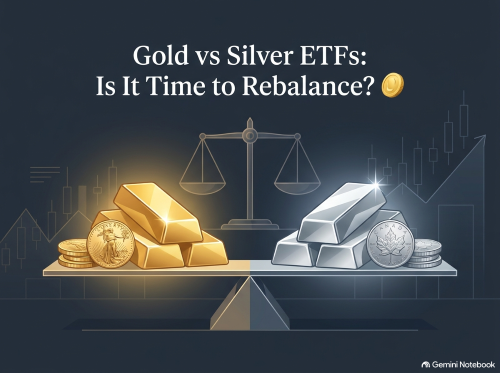
Investors in precious metals witnessed a striking divergence in market sentiment during October. While traditional allocations to gold exchange-traded funds (ETFs) experienced a sharp breather, interest in silver ETFs surged dramatically. According to data released by the Association of Mutual Funds in India (AMFI), gold ETF inflows dropped by 22 percent month-on-month, whereas silver ETFs recorded a remarkable 57 percent leap in fresh capital.
This sudden shift has sparked curiosity among investors regarding whether market preferences are fundamentally moving towards silver, or whether short-term momentum is simply driving tactical allocations. For a detailed breakdown of the market figures, the comprehensive Gold vs Silver ETF analysis provides valuable context on evolving investor behaviour. Before making any sudden adjustments to your portfolio, it is essential to examine the underlying drivers behind these capital flows and evaluate how each metal functions within a well-structured investment strategy.
The raw data from October highlights a clear contrast in investor behaviour. Net inflows into gold ETFs contracted to ₹3,474 crore, down from ₹4,450 crore recorded in September. Conversely, silver ETFs attracted ₹3,092 crore in fresh capital during October, up substantially from ₹1,974 crore in the previous month.
Despite the monthly dip in gold inflows, broader historical context remains reassuringly strong. Nehal Meshram, Senior Analyst at Morningstar Investment Research India, notes that sustained flows throughout the year reflect investors' growing willingness to incorporate gold as a core long-term asset within multi-asset portfolios. Indeed, across the first ten months of calendar year 2026, total inflows into gold ETFs reached an impressive ₹49,399 crore, comfortably surpassing the ₹42,961 crore accumulated across the entirety of 2025.
Silver ETFs, meanwhile, have registered ₹17,601 crore in year-to-date inflows for 2026, compared with ₹23,472 crore in 2025. October’s dramatic surge indicates that investors quickly stepped in to capitalise on recent price corrections and participate in silver's potential catch-up rally.
Several market dynamics explain why investor enthusiasm favoured silver over gold during October. Gold had previously enjoyed an extended, powerful rally to record peak prices. Vishal Dhawan, Founder and CEO of Plan Ahead Wealth Advisors, observes that these elevated price levels left many retail investors hesitant to commit fresh lump sums, leading some to lock in gains or pause allocations.
Silver presented a distinctly different entry opportunity. Having lagged gold's rally for some time, silver was perceived as relatively affordable. When prices experienced a sharp pull-back, opportunistic buyers stepped in. Financial experts highlight that short-term momentum and fear of missing out (FOMO) played a substantial role in accelerating these inflows.
Furthermore, Shivam Pathak, CFP and Founder of Asset Elixir, points out that the correction in silver prices created attractive entry points for value-seeking investors. Because silver operates within a significantly smaller and less liquid market than gold, increased buying activity quickly amplifies price movements, attracting tactical traders looking to participate in rapid market swings.
Interestingly, the surge in silver ETF inflows coincided with broader monthly price corrections, demonstrating that strong capital inflows do not automatically shield funds from short-term market pullbacks.
Gold ETFs recorded an average decline of 5.30 percent across the sector during October. For instance, Nippon India ETF Gold BeES, the largest gold scheme by assets under management, fell by 5.34 percent, while the Zerodha CASE Gold ETF dropped 5.39 percent and the Wealth Company Gold ETF fell 5.23 percent.
Silver ETFs faced considerably sharper pressure over the same period, tumbling by an average of 17.30 percent. The Zerodha CASE Silver ETF experienced the steepest decline at 17.66 percent, while Bandhan Silver ETF recorded the lowest drop in the category at 17.00 percent. This pronounced drawdown serves as a clear reminder of silver's heightened volatility compared to gold.
To maintain long-term portfolio stability, investors must recognise that gold and silver serve fundamentally distinct economic purposes:
As Vishal Dhawan cautions, a slowdown in global industrial manufacturing represents one of the main risks facing silver. If factory output weakens, commercial demand for silver can drop sharply, putting pressure on prices regardless of ETF investor sentiment. Conversely, robust manufacturing and green infrastructure growth can propel silver to outperform gold during bullish economic cycles.
Given these contrasting profiles, is it time to rebalance your portfolio by swapping gold for silver? Investment advisers strongly caution against making knee-jerk shifts based on short-term ETF flow statistics.
Shivam Pathak advises investors against increasing silver exposure purely due to recent price movements or temporary inflow spikes. Instead, financial planners recommend keeping overall precious metal exposure between 5 percent and 10 percent of your total portfolio.
Gold should continue to form the foundational core of this allocation due to its stability, inflation-hedging capabilities, and lower volatility. Silver can be effectively positioned as a smaller, tactical satellite holding to capture industrial growth upside.
For investors looking to build or adjust their silver holdings, adopting a staggered investment strategy—such as a systematic investment plan (SIP)—is far safer than deploying a single lump sum. Dollar-cost averaging helps absorb silver’s characteristic price swings and reduces the risk of buying at market peaks.
Ultimately, gold and silver are complementary assets that play distinct roles. By maintaining a balanced, disciplined strategy aligned with your individual risk tolerance and investment goals, you can capitalise on silver's growth potential while preserving the steady protective anchor that gold provides.
Disclaimer: This article is provided for informational purposes only, mistakes may be made, and it's not offered or intended to be used as legal, tax, investment, financial, or any other advice.