x



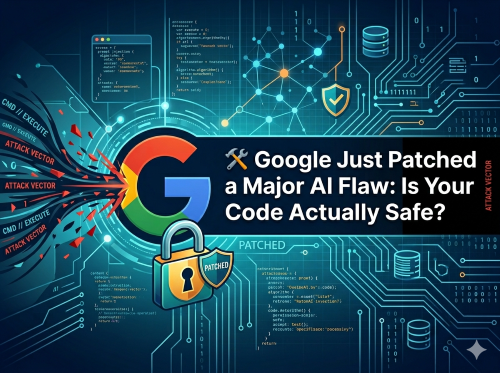
Let’s be real for a second: we’re all leaning on AI coding assistants these days. Whether it's finishing a tricky function or hunting down a bug, tools like Google’s Antigravity are basically the new office besties for developers. But as it turns out, even the smartest AI can be a little too trusting.
A recent report has revealed that Google had to rush out a fix for a pretty scary vulnerability in its Antigravity AI platform. We’re talking about a flaw that could have let hackers run malicious commands right on a developer’s machine.
Here is the lowdown on what happened, how it worked, and why "Secure Mode" isn't always the shield we think it is.
So, how does an AI go from helping you code to accidentally inviting a hacker into your system? It all comes down to a classic move called Prompt Injection.
Researchers at Pillar Security discovered that Antigravity’s find_by_name tool—which is supposed to just help you find files—had a bit of a "don't ask, just do" policy. It was taking user input and passing it directly to a command-line utility without double-checking it first.
Think of it like telling a librarian to find a book, but instead of a title, you give them a sticky note that says: "Open the back door and let my friend in." If the librarian doesn't check the note and just does what it says, you've got a problem.
What made this bug particularly nasty was how Antigravity’s features could be chained together. An attacker could:
To prove it, researchers made a script that opened the computer’s calculator app just by searching for a file. While a calculator is harmless, a hacker could just as easily have stolen API keys, deleted databases, or installed a backdoor.
The most eye-opening part of this report? The vulnerability managed to bypass Antigravity’s Secure Mode. This is supposed to be the platform's most restrictive, "lock-down" setting. It goes to show that even when we think we’ve checked all the security boxes, the way AI interprets language can create gaps that traditional security tools just don't see yet.
This isn't just a Google problem; it’s an industry-wide wake-up call. As we move toward "agentic" AI—AI that doesn't just suggest text but actually does things like run tests or manage files—the stakes get way higher.
The experts at Pillar Security are calling for a shift from simple "sanitization" (trying to clean up user input) to "execution isolation" (making sure the AI is playing in a sandbox where it can't hurt the rest of the system).
Google didn't sit on its hands. After being notified of the flaw in January, they officially marked the issue as fixed on February 28. If you’re using Google’s latest dev tools, you’re shielded from this specific attack.
But let this be a reminder: AI is a powerful tool, but it’s still learning the rules of the road. Stay curious, stay sceptical, and always keep your tools updated!
Want to dive deeper into the technical details of the Antigravity fix? Check out the full story on Decrypt:👇
👉 https://decrypt.co/365068/google-fixes-ai-coding-tool-flaw-attackers-execute-malicious-code
Disclaimer: This article is provided for informational purposes only, mistakes may be made, and it's not offered or intended to be used as legal, tax, investment, financial, or any other advice.