x




In the early 2000s, Lego was on the brink of total collapse. By 2003, the most beloved toy company on the planet was losing a staggering one million dollars every single day, saddled with roughly eight00 million dollars of debt. Sales had plummeted by 30% year-on-year, and the iconic Danish family business was just weeks away from technical insolvency.
Fast forward to the present day, and the narrative has completely flipped. Lego recently posted 12.2 billion dollars in annual revenue, with net profits climbing 21% year-on-year. Remarkably, the Danish brick maker now generates more money than its primary rivals, Mattel and Hasbro, combined.
The catalyst for this historic corporate turnaround can be traced back to a single, highly controversial decision made in 1998: a licensing agreement that initially split the Lego boardroom in half, but ultimately rewrote the economics of the global toy industry.
Founded in 1932 by carpenter Ole Kirk Christiansen, Lego built its global empire on a strict philosophy of original creation. The company name itself derives from the Danish phrase leg godt, meaning "play well". In 1958, Lego patented the revolutionary stud-and-tube coupling system, establishing what they called the "System of Play". The engineering precision was so exact that every single brick manufactured since that date matches a tolerance of just 0.005 millimetres, ensuring complete backwards compatibility across generations.
For nearly seven decades, the brick was the brand. Lego never used third-party characters, paid royalties, or sought external studio approvals. However, by the late 1990s, the digital revolution arrived. Video games and the early internet began pulling children away from physical toys.
In a state of panic, Lego management aggressively diversified into theme parks, clothing lines, jewelry sets, and complex video games. The internal brick portfolio ballooned from 6,000 unique elements to nearly 13,000, destroying manufacturing margins. In 1998, for the first time in its history, Lego posted a financial loss.
As the company began to fracture financially, a small team within Lego’s American office quietly pitched a partnership to Lucasfilm, tied to the upcoming release of Star Wars: Episode I – The Phantom Menace.
Inside the headquarters in Billund, Denmark, the reaction from company purists was fiercely hostile. For 67 years, Lego had fiercely guarded its creative independence. Critics argued that partnering with a Hollywood studio would dilute the brand identity, compromise creative control, and surrender the soul of the System of Play.
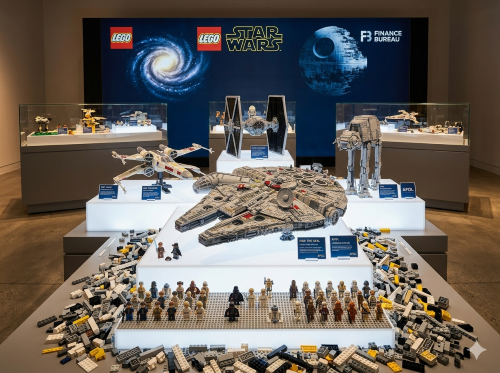
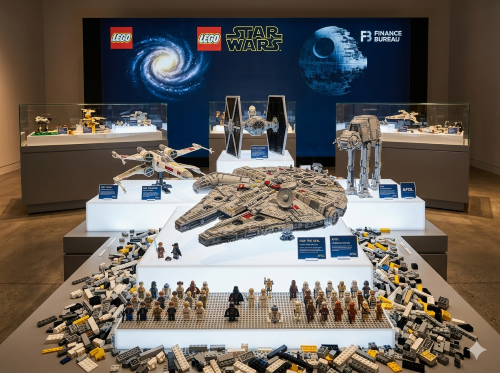
Despite intense internal resistance, the deal was signed and announced at the New York Toy Fair in February 1999. When the first 13 Lego Star Wars sets launched that May, they sold out instantly. Lego’s conservative sales projections left them supply-constrained, whilst other toy manufacturers overproduced for the movie hype and ended up with warehouses of unsold inventory. Adult collectors who had abandoned the hobby years prior suddenly returned in droves. At its peak integration, Star Wars merchandise accounted for roughly 35% of Lego's total revenue.
Whilst the 1999 Star Wars launch proved the concept of licensed IP, it was not an immediate cure-all. By 2003, the financial bleeding had worsened. The turning point arrived in October 2004 with the appointment of Jørgen Vig Knudstorp as CEO. At just 35 years old, the former McKinsey consultant became the first non-family member to lead the business.
Knudstorp’s strategy was simple yet brutal: return to the brick. He cut roughly 1,000 jobs, halved the bloated brick portfolio back down to 7,000 unique pieces, and sold a majority stake in the four Legoland theme parks to Merlin Entertainments for approximately 460 million dollars.
Crucially, Knudstorp chose not to scrap the Star Wars license. Instead, he doubled down on it. By 2005, Lego was profitable again. During the 2008 global financial crisis, whilst the wider toy industry contracted, Lego’s profits grew. By 2014, Lego had dethroned Mattel to become the largest toy company globally.
The Star Wars partnership established a corporate blueprint that competitors have spent two decades trying to replicate. Today, Lego holds partnerships across the entire entertainment landscape, including Harry Potter, Marvel, DC, Lord of the Rings, Nintendo, and Formula 1. Licensed properties now generate roughly one-third of Lego's total revenue. The foundational Star Wars agreement has been extended multiple times, locking it in until at least the end of 2032.
Lego's true competitive advantage lies in its ability to scale a single intellectual property across every imaginable consumer price bracket simultaneously. Because of the modular nature of the brick, a Star Wars product can exist as a five-pound polybag, a thirty-pound starter set, or an 850-dollar Ultimate Collector Series masterpiece containing over 7,500 pieces.
Competitors like Mattel or Hasbro cannot multiply a license this effectively because their product formats are rigid; a Barbie doll or a Transformer action figure cannot be dynamically scaled across dozens of distinct price points to fit every consumer's budget. Furthermore, because every new set is fully backwards compatible with pieces from 1958, each purchase actively enhances the value of a customer's existing collection, creating an incredibly powerful network effect.
Another massive component of Lego's modern success is its deliberate courtship of the adult market, known internally as AFOLs (Adult Fans of Lego). Historically, toy manufacturers viewed adults as a negligible demographic, but Lego recognized their immense purchasing power.
Today, adults account for between 20% and 25% of Lego's total annual revenue. The adult market is currently the fastest-growing demographic in the entire toy sector, with the average adult collector spending thousands of pounds annually, compared to the modest amounts spent on children's toys.
Lego has catered to this audience with massive, complex display sets. In recent years, they have released sets like the 6,020-piece Hogwarts Castle, a 9,090-piece Titanic, and a massive 9,023-piece Death Star that retail right up to the 1,000-dollar mark.
For adult fans, a Lego set has effectively become a tangible, legal way to own, modify, and display a piece of the fictional universes they love. Lego has successfully transformed passive pop-culture fandom into active physical ownership. Combined with their 2019 acquisition of BrickLink—the world's largest secondary marketplace for Lego parts—and crowdsourced design initiatives like Lego Ideas, the company has turned its community into an emotional and financial powerhouse. What began as a desperate bid for survival in 1999 has ultimately become the deepest defensive moat in corporate history.
Coin Bureau - How Star Wars Saved Lego
"LEGO nearly collapsed in 2003, but a single licensing gamble with Star Wars turned things around and changed the rules of the toy industry. From debt disaster to $12 billion in revenue, learn how one phone call made LEGO untouchable.
See why adults now spend thousands a year on plastic bricks, how LEGO expanded to every corner of pop culture, and why its money machine can’t be copied. Your nostalgia just became big business."
~ TIMESTAMPS ~
0:00 – LEGO's Near Collapse and Billion-Dollar Turnaround
2:14 – The "System of Play": Why Every LEGO Brick Still Fits
4:28 – The 1999 Star Wars Deal That Changed LEGO Forever
6:42 – How Jorgen Vig Knudstorp Saved the Brick
8:56 – LEGO's Licensing Flywheel: Dominating Global IP
11:10 – The Rise of Adult Fans of LEGO (AFOLs)
13:24 – From Passive Fandom to Active Ownership
15:38 – LEGO vs. Mattel and Hasbro: The World’s Largest Toy Company
Source 👉 https://www.youtube.com/watch?v=BgbG7e-s83s
Disclaimer: This article is provided for informational purposes only, mistakes may be made, and it's not offered or intended to be used as legal, tax, investment, financial, or any other advice.