x




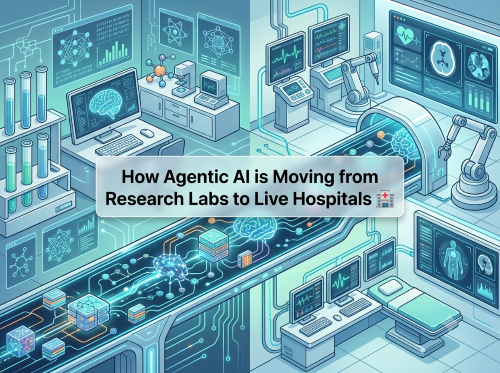
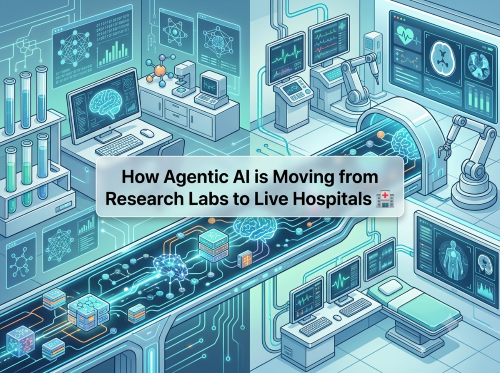
For years, the healthcare sector has faced a frustrating paradox. Millions of pounds and dollars have been poured into artificial intelligence research, resulting in algorithms that perform brilliantly in controlled environments. Yet, when it comes to the real world—where doctors navigate chaotic shifts, complex workflows, and live patient records—most AI projects remain stuck in the sandbox phase.
That disconnect is precisely why Bunkerhill Health recently secured $55 million (£42 million) in Series B funding to scale its agentic AI platform, Carebricks. Supported by major venture firms such as Khosla Ventures, Sequoia Capital, Felicis, Optum Ventures, and Y Combinator, the platform represents a fundamental shift in how health systems deploy machine learning.
Rather than simply recording clinical data, agentic AI actively executes tasks alongside medical teams, turning long-standing clinical ideas into live, operational realities.
The broader healthcare landscape is under unprecedented pressure. Global healthcare expenditure continues to skyrocket while severe workforce shortages strain clinical and administrative staff alike. Decades of spending have focused on electronic health record (EHR) systems designed primarily for documentation. While necessary, these tools often add to the cognitive load of clinicians rather than easing it.
As Nishith Khandwala, Co-Founder and CEO of Bunkerhill Health, highlights, modern medicine has advanced faster than the infrastructure’s capacity to operationalise it. Health systems are filled with ideas to improve patient care, but staff simply do not have the hours to execute them.
The promise of agentic AI lies in bridging this gap: moving technology from a passive record-keeper to an active collaborator.
Unlike traditional software that forces hospitals to adapt to fixed, off-the-shelf tools, Carebricks acts as an adaptable foundation. It allows healthcare organisations to build and tune their own specialised AI agents to meet their specific operational needs.
These agents cover a remarkably wide spectrum of hospital activities:
Leading medical centres, including the Cleveland Clinic, Intermountain Health, and the University of Texas Medical Branch (UTMB), are already running the platform in live clinical environments.
To understand what agentic AI looks like when pilot labels are stripped away, one need only look at UTMB. The institution currently runs over 20 distinct AI agents on the Carebricks platform, spanning clinical care, triage, and hospital administration.
The real-world outcomes reported by UTMB demonstrate the transformative potential of this technology:
These are not theoretical benchmark scores; they are operational metrics achieved within a functioning healthcare environment.
While the early results are compelling, scaling agentic AI across major health systems brings distinct challenges. When a medical department builds and tunes its own triage agent, it also takes ownership of how that agent performs.
Health system boards looking to adopt agentic platforms must address critical questions before scaling up:
Addressing these governance and safety parameters will be crucial as Bunkerhill expands Carebricks into additional clinical domains.
The bottleneck in healthcare technology was never a lack of sophisticated algorithms; it was the challenge of seamless operational integration. By proving that agentic AI can handle live workflows inside major medical centres, platforms like Carebricks are carving out a path toward a far more responsive, efficient healthcare system.
To read the full news coverage and explore further details about this funding round, visit the original article on Artificial Intelligence News:
👉 Bunkerhill raises $55M to scale agentic AI across health systems
Disclaimer: This article is provided for informational purposes only, mistakes may be made, and it's not offered or intended to be used as legal, tax, investment, financial, or any other advice.