x




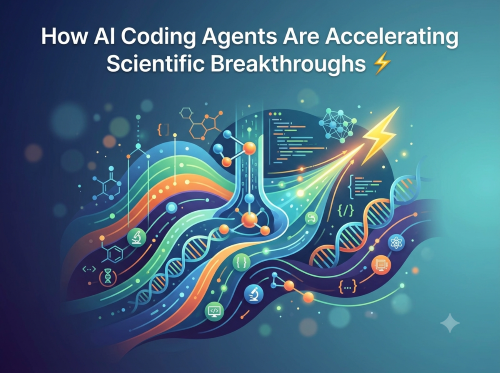
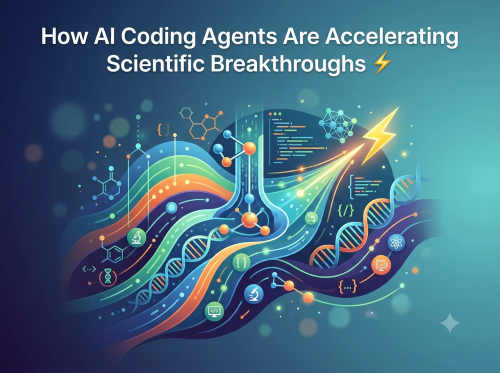
Scientific progress relies heavily on computing power, yet much of the open-source software underpinning cutting-edge research suffers from a quiet crisis: severe technical debt. Often built by small academic teams without dedicated software engineering support, critical tools across genomics, statistics, and immunology frequently become neglected, slow, or difficult to maintain over time.
A field report published by OpenAI offers a compelling glimpse into how AI coding agents—such as Codex and Anthropic’s Claude Code—are tackling this maintenance bottleneck. Tracking eight scientific computing projects, the report documents how AI agents successfully refactored legacy codebases, ported architectures to modern frameworks, and delivered dramatic performance optimisations.
However, as the report highlights, while AI can generate code in seconds, the ultimate responsibility for scientific integrity, community stewardship, and rigorous verification remains firmly human.
In academic research, software is frequently developed to support a single paper or grant. Once published, the primary developers often move on to new projects, leaving essential libraries without long-term engineering resources. This results in software that is:
By deploying AI coding agents, research teams have begun addressing this accumulated technical debt without requiring multi-million-pound engineering budgets or months of manual refactoring.
The projects surveyed in the report showcase three main areas where autonomous coding agents excel: build cleanup, performance optimisation, and language or framework migrations.
1. Build Cleanup and Framework Migration
2. Autonomous Performance Optimisation
3. High-Performance Language Ports & GPU Redesigns
Despite these impressive benchmark figures, the report underscores a crucial nuance: AI coding agents are extraordinarily fast coders, but poor scientific judges.
Because Large Language Models (LLMs) operate on statistical pattern matching, an agent can confidently output code that compiles and runs quickly, yet yields subtly incorrect scientific calculations. The primary burden on human researchers shifts from writing code to rigorous verification.
Key human responsibilities include:
As Brent Pedersen, contributor to the cyvcf2 project, observed, moving fast with AI agents is achievable, but moving far in science still requires expert human guidance, taste, and domain understanding.
While AI agents lower the cost of software development, they also introduce a subtle community risk: fragmentation.
When creating or porting a complex tool becomes trivial, different laboratories might independently produce slightly incompatible versions of the same core software. If two labs use divergent builds that handle subtle edge cases differently, scientific results risk becoming non-reproducible across institutions.
To prevent community fragmentation, researchers recommend:
AI coding agents are transforming scientific computing by turning months of tedious refactoring into manageable, supervised tasks. By reducing runtime bottlenecks and resolving long-standing technical debt, these tools allow researchers to spend less time managing broken build pipelines and more time advancing scientific discovery.
However, AI is an assistant, not a replacement for scientific rigour. The future of scientific software lies in a collaborative model where AI handles implementation speed while human experts provide the critical oversight, taste, and stewardship required to keep science accurate and reproducible.
For more detailed insights on this report and individual project case studies, read the original article on Artificial Intelligence News:
👉 OpenAI report links coding agents to faster science software builds
Disclaimer: This article is provided for informational purposes only, mistakes may be made, and it's not offered or intended to be used as legal, tax, investment, financial, or any other advice.