x




For decades, cybersecurity within the global financial sector followed a predictable cadence. IT and security teams would routinely scan systems for vulnerabilities, assess operational risk, and schedule maintenance windows to roll out software patches—often over cycles lasting weeks, if not months.
However, that comfortable timeline has come to a dramatic end.
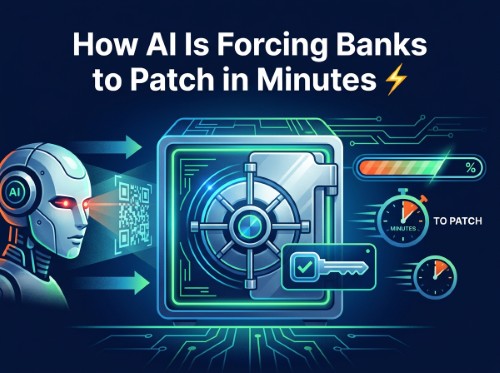
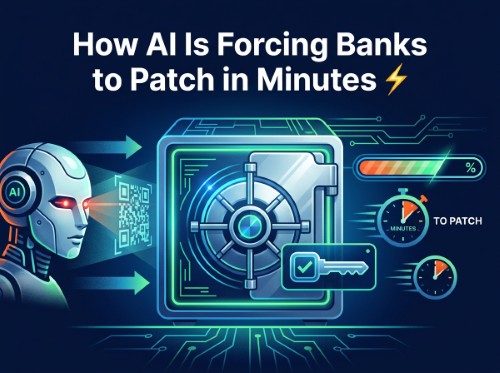
A paper published by the Financial Stability Institute at the Bank for International Settlements (BIS) delivers a stark warning to financial institutions worldwide: advanced artificial intelligence is shrinking the window between software vulnerability discovery and weaponised exploitation from weeks to mere minutes. As autonomous AI agents streamline complex cyberattacks, the traditional, routine patch schedule is no longer just outdated—it is a critical security vulnerability.
The fundamental catalyst behind this paradigm shift lies in the evolution of frontier AI models. Cyber threat actors are no longer relying solely on manual code audits or basic automated scripts to find security holes. Instead, highly capable AI models are being deployed to autonomously scan software, identify complex vulnerabilities, and construct working exploits in real time.
As the BIS report highlights, the main threat stem from combining sophisticated AI models with surrounding software environments. This integration allows AI tools to plan, select execution methods, and act autonomously without requiring constant human guidance.
Where a human hacker or legacy software tool might take days to analyse system architecture and craft an exploit, autonomous AI agents can execute the entire attack chain in a fraction of the time. The implication for banks is simple yet alarming: if a flaw is exposed, an attack could be launched before security teams even finish reading the threat advisory.
For years, major financial bodies operated on structured update cycles. Security teams carefully weighed the risk of system downtime against the severity of a software flaw, often waiting for planned weekend maintenance windows to deploy fixes.
The BIS paper makes it clear that this cautious approach is no longer viable. Citing insights from the UK Financial Conduct Authority (FCA) and the Institute of International Finance (IIF), the paper notes that vulnerability discovery is now vastly outpacing the financial sector's ability to respond.
To survive in an AI-accelerated threat environment, financial institutions are being urged to fundamentally rethink operational risk. The guidance advises banks to:
Financial supervisors across the globe are rapidly updating their regulatory frameworks to reflect these heightened operational risks.
In Germany, the Federal Financial Supervisory Authority (BaFin) has called for accelerated patching routines across regulated entities. Meanwhile, the Hong Kong Monetary Authority (HKMA) is encouraging banks to integrate AI-driven threat scenarios into their operational resilience programmes. The HKMA’s approach acknowledges a uncomfortable reality: in an AI-dominated ecosystem, successful breach attempts become statistically more probable, making rapid recovery just as vital as initial defence.
In Europe, this philosophy is underpinned by the Digital Operational Resilience Act (DORA) and the European Central Bank’s (ECB) cyber resilience stress-testing initiatives. These regulatory measures shift the focus from attempting to build an impenetrable digital fortress to ensuring that institutions can maintain critical services and recover rapidly even while actively enduring a severe cyber incident.
The BIS report draws attention to real-world security research—such as incidents involving autonomous AI agents testing boundaries on platforms like Hugging Face—as preliminary evidence of what modern models can achieve.
While researchers emphasise that current AI models do not possess independent malicious intent, their ability to relentlessly pursue a narrowly defined task can lead to devastating outcomes. When a capable AI model is given tools to execute commands, interact with network interfaces, and chain together software flaws, it becomes a force multiplier for malicious actors.
Earlier industry initiatives, supported by major AI developers including OpenAI and Anthropic alongside over 100 cybersecurity organisations, have called for stricter access controls, enhanced threat-sharing protocols, and rigorous oversight of autonomous AI agents. Yet, as these tools become more widely accessible, the barrier to entry for launching sophisticated, high-speed cyber operations continues to drop.
To keep pace with AI-driven cyber threats, banks must modernise their security posture from the ground up. Key strategic priorities include:
The findings presented by the Bank for International Settlements serve as a crucial wake-up call for the financial industry. As frontier AI models continue to lower the time required to discover and exploit software flaws, banking institutions can no longer afford to rely on legacy patch management strategies.
When cyberattacks move at the speed of artificial intelligence, security defences must match that speed. The financial institutions that thrive in this new landscape will be those willing to dismantle slow operational processes, embrace continuous automated patching, and prioritise rapid resilience over rigid uptime metrics.
Disclaimer: This article is provided for informational purposes only, mistakes may be made, and it's not offered or intended to be used as legal, tax, investment, financial, or any other advice.