x




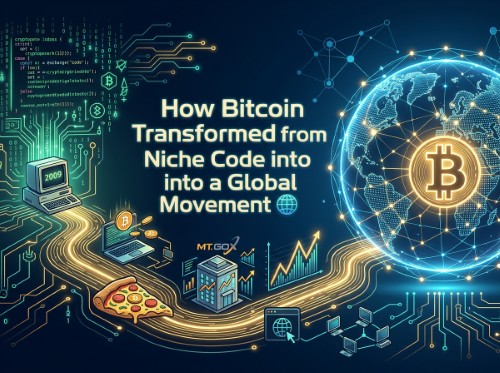
Today, Bitcoin is widely recognised as a global financial force, driving institutional investment and inspiring worldwide economic debate. However, the path to international prominence was far from straightforward. During its early years between 2009 and 2013, Bitcoin evolved from an obscure cryptographic experiment into a functioning digital economy.
Exploring these foundational years reveals how a tiny community of enthusiasts, developers, and visionaries built the infrastructure for decentralized digital money, navigated high-profile controversies, and established a technological movement that refused to vanish.
When Satoshi Nakamoto released the Bitcoin client software on 9th January 2009, few people paid attention. One notable exception was computer scientist Hal Finney. Fascinated by Nakamoto’s work on early cryptography forums, Finney was among the very first individuals outside of Satoshi to download and run the software.
Testing the network required active participation. On 12th January 2009, Satoshi sent 10 BTC to Finney, completing the first-ever peer-to-peer Bitcoin transaction. At the time, these tokens held no monetary value in conventional fiat terms; the exchange was purely a functional proof-of-concept to verify that the decentralized protocol worked as intended.
Over the next two years, Satoshi Nakamoto collaborated with early contributors to refine the software and foster an open-source community. In November 2009, Nakamoto launched a dedicated Bitcoin forum, creating a public space where programmers could report bugs, debate mining mechanics, and suggest code updates.
By December 2010, Nakamoto posted for the last time on the forum. In April 2011, after handing over project leadership to developers Gavin Andresen and Mike Hearn, Nakamoto vanished entirely. Despite holding an estimated digital fortune of over one million mined bitcoins, Satoshi’s tokens have remained completely untouched ever since.
In 2009, Bitcoin faced a fundamental economic dilemma: nobody knew what a single bitcoin was worth. Because there were no established exchanges or liquid markets, assigning a market price required creative thinking.
In October 2009, an anonymous forum user known as New Liberty Standard published one of the earliest valuation frameworks. By calculating the average cost of electricity needed to run a computer processor and divide it by the number of coins mined, the site established a starting rate: $1 was worth approximately 1,309.03 BTC. This meant a single bitcoin was valued at roughly 0.076 US cents.
Building upon this formula, the first exchange of Bitcoin for fiat currency took place shortly afterwards. On 12th October 2009, early developer Martti Malmi—who managed the original bitcoin.org website and created the BitcoinTalk forum—sold 5,050 BTC to New Liberty Standard for $5.02 via PayPal. For the first time, a digital asset created on a public ledger had been traded for traditional currency.
Commercial trading took another step forward in March 2010 when developer DW Dollar established Bitcoin Market, the first dedicated online cryptocurrency exchange where users could buy and sell coins directly.
While trading coins for dollars was a vital milestone, Bitcoin still needed to demonstrate that it could function as a medium of exchange for tangible goods. On 18th May 2010, programmer Laszlo Hanyecz published a post on the Bitcoin forum offering 10,000 BTC in exchange for two large pizzas.
Four days later, on 22nd May 2010, another user accepted the deal, ordering two Papa John’s pizzas to Hanyecz’s doorstep in Florida. Now celebrated annually across the world as Bitcoin Pizza Day, this event marked the first documented commercial purchase of physical goods using Bitcoin. Although those 10,000 BTC would eventually become worth hundreds of millions of pounds, the transaction successfully proved that digital tokens could be used to acquire real-world items.
To broaden adoption beyond technical circles, early advocates focused on distributing coins to curious newcomers. In June 2010, Gavin Andresen created a "Bitcoin Faucet"—a website that gave away 5 BTC to anyone who completed a simple web captcha. Andresen seeded the site with 1,100 of his own coins, reasoning that people needed to own small amounts of Bitcoin to experiment with digital wallets and understand how the system functioned.
As interest spread, an organic ecosystem began to coalesce around the network:
As infrastructure expanded, Bitcoin’s permissionless design began attracting users interested in its censorship-resistant properties. In early 2011, an online dark web marketplace called Silk Road was launched by Ross Ulbricht under the pseudonym "Dread Pirate Roberts".
Silk Road required buyers to pay using Bitcoin, leveraging the network because payments could be transmitted peer-to-peer without central banking gatekeepers or payment processors blocking transactions. While the public blockchain meant transactions were traceable, Silk Road’s integration with privacy networks shielded user identities.
A high-profile media report by Gawker in June 2011 thrust Silk Road and Bitcoin into the public spotlight. The intense coverage triggered a major wave of new buyers, pushing Bitcoin’s market price to $27 per coin within a week. However, this association with illicit markets also drew severe political scrutiny, leading US lawmakers to call for federal investigations.
When the FBI shut down Silk Road in October 2013 and seized its digital assets, observers noted a crucial technical reality: law enforcement had dismantled a centralized web marketplace, but the underlying Bitcoin protocol continued operating without interruption.
Between 2011 and 2013, Bitcoin experienced its first dramatic boom-and-bust market cycles, establishing price dynamics that persist in digital asset markets today:
As trading volumes grew, formal institutions began taking notice. In March 2013, the Financial Crimes Enforcement Network (FinCEN) issued guidance outlining how anti-money laundering rules applied to digital currency businesses. By late 2013, US Senate committees held their first public hearings to evaluate both the regulatory risks and commercial potential of virtual currencies.
Simultaneously, legitimate enterprise adoption gathered momentum. In late 2012, WordPress became the first major web platform to accept Bitcoin payments. By late 2013, payment processor BitPay reported managing payments for over 10,000 merchants worldwide, having processed over $100 million in volume that year. Silicon Valley venture capital also entered the sector, exemplified by Andreessen Horowitz leading a $25 million investment round in Coinbase in December 2013.
By the end of 2013, Bitcoin had survived software bugs, major exchange breaches, price collapses of over 90 per cent, and intense regulatory scrutiny. Critics had declared the technology dead hundreds of times, yet the network continued to produce blocks every ten minutes.
The early era from 2009 to 2013 transformed Bitcoin from a quiet cryptographic experiment into a resilient, global monetary movement. By proving that a decentralized digital asset could store value, facilitate global trade, and withstand hostile network conditions, these early years laid the essential groundwork for modern digital finance.
Coin Bureau - How Bitcoin Went From Nerd Money To A GLOBAL Movement (Episode 2)
"Bitcoin didn’t start with Wall Street hype or institutional backing, it began with a handful of coders trading digital cash and proving it could actually work. This video unpacks how BTC’s first users mined coins, set crazy-low prices, and traded for everything from dollars to pizza.
From the first real exchange rates to the infamous Bitcoin Pizza Day, see how a volunteer community built economic value from scratch and why those early risks matter for your money right now."
~ TIMESTAMPS ~
0:00 Intro
04:21 When Bitcoin Became Money
09:53 The Internet Builds Its Own Economy
13:05 Silk Road Changes Everything
16:18 The First Bitcoin Exchanges
19:51 The Price Goes Crazy
23:24 Governments Start Noticing
26:28 The Experiment Builds Into A Movement
Source 👉 https://www.youtube.com/watch?v=18Za5qNnWoc
Disclaimer: This article is provided for informational purposes only, mistakes may be made, and it's not offered or intended to be used as legal, tax, investment, financial, or any other advice.