x




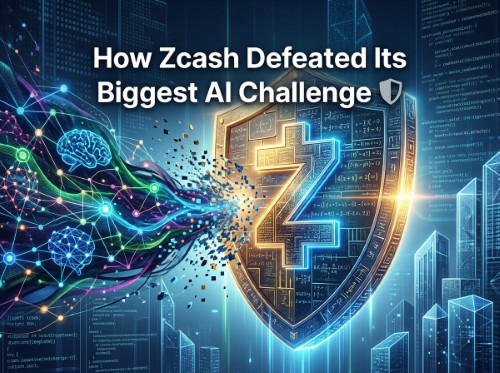
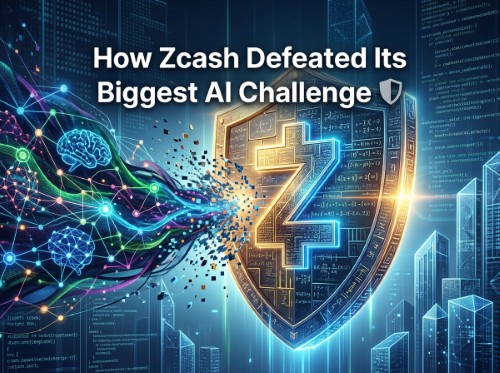
The intersection of artificial intelligence and blockchain technology has reached a pivotal turning point. In a recent detailed analysis by Coin Bureau, the spot light shines on Zcash (ZEC) and a dramatic event where an AI model uncovered a four-year-old flaw in one of the world's most advanced privacy protocols. While initial headlines sparked market anxiety, the deeper story reveals a masterclass in cryptographic resilience, protocol safeguards, and the future of private digital money.
For over four years, the Orchard shielded pool—Zcash's state-of-the-art privacy architecture built on Halo 2 zero-knowledge proofs—underwent rigorous human code reviews and formal cryptographic audits. Security experts worldwide considered the system nearly impenetrable.
However, during an advanced security review using an artificial intelligence harness powered by Anthropic's Claude Opus model, researcher Taylor Hornby accomplished in hours what human teams had missed for years. The AI identified an under-constrained element in the Orchard proving circuit. In a controlled test environment, this soundness bug allowed the creation of mathematical proofs that could theoretically accept invalid inputs, raising the spectre of counterfeit coin generation inside the local sandbox.
When news of the vulnerability reached the public, initial market sentiment reacted with predictable volatility. Traders feared that the integrity of the Zcash supply had been compromised, leading to a sharp price dip as uncertainty swept through exchanges.
Yet, a closer examination of the protocol revealed that Zcash’s underlying architecture was specifically engineered for this exact scenario.
The Role of Turnstile Accounting
Unlike many altcoins that collapse at the first sign of a security scare, Zcash relies on a fail-safe mechanism known as turnstile accounting.
The speed with which the development team and community responded demonstrated remarkable operational maturity. Within five days of discovery:
This rapid mitigation highlighted how proactive AI security testing can serve as an ultimate defence mechanism. Rather than weaponising vulnerabilities, combining AI auditing tools with responsible disclosure enables developers to harden decentralized networks against future automated threats.
As AI tools become increasingly adept at on-chain surveillance and automated transaction mapping, public blockchains face unprecedented privacy challenges. Machine learning algorithms can easily aggregate wallet metadata, trace transaction graphs, and index financial activity at a global scale.
In this evolving environment, zero-knowledge privacy protocols like Zcash provide an essential counterweight. By shielding transaction details while preserving verifiable supply limits, private money protects individual financial autonomy against pervasive, automated oversight.
The Zcash incident proves that while AI can find human oversights in complex mathematics, robust protocol design, automated backstops, and proactive security measures ensure that true private money remains resilient.
Coin Bureau - Zcash Just Proved AI Is NO MATCH For Private Money
"An AI beat 4 years of cryptographic audits and found a dangerous bug in Zcash's code. The market panicked. Yet Zcash not only survived, it hit new all-time highs just months later.
Find out what the AI exploited, how the protocol protected itself, and why ZEC's design is now attracting attention in a world where surveillance is automated and constant."
~ TIMESTAMPS ~
0:00 – How AI Discovered a Fatal Zcash Bug
2:16 – Why Zcash Survived the Exploit
4:31 – The Strange Truth About the Hidden Pool
6:45 – Why Most Old Altcoins Stay Dead
9:00 – How Zcash is Built Differently
11:14 – The Rising Threat of AI On-Chain Surveillance
13:28 – What Real Crypto Maturity Looks Like
Source 👉 https://www.youtube.com/watch?v=UGpS2jk2EkQ
Disclaimer: This article is provided for informational purposes only, mistakes may be made, and it's not offered or intended to be used as legal, tax, investment, financial, or any other advice.