x




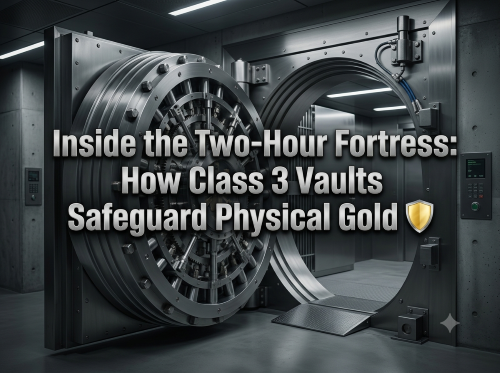
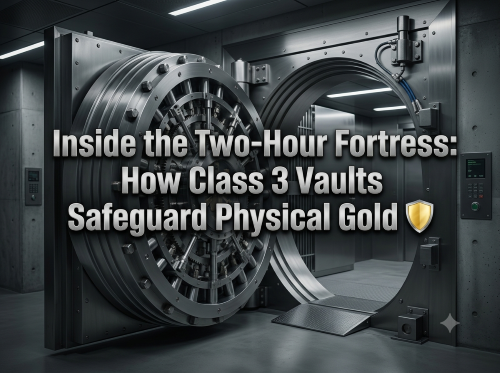
When expanding a portfolio into physical gold, smart investors quickly realise that acquiring bullion is only half the equation. The other, equally crucial half is answering a simple question: where is your gold actually stored, and how well is it protected?
In the world of high-security bullion storage, one benchmark stands above all others: the Class 3 vault rating. Far from being a mere marketing slogan, a Class 3 rating represents a rigorously audited, mathematically tested standard of physical defence. Here is a comprehensive look at how Class 3 vaults work, why they outshine traditional bank security, and how they protect precious metals against extreme threats.
A Class 3 vault is the highest commercial security classification granted under UL Standard 608—a benchmark established by Underwriters Laboratories, the world-renowned independent safety and security certification body.
UL Standard 608 measures the burglary resistance of vault doors and modular wall panels. Rather than relying on simple wall thickness or static dimensions, the rating is earned through hands-on testing that measures net working time. This distinction is critical: the timer runs only when tools are actively making contact with and attempting to breach the vault material.
The UL 608 scale features four distinct classifications:
Class 3 is the ultimate ceiling under UL Standard 608; there are no Class 4 or Class 5 designations. Holding out against two hours of continuous, active destruction makes a Class 3 vault the gold standard for institutional depositories worldwide.
To earn a Class 3 rating, a vault must endure a brutal, multi-angled assault conducted by certified technical experts in controlled laboratory settings.
Testers do not simply attack the massive vault door; they attack every side of the enclosure, including the modular wall panels, floor, and ceiling. A vault system is only ever as secure as its weakest panel.
During the attack window, testers deploy the complete arsenal of a high-level, sophisticated burglary syndicate. This includes:
Because UL testing is independent, standardised, and binary—a vault structure either passes or fails—investors receive a clear, verifiable guarantee rather than empty claims.
In a real-world security environment, physical barriers do not operate in a vacuum. A Class 3 vault is designed as a core element of a broader defence-in-depth strategy.
1. Alarm Response and Detection
Two hours of net working time provides an enormous operational window. Modern monitoring and alarm systems detect breach attempts within seconds. A physical structure that can absorb two hours of continuous heavy drilling or torching ensures that emergency response teams and law enforcement have more than enough time to secure the perimeter.
2. Threat Elimination
Executing a two-hour physical assault using heavy thermal torches and abrasive saws generates intense heat, dense fumes, deafening noise, and massive mechanical strain. Managing these environmental factors while attempting to breach a Class 3 structure eliminates virtually all potential threat actors.
3. Institutional Exchange Requirements
Class 3 certification is not optional for major bullion depositories; it is mandatory. Leading commodity exchanges—including NYMEX, COMEX, and the London Bullion Market Association (LBMA)—require Class 3 construction as an absolute condition of depository licensure.
Many retail investors assume that storing gold in a traditional local bank branch offers the highest level of physical protection. Surprisingly, this assumption is often incorrect.
In 1991, amendments to the Bank Protection Act eliminated minimum statutory vault construction standards for commercial bank branches. As a result, many modern local bank facilities carry lower physical security specifications than specialised bullion depositories.
Furthermore, safe deposit boxes inside local banks carry significant drawbacks:
By contrast, professional depositories operated by industry leaders like Brink’s, Loomis, and Malca-Amit are purpose-built fortresses designed explicitly for high-density wealth storage.
While a Class 3 rating guarantees world-class physical integrity, world-class depositories surround the vault with multi-layered operational security:
When storing metals in a Class 3 facility, investors typically choose between two custody models:
Crucially, both storage models enjoy identical Class 3 structural defence and insurance coverage. Whether held in an allocated or segregated arrangement, your physical wealth sits within the same audited, attack-resistant envelope.
Physical gold represents timeless financial security. However, ensuring that wealth remains safe across generations requires equal attention to physical custody. A Class 3 vault rating provides measurable, independently verified proof that your assets are protected by the strongest commercial defences available today.
Further Information:
To read more about the Class 3 vault standard, institutional security architecture, and physical precious metals storage, visit the original source article at GoldSilver Industry News:
👉 Class 3 Vault: The Two-Hour Attack Standard That Protects Your Gold
Disclaimer: This article is provided for informational purposes only, mistakes may be made, and it's not offered or intended to be used as legal, tax, investment, financial, or any other advice.