x




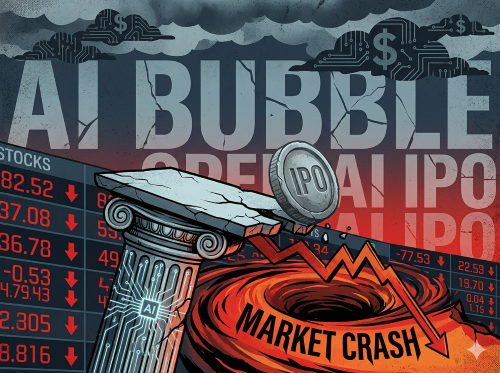
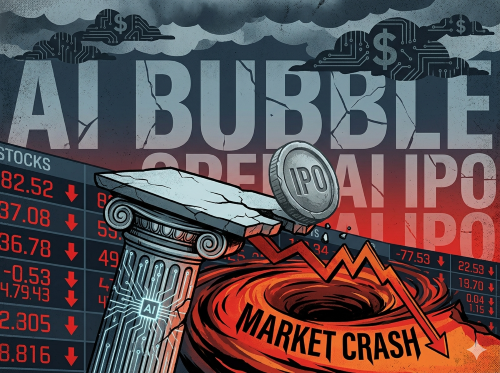
The tech landscape is bracing itself for one of the most anticipated stock market listings in a generation. For years, the conventional narrative has painted the upcoming OpenAI Initial Public Offering (IPO) as a triumphant victory lap. It is supposed to be the crowning moment for the laboratory that transformed a niche machine-learning research curiosity into the fastest-adopting consumer technology in human history.
However, peeling back the layers of heavy industry hype reveals a far more volatile financial reality. Rather than listing from a position of absolute market dominance, reports indicate that OpenAI is walking toward the public markets under severe financial strain. Analysts increasingly view the upcoming listing not as a celebratory milestone, but as an urgent, forced funding event driven by an insatiable need for capital. With mounting operating losses, massive infrastructure commitments, and an aggressive challenge from rival Anthropic, the pioneer of the artificial intelligence revolution is facing a critical structural bottleneck.
On paper, OpenAI appears to be an unstoppable economic juggernaut. In its private funding round closing on 31st March 2026, the company achieved a staggering valuation of 852 billion dollars following a record-breaking 122 billion dollar capital raise. This round saw massive investments from major industry players like Nvidia, SoftBank, and Amazon—with Amazon alone contributing 50 billion dollars. Looking ahead to the public listing, early targets suggest the company is aiming for a historic 1 trillion dollar valuation.
Yet, beneath these eye-watering headline numbers, the financial architecture is remarkably unstable. OpenAI is currently generating roughly 2 billion dollars a month in revenue, which translates to an impressive annualised rate of 25 billion to 30 billion dollars. However, generating this revenue comes at a devastating cost. In the first quarter of 2026, OpenAI posted an adjusted operating margin of negative 122 per cent. To put it simply, for every single dollar of revenue the company brings in, it spends 2.22 dollars to generate it. This translated into a spectacular operating loss of nearly 7 billion dollars in just three months, with total losses projected to hit 14 billion dollars for the full year.
The core of this problem lies in a massive monetisation hole. While ChatGPT boasts close to 1 billion weekly active users, approximately 95 per cent of those users utilise the free tier. OpenAI has built one of the most famous consumer products on earth, but it has fundamentally struggled to convert that immense audience into paying customers. Furthermore, data from analytics firms like Sensor Tower indicates that ChatGPT’s dominant share of global AI app downloads has experienced a steady decline since early 2025 as the consumer market becomes increasingly crowded.
A billion free users would not be an existential threat if running the platform were inexpensive, but artificial intelligence requires an unprecedented amount of backend processing power. Every single prompt entered, line of code generated, and image rendered incurs an immediate infrastructure cost. OpenAI is on the hook for an estimated 50 billion dollars in cloud compute expenses this year alone. Looking out toward 2030, its long-term compute commitments are projected to hover around 600 billion dollars.
This extreme overhead highlights a distinct structural disadvantage when compared to legacy competitors like Google. Google operates its own hyperscale data centres and utilises custom-designed chips, meaning it can run models at a fraction of the cost. OpenAI, by contrast, must rent its capacity from third-party cloud providers, effectively paying retail margins on top of the base infrastructure costs.
This dynamic has created what financial analysts describe as a worrying capital loop. Tech giants like Amazon and Microsoft inject billions of dollars into OpenAI during private funding rounds. However, that capital does not simply sit on the balance sheet to fund core research; a massive portion of it is immediately redirected back to those very same tech giants to pay for server rental. This circular flow of capital raises serious questions about the true financial independence of the startup. At the same time, this concentration risk impacts the wider tech ecosystem. For example, reports indicate that over 300 billion dollars of Oracle’s remaining contracted revenue is tied to OpenAI as a single customer, meaning the financial stability of one company directly underpins the order book of another.
While OpenAI has been focused on managing its consumer audience, its fiercest rival, Anthropic, has executed a masterful strategic pivot. Founded by former OpenAI researchers, Anthropic has quietly transitioned from an industry underdog into the financial frontrunner of the enterprise AI sector.
On 28th May 2026, Anthropic closed a monumental funding round at a 965 billion dollar post-money valuation, officially overtaking OpenAI's last private valuation. More importantly, Anthropic is winning where it matters most: revenue and path to profitability. Anthropic is currently operating at an annualised revenue rate of approximately 47 billion dollars—comfortably ahead of OpenAI’s 25 billion to 30 billion dollar range—following a fivefold revenue increase in the first five months of 2026 alone.
The divergence in their fortunes comes down to a fundamental choice of business model:
Corporate clients are vastly more lucrative, generating between three and five times more revenue per token than traditional consumer models. Data from the corporate card platform Ramp highlights the speed of this market shift: Anthropic’s share of combined enterprise AI spending surged from a modest 10 per cent in early 2025 to a dominant 65 per cent by February 2026. Consequently, Anthropic is on track to achieve its first profitable quarter as early as 2028, a full year ahead of OpenAI's internal timeline.
The stark reality of these financial metrics explains why OpenAI's highly anticipated IPO timeline has repeatedly slipped. The company finally filed its confidential S1 prospectus with the Securities and Exchange Commission (SEC) on 22nd May 2026, targeting a potential listing window as early as September, with Goldman Sachs and Morgan Stanley leading the underwriting.
Yet, the lead-up to this filing has been marked by deep ideological friction within the executive suite. Chief Financial Officer Sarah Friar has reportedly argued strongly for delaying the public listing until 2027. Her internal concerns centre on financial reporting readiness and the terrifying gap between current revenue streams and the "vertical wall of demand" presented by the company's long-term compute obligations. The tension between OpenAI's confident public narrative and the cautious approach urged by its own CFO suggests a company rushing to the markets out of a critical need to secure cash, rather than a business celebrating a natural transition to the public domain.
Adding to the financial pressure is a complex web of legal and regulatory hurdles. On 18th May 2026, a federal jury in Oakland ruled against Elon Musk on statute of limitations grounds, halting his high-profile lawsuit that sought to force the redistribution of 134 billion dollars from OpenAI’s commercial arm back to its original non-profit entity. While OpenAI technically won the case, the trial caused severe reputational damage. Internal communications were exposed to the public, and court testimony highlighted structural oddities, including the fact that Chief Executive Officer Sam Altman holds no direct equity stake in the company he leads.
The governance model remains highly unconventional. Following its transition into a Public Benefit Corporation, the original non-profit entity retains a 26 per cent stake, while Microsoft holds roughly 27 per cent. This unique corporate architecture has already drawn intense regulatory scrutiny, with several state attorneys general requesting access to OpenAI documents prior to the listing, alongside ongoing congressional inquiries into Altman's personal investments in external businesses that contract with OpenAI.
When OpenAI ultimately lists on the public exchange, it will represent a critical stress test for the entire technology sector. It will not list in isolation; both SpaceX and Anthropic are reportedly eyeing public debuts in a similar timeframe, creating intense competition for market liquidity.
For retail and institutional investors alike, the math required to justify buying shares at a 1 trillion dollar valuation is incredibly steep. Public buyers are being asked to purchase an entity that loses billions of dollars a year, faces declining consumer app market share, maintains a complicated governance structure, and is currently being outpaced in the enterprise sector by its primary rival. Furthermore, there are rising concerns that everyday investors could be left holding overvalued shares, particularly as over 600 current and former OpenAI employees have already cashed out roughly 6.66 billion dollars via secondary market tender offers.
Ultimately, the OpenAI IPO will serve as the ultimate referendum on the financial viability of the generative artificial intelligence boom. If the industry pioneers cannot find a sustainable path to profitability, the broader capital expenditures flowing into AI infrastructure could face a severe correction.
Coin Bureau - The OpenAI IPO Will CRASH The Market (Few Are Ready)
"OpenAI is on the verge of a blockbuster IPO, but its business is burning money faster than it makes it. The real winners in AI might not be who you think, with rivals overtaking OpenAI in revenue and profitability.
This video exposes the financial reality behind OpenAI’s public listing, the risks regular investors might face, and why the AI revolution’s frontrunner is fighting to keep up. Watch to understand what’s really at stake before the shares hit the market."
~ TIMESTAMPS ~
00:00 – The Rise of the AI Age
01:52 – OpenAI's $852 Billion Valuation
03:32 – The $14 Billion Loss Reality
05:18 – The Massive Cost of Compute
07:08 – The Big Tech Financing Loop
08:46 – Anthropic: The $965 Billion Rival
10:37 – Why Anthropic is Winning the Race
12:27 – Internal Conflict & IPO Delays
14:12 – Legal Risks and Sam Altman's Equity
16:05 – Future Outlook: Peak AI Cycle?
Source 👉 https://www.youtube.com/watch?v=_IiV53Lh1Sk
Disclaimer: This article is provided for informational purposes only, mistakes may be made, and it's not offered or intended to be used as legal, tax, investment, financial, or any other advice.