x




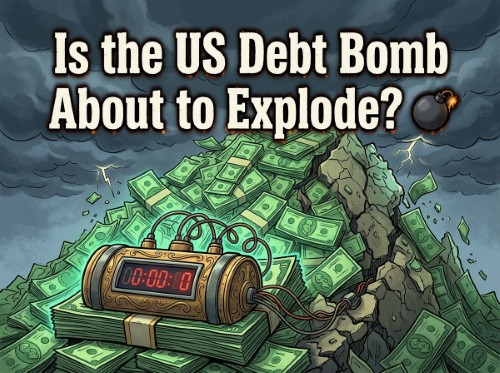
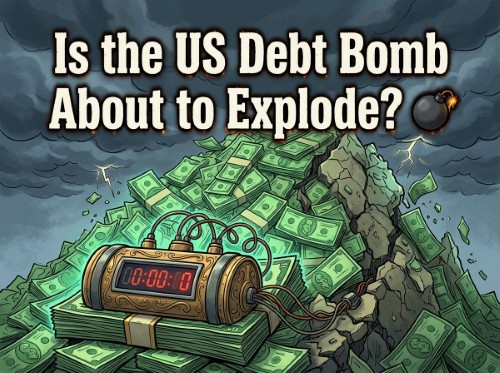
At first glance, the official economic indicators in the United States present a picture of resilience. Headline Gross Domestic Product (GDP) growth remains positive, unemployment figures appear stable, and stock market indices frequently touch atmospheric heights. Yet, beneath this tranquil surface, a vastly different narrative is unfolding inside the corridors of the U.S. Department of the Treasury.
Despite official assertions that there is no financial emergency, sovereign authorities have quietly begun deploying high-powered, crisis-era financial mechanisms. From aggressive bond buybacks to rare international currency interventions, the tools being used suggest that the U.S. sovereign debt market is facing unprecedented structural pressure. Understanding these covert manoeuvres is essential for anyone seeking to safeguard their investments and savings against growing systemic risks.
The fundamental paradox of the current macroeconomic environment lies in the contrast between public messaging and policy execution. In an ordinary market environment, government bond markets clear naturally through private demand. Institutional funds, foreign central banks, and domestic investors purchase government debt at auction based on prevailing interest rates.
However, recent auction results for long-term U.S. Treasuries—specifically 30-year paper—have revealed a glaring absence of private appetite. High borrowing costs and rising long-term yields have forced primary dealers to absorb far larger shares of debt than usual. To prevent long-end yields from spiralling upwards and triggering wider financial dislocation, the U.S. Treasury was forced into action.
Rather than allowing market forces to dictate long-term borrowing rates, officials dramatically escalated secondary-market purchases of existing Treasuries. By stepping in to absorb long-dated bonds, the government is effectively acting as a buyer of last resort to create artificial demand where private capital has retreated.
To appreciate the gravity of these interventions, it is crucial to distinguish between traditional central bank Quantitative Easing (QE) and the Treasury's current strategy.
Under conventional QE, the Federal Reserve creates new bank reserves to purchase government securities, thereby expanding its balance sheet. The Treasury's bond buyback programme operates differently:
This re-engineering of public debt, often described as a "Treasury twist," allows authorities to manage market liquidity without technically expanding the Federal Reserve's balance sheet. However, replacing long-term obligations with short-term rollover debt significantly increases refinancing risk if interest rates remain elevated.
Why are these emergency measures becoming necessary? The core issue boils down to a vanishing supply of "patient money"—investors willing to lock up capital for ten to thirty years at current yield levels.
Several factors have accelerated this institutional retreat:
When traditional global buyers back away from sovereign debt, the government faces a stark reality: either allow yields to rise to levels that choke off economic activity, or intervene directly to finance its own liabilities.
The driving force behind this market dysfunction is the exponential growth of the U.S. national debt, which has crossed the staggering threshold of $40 trillion.
As older, low-yielding bonds mature, they must be reissued at today's significantly higher interest rates. Consequently, net interest expense on the national debt has surpassed $1 trillion annually—consuming a rapidly expanding proportion of total federal tax revenue.
This dynamic creates a self-reinforcing feedback loop:
Prominent voices across Wall Street have begun warning that the financial system is entering a phase of subtle financial repression. When a government cannot easily outgrow its debt liabilities, policy options narrow considerably.
To keep the financial engine running, policymakers generally face three long-term paths:
As authorities navigate these complex dynamics, traditional financial assets may experience heightened volatility. Investors seeking to preserve purchasing power are increasingly paying attention to hard assets, sound monetary stores of value like gold, and capital allocation strategies designed to withstand prolonged monetary dilution.
While official headlines continue to reassure the public that everything is under control, the Treasury's aggressive behind-the-scenes manoeuvres tell a far more cautious story. Understanding these structural shifts is the first step toward navigating the financial landscape ahead.
Coin Bureau - US Panic: The Debt Bomb is Exploding (and they can't stop it)
"The US is using emergency financial tools, massive bond buybacks, nearly $1 trillion in cash reserves, and rare currency interventions to keep the system running. But official stats claim there’s no crisis, so why all the panic moves?
We explain what the Treasury is scrambling to fix, why global buyers are walking away from US debt, and what this means for everyone's savings and investment risks right now."
~ TIMESTAMPS ~
0:00 - The US Government is Using Crisis Tools
2:18 - Decoding the Treasury's Emergency Actions
4:36 - What is a Bond Buyback?
6:54 - The Joint Currency Rescue with Japan
9:12 - Why the World is Refusing to Lend to America
11:30 - The Shocking Reality of the US National Debt
13:48 - Wall Street Legends Sound the Alarm
16:06 - Is the US Economy Heading for a Crash?
Source 👉 https://www.youtube.com/watch?v=qGqOvOIIXqE
Disclaimer: This article is provided for informational purposes only, mistakes may be made, and it's not offered or intended to be used as legal, tax, investment, financial, or any other advice.