x




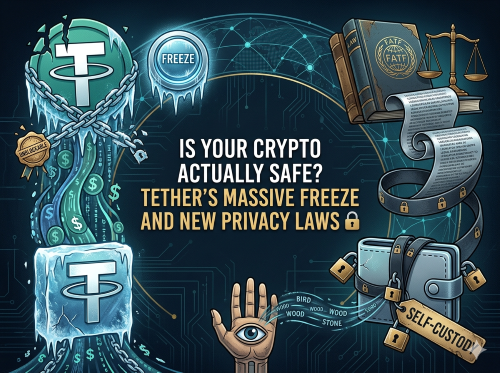
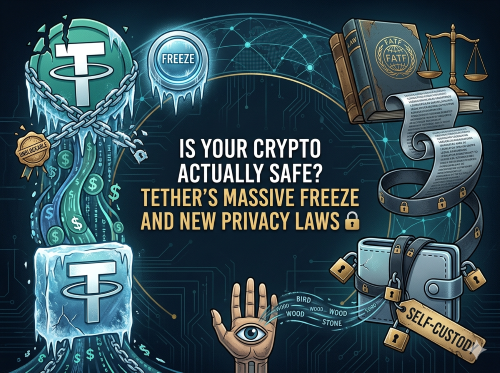
If you’ve been in the crypto world for a while, you probably remember the original pitch: money that nobody can touch, no bank can block, and no government can seize. It was all about freedom and taking back control. But lately, things have been feeling a little different, hasn't it? A couple of major events just went down that suggest the "safety" of our digital assets might be under a bit of a microscope right now.
First off, let’s talk about Tether (USDT). It’s the king of stablecoins, but it turns out it has a bit of a "secret" feature—a remote kill switch. Recently, Tether made its biggest move yet, freezing a staggering $344 million in just two wallets. This wasn't a random decision; they were working directly with the U.S. Treasury.
While these freezes usually target bad actors and groups under sanction, it’s a massive wake-up call for the average user. It proves that centralized stablecoins like USDT and USDC aren't exactly "unstoppable" money. If a private company has a freeze button and a government tells them to press it, that money is going nowhere.
While Tether was busy locking wallets, South Africa was drafting some of the toughest crypto laws we’ve seen yet. They’re looking to reclassify crypto as capital, putting it under the same strict rules as gold or foreign currency.
The wildest part? One of the proposed rules suggests that if you don't hand over your private keys or seed phrases when asked by authorities, you could face years in prison. This strikes at the very heart of self-custody. The whole point of a hardware wallet is that you are the only one with the keys, but governments are now finding legal ways to force those keys out of your hands.
You might think, "Well, I don't live in South Africa, so I'm fine," but it’s not that simple. Most of these moves are driven by international groups like the FATF (Financial Action Task Force). They set the standards for anti-money laundering, and countries that don't follow their "recommendations" often face serious economic consequences.
We’re seeing a pattern where these strict rules start in one place and quickly spread to the UK, EU, Brazil, and beyond. It’s a global effort to bring the "wild west" of crypto under traditional financial control.
The big takeaway here isn't that crypto is "dead," but that the rules of the game are changing fast.
The "escape routes" we’ve spent a decade building are being squeezed from both sides. Whether you’re a long-term hodler or a daily trader, it’s time to pay close attention to where you’re keeping your coins and who actually has the power to stop them.
Coin Bureau - Tether Freezes Millions. Crypto No Longer Safe?
Tether has just FROZEN $344 million at the U.S. Treasury's request, making it the largest single stablecoin lockup in history. Simultaneously, South Africa is attacking crypto self-custody, proposing laws that FORCE you to hand over your private keys or face prison.
These two shocks reveal how quickly your crypto can be controlled and why no money is truly safe from government reach. In this urgent update, DC breaks down what happened, how world agencies are closing every crypto escape route, and which coins might still resist. If you own any stablecoins or store your own Bitcoin, you need to see this before it’s too late.
~ TIMESTAMPS ~
0:00 – Crypto’s Biggest Lie? “Unstoppable Money” Is Breaking
0:22 – $344M Frozen Overnight: Tether’s Kill Switch Exposed
4:36 – New Law Could FORCE You to Hand Over Your Seed Phrase
6:43 – The Global Rulebook Quietly Taking Over Crypto
8:12 – The Endgame: Governments Take Control of Both Sides of Crypto
Source 👉 https://www.youtube.com/watch?v=hJHGbw1xrew
Disclaimer: This article is provided for informational purposes only, mistakes may be made, and it's not offered or intended to be used as legal, tax, investment, financial, or any other advice.