x



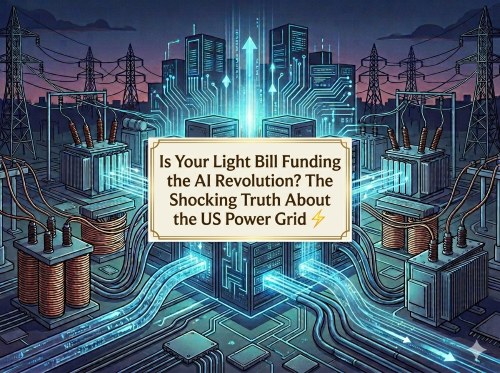
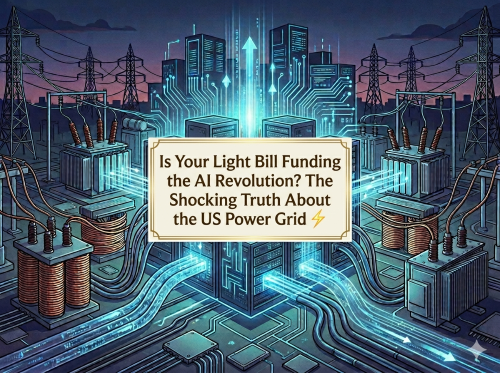
Ever looked at your electricity bill lately and wondered why it’s creeping up faster than a spider on a hot wall? You’re not alone. While most of us are trying to remember to turn off the kitchen light, there’s a massive, silent transition happening behind the scenes that’s putting the entire American power grid on the brink of a blackout.
In a recent deep dive by Coin Bureau Finance, the curtain is pulled back on why our energy system is struggling to keep up and, more importantly, who is actually picking up the tab for the massive technological boom we’re living through.
We all love the convenience of AI, from chatbots to image generators. But here’s the kicker: these "hyperscale" data centers require an astronomical amount of energy. To give you an idea of the scale, we’re looking at the largest expansion in power demand since the end of World War II. It’s like plugging 180 million new homes into a system that was largely built in the 1950s and 60s.
The problem isn't just that we're using more power; it's that we're using it on infrastructure that was only designed to last 40 to 60 years. Over half of our distribution transformers are already past their prime, and the supply chain to replace them is, frankly, a mess.
This is where it gets frustrating. You might think the trillion-dollar tech companies building these data centers are paying for the grid upgrades they require. Think again.
Through a process of "socializing the costs," many of these multi-billion dollar infrastructure upgrades are being tucked into the routine utility filings of regular people. While tech giants get the "pinky swear" ratepayer protection pledges, retirees and average families are seeing their monthly statements double to subsidize data centers they’ll never even see.
It's not just local demand causing the spike. Global events, like the conflicts in the Middle East, have sent natural gas and shipping insurance prices through the roof. Since natural gas generates a huge chunk of US electricity, any hiccup in the global market translates directly to your monthly bill.
Even when things calm down, the "tail risk" insurance premiums often stay high, keeping the cost of energy elevated for years to come.
While consumer-facing utilities are feeling the heat, the "smart money" is looking at the "picks and shovels" of the energy world—the companies actually building the turbines, transformers, and transmission lines.
Investors are shifting focus toward the infrastructure players who provide the backbone of the grid. These companies are sitting on massive backlogs because the demand for new equipment is so high.
The era of cheap, abundant American electricity might be behind us. We’re entering a time where the grid is being pushed to its absolute limit. Whether Washington will step in to make sure data centers pay their fair share, or if households will continue to subsidize the AI revolution, remains the multi-trillion dollar question.
One thing is for sure: the next time you open your utility bill, remember that there’s a lot more than just your lightbulbs being powered by that payment.
Source 👉 https://www.youtube.com/watch?v=q0nS2JoSK-g
Video - Is America’s Grid One Step From Blackout?
Disclaimer: This article is provided for informational purposes only, mistakes may be made, and it's not offered or intended to be used as legal, tax, investment, financial, or any other advice.