x




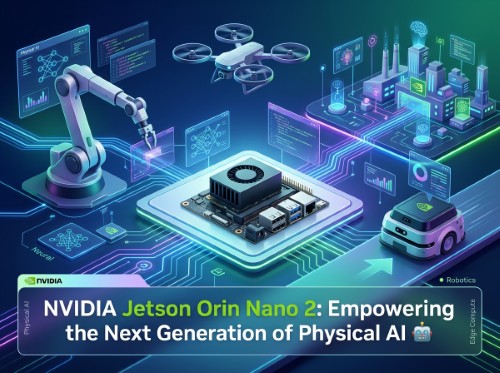
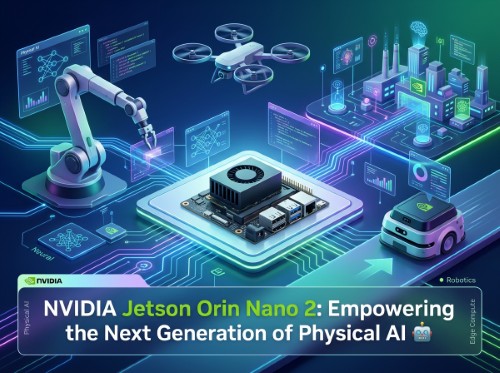
Artificial intelligence is undergoing a profound transformation. While recent years have been defined by massive, cloud-bound data centres processing vast amounts of information, the next frontier belongs to Physical AI—intelligent systems capable of perceiving, reasoning, and acting within the real world in real time.
At the forefront of this shift is NVIDIA's launch of the Jetson Orin Nano 2, an entry-level edge computing platform designed to bring advanced generative AI out of distant servers and directly onto autonomous drones, mobile robots, and vision systems.
Historically, deploying high-level artificial intelligence onto compact devices meant accepting severe compromises. Developers either had to strip down models until they lost utility or rely on continuous cloud connectivity—introducing latency, security risks, and bandwidth bottlenecks.
The launch of the Jetson Orin Nano 2 leverages a major industry breakthrough: small and medium-sized AI models have advanced so rapidly that they now match the accuracy and capabilities of last year's massive frontier models. By running these optimised models directly on edge hardware, machines can understand natural language, interpret complex visual environments, and execute split-second operational decisions locally.
Built to deliver high performance without straining power budgets or balance sheets, the Jetson Orin Nano 2 packs impressive capabilities into a compact footprint:
Compared to its predecessor, the Jetson Orin Nano Super, the new board achieves twice the AI inference performance. NVIDIA accomplished this leap by integrating upgraded Tensor Cores and increasing memory bandwidth while maintaining the original small form factor.
Energy efficiency is equally critical for battery-operated machinery. Operating in its 15-watt mode, the Jetson Orin Nano 2 matches the performance of the Jetson Orin Nano Super while consuming 40 per cent less power, directly translating to longer flight times for delivery drones and extended operating shifts for autonomous robots.
Hardware power is only effective when paired with versatile software. The Jetson Orin Nano 2 operates on NVIDIA’s open software stack, supported by Jetson agent skills and a global developer ecosystem.
The board is engineered specifically to run memory-efficient Large Language Models (LLMs) and Vision Language Models (VLMs) directly at the edge. Developers are not restricted to proprietary tools; they can deploy a variety of leading open-weight models, including:
This multi-model flexibility enables edge devices to move beyond static, pre-programmed routines, allowing for contextual understanding, conversational interaction, and dynamic adaptation in unpredictable environments.
Leading technology pioneers are already incorporating the Jetson Orin Nano 2 into their commercial roadmaps to push the boundaries of physical AI.
Safer, Faster Drone Delivery with Wing
Wing, the drone delivery subsidiary of Alphabet, relies heavily on edge processing across its fleet. Navigating residential airspaces requires immediate environmental perception to spot obstacles and determine safe landing spots. By evaluating the Jetson Orin Nano 2, Wing aims to enhance flight responsiveness and energy efficiency, paving the way for faster, safer home deliveries.
Conversational Home Robotics with Matic
Consumer robotics firm Matic Robots is utilising the board to power its next-generation home cleaning systems. Instead of basic collision sensors, Matic’s platform leverages the board's compute power for gesture recognition, natural language communication, dynamic mapping, and semantic object recognition—enabling the robot to understand clutter and clean intelligently around changing household layouts.
Industrial Automation
Industrial machine vision leader Cognex and heavy equipment manufacturer Doosan Bobcat are also testing the hardware to integrate real-time spatial awareness and vision AI into smart factories, construction sites, and agricultural machinery.
To help companies bring physical AI products to market quickly, NVIDIA has partnered with an extensive list of hardware manufacturers and system integrators.
Manufacturers such as AAEON, ADLINK, Advantech, Aetina, and Seeed Studio are producing dedicated carrier boards and ruggedised enclosures. Simultaneously, companies like Connect Tech, RidgeRun, Antmicro, and AVerMedia are offering custom software integration, reference designs, and technical support to streamline development timelines.
The launch of the Jetson Orin Nano 2 represents a milestone in the miniaturisation of artificial intelligence. By bringing data-centre-grade reasoning capabilities into a power-efficient, entry-level board, NVIDIA is making physical AI accessible to millions of developers worldwide. As hardware and small language models continue to converge, the era of truly autonomous, interactive physical machines has officially arrived.
Disclaimer: This article is provided for informational purposes only, mistakes may be made, and it's not offered or intended to be used as legal, tax, investment, financial, or any other advice.