x




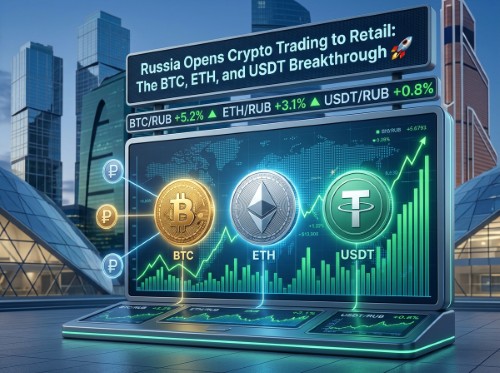
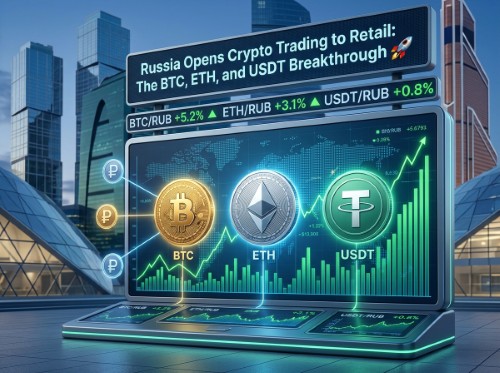
The Russian financial system is undergoing a major shift in its approach towards digital assets. For years, the Bank of Russia maintained a cautious, highly restrictive stance regarding digital currencies. However, a draft directive published by the central bank signals a dramatic transition: ordinary, non-qualified investors are set to gain legal access to cryptocurrency trading on public exchanges through regulated brokers and managers.
This regulatory framework represents a landmark effort to integrate digital assets into Russia's national financial framework while establishing strict consumer protection parameters. Yet, the doors are not opening wide for every digital token on the market. Instead, Russian authorities have drawn a sharp boundary, permitting public trading for only three specific assets while leaving prominent altcoins like XRP on the outside looking in.
Under the newly proposed directive, non-qualified retail investors will finally be able to purchase cryptocurrencies via regulated brokers, managers, and crypto exchanges. However, to guard against financial instability and retail speculation, the Bank of Russia has imposed a firm purchasing ceiling.
Retail market participants will be subject to an annual limit of 300,000 rubles (approximately £2,500 to £3,000 depending on exchange rates) per intermediary. This ceiling ensures that casual traders can gain exposure to digital markets without over-leveraging their personal finances.
Moreover, entry into the market is not automatic. To protect retail participants from market volatility and complex financial mechanics, the central bank is making risk testing mandatory. Before executing any trades, all investors—regardless of their wealth or trading volume—must pass a formal assessment test to demonstrate their understanding of digital asset risks.
The central bank's directive establishes a strict vetting framework for tokens permitted on public trading platforms. Under the newly enacted federal digital currency laws, assets must satisfy rigorous benchmarks to achieve clearance, including:
Based on these stringent criteria, only three digital assets have cleared the central bank’s initial liquidity bar: Bitcoin (BTC), Ethereum (ETH), and Tether (USDT).
By approving Bitcoin and Ethereum, the Bank of Russia recognises the two cornerstone assets of the global crypto economy. The inclusion of Tether (USDT), the world’s largest dollar-pegged stablecoin, provides Russian market participants with a familiar vehicle for digital settlement and capital preservation during times of market turbulence.
One of the most notable outcomes of the draft directive is the omission of XRP. Created in 2012 by the founders of Ripple, XRP easily meets the formal age requirement and boasts one of the largest market capitalisations in the cryptocurrency sector. On paper, it fulfills all the quantitative criteria set by the Russian authorities.
However, analysts point to XRP's complex regulatory history as the primary catalyst for its exclusion. Ripple spent several years embroiled in high-profile legal proceedings with the United States Securities and Exchange Commission (SEC). Although the litigation was ultimately settled, the dispute led to temporary delistings from numerous major global exchanges, disrupting the asset's continuous trading record and creating regulatory uncertainties.
The Bank of Russia’s decision to exclude XRP reflects an abundance of caution, prioritising assets with uninterrupted global compliance and liquidity records to shield non-qualified investors from unexpected legal or structural shifts.
While retail traders must navigate strict annual caps and a restricted token selection, qualified investors—Russia’s accredited, high-net-worth tier—will operate under a fundamentally different set of rules.
Wealthier investors will enjoy unrestricted access to all digital currencies traded across exchange platforms and over-the-counter (OTC) markets. They will not be constrained by the 300,000 ruble annual ceiling, nor will they be limited to the three approved tokens. This two-tiered structure aligns with global wealth management practices, allowing sophisticated capital to manage higher-risk instruments while erecting safeguards around retail wealth.
Nevertheless, qualified investors are not entirely exempt from oversight; they too must undergo compulsory risk testing and acknowledge the volatile nature of crypto-assets before placing orders.
This major policy pivot arrives amidst broader regulatory developments across Eurasia. While the Bank of Russia moves to integrate stablecoins like USDT into its domestic frameworks, global scrutiny around stablecoin transactions remains heightened, particularly concerning international sanctions compliance and capital movements.
The draft directive, bearing the signature of Central Bank Governor Elvira Nabiullina, represents a strategic compromise between financial modernisers and risk-averse monetary authorities. Public consultation on the proposal remains open until 24 August, with the directive set to take official effect 10 days after formal publication.
As Russia prepares to formalise these rules, the global crypto market will be watching closely to see how retail participation unfolds and whether other major altcoins might eventually meet the central bank's stringent standards.
Disclaimer: This article is provided for informational purposes only, mistakes may be made, and it's not offered or intended to be used as legal, tax, investment, financial, or any other advice.