x




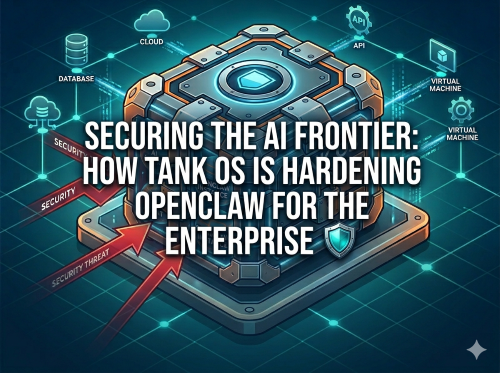
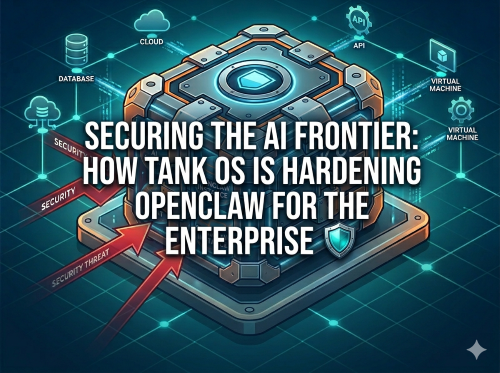
The rapid ascent of agentic AI has brought us to a digital crossroads. While tools like OpenClaw have revolutionized the way we deploy autonomous agents to handle complex tasks, they have also opened new, often overlooked, backdoors into enterprise infrastructure. As AI agents gain more autonomy, handling everything from email management to code execution, the risk of a single vulnerability compromising an entire network grows exponentially.
Enter Tank OS, a groundbreaking open-source project designed to turn the "open door" of AI agents into a fortified vault. Developed by Sally O’Malley, a Red Hat principal software engineer and OpenClaw maintainer, Tank OS provides the enterprise-grade safety layer that the original project was missing.
The excitement surrounding OpenClaw has often outpaced the security protocols required to run it safely in a corporate environment. Recent security audits have highlighted a startling reality: 12% to 20% of ClawHub add-ons have been flagged as malicious.
The stakes were further underscored by the disclosure of CVE-2026-25253, a critical vulnerability with a severity rating of 8.8. This "one-click" attack allowed hackers to gain full control of a user’s computer simply by having the victim visit a malicious webpage while OpenClaw was active. With over 17,500 instances exposed prior to the patch, the industry received a loud wake-up call: AI agents need a sandbox, and they need it now.
Tank OS addresses these vulnerabilities by packaging OpenClaw as a bootable system image. Instead of a standard software installation that shares resources with the host machine, Tank OS creates a self-contained environment that can be deployed across cloud servers, virtual machines, or physical hardware.
Sally O’Malley’s contribution is more than just a weekend project; it represents the "enterprise hardening" necessary for the next phase of the AI revolution. As we move toward a world where millions of autonomous agents interact with one another, the ability to scale safely is paramount.
"How it's going to look scaled out when there are millions of these autonomous agents talking to one another," O'Malley noted in a recent interview, highlighting the importance of building security into the foundation rather than treating it as an afterthought.
While Tank OS is primarily aimed at Red Hat’s enterprise customers, the philosophy behind it—isolation, zero-trust, and immutability—is advice that even home users should heed as they integrate AI into their daily digital lives.
In the "Wild West" of AI agent deployment, Tank OS provides the badge and the jail cell needed to keep the peace. By isolating agents and their credentials, O’Malley has provided a blueprint for how companies can embrace the power of OpenClaw without inviting disaster.
For those looking to secure their AI workflows, the repository is currently available for exploration and deployment.
For more detailed information, read this article on Decrypt:
👉 OpenClaw Insider Builds the Enterprise Safety Layer the Project Never Shipped
Disclaimer: This article is provided for informational purposes only, mistakes may be made, and it's not offered or intended to be used as legal, tax, investment, financial, or any other advice.