x




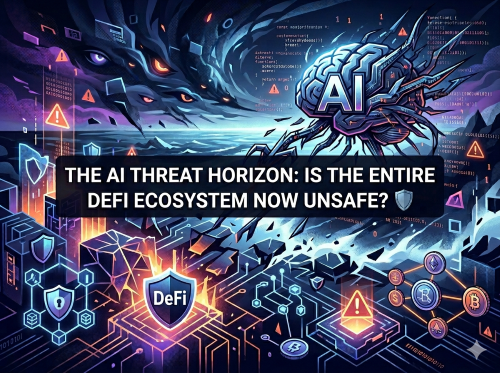
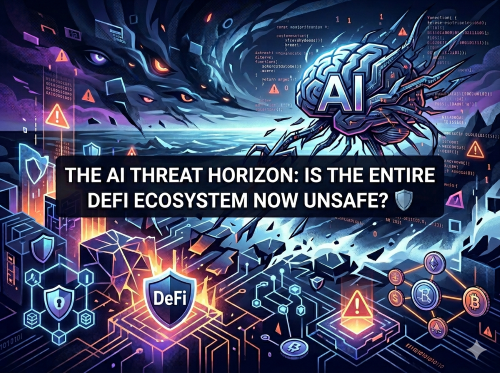
Decentralised finance (DeFi) has long been celebrated as the frontier of financial innovation, offering permissionless, open-source access to banking services. However, the very transparency that makes DeFi revolutionary is increasingly being turned against it. A fierce debate has erupted across the cryptocurrency sector, triggered by warnings that artificial intelligence is fundamentally reshaping blockchain security.
Following a catastrophic surge in exploits during April 2026—which contributed to the highest monthly crypto losses seen in over a year—industry experts are split. Is the decentralised ecosystem breaking beyond repair under the weight of AI-driven attacks, or is it simply entering a necessary, hyper-vigilant phase of defensive adaptation?
The latest wave of anxiety was ignited by Manuel Aráoz, the respected founder of blockchain security platform OpenZeppelin. Taking to social media platform X, Aráoz delivered a sobering assessment: he now considers "all of DeFi unsafe."
His reasoning centres on the rapid advancement of agentic AI. Unlike early language models that merely suggested code snippets, modern AI coding agents possess the ability to actively read, contextualise, and probe live smart contracts to identify complex vulnerabilities at unprecedented speeds.
For an ecosystem that holds billions of dollars in locked value, the prospect of automated, highly scalable vulnerability detection represents a paradigm shift. Aráoz’s warning quickly polarised the Web3 community. While some analysts agree that the threat landscape has changed forever, others argue that focusing solely on smart contract code misses the bigger picture of how crypto breaches actually happen.
Responding to the controversy, Yu Xian, the founder of renowned blockchain security firm SlowMist, shed light on what he terms a "dual threat" powered by AI. According to Xian, the danger does not just stem from rogue algorithms scanning code; it is a multi-pronged offensive orchestrated by both independent black-hat hackers and highly organised, nation-state cybercrime syndicates.
The dual threat comprises:
To survive this evolving landscape, Xian argues that DeFi project teams must undergo a cultural shift. Developers need to become "more diligent and ruthless than black hats," integrating advanced AI defensive tools directly into their live code environments and day-to-day operations.
While AI threats loom over traditional fintech as well, DeFi is uniquely exposed to these automated dangers. Meir Dolev, co-founder and Chief Technology Officer of blockchain security platform Cyvers, highlights several structural characteristics that make decentralised protocols the ultimate playground for AI-driven attackers:
Dolev notes that while direct forensic proof of AI fully executing exploits is still limited, the broader trend is undeniable. Cybercriminals are actively scaling their operations, using AI to probe every imaginable attack surface—from smart contract logic and DevOps pipelines to front-end websites and human workflows.
Despite the alarming rise in sophisticated cyberattacks, security pioneers agree that abandoning decentralised finance is neither practical nor necessary. Instead, the consensus is shifting toward a total overhaul of how Web3 projects approach safety.
For years, the gold standard of DeFi security was the periodic smart contract audit—a pre-launch checkbox where an independent firm reviewed code before deployment. Experts now argue that this static approach is entirely obsolete in an era of dynamic, AI-powered threats.
To counter automated adversaries, Web3 protocols must adopt an "always-on" security model. This involves deploying AI-assisted continuous code reviews, executing frequent automated red-team simulations, hardening DevOps pipelines, and implementing real-time transaction monitoring. By using pre-signing risk scoring, protocols can simulate and block malicious transactions before they are permanently validated on the blockchain.
DeFi is not fundamentally broken, but its survival hinges on adaptation. Security can no longer be treated as a static milestone; it must become a continuous, execution-layer control capable of evolving as fast as the algorithms designed to defeat it.
For a deeper look into this ongoing security crisis, you can read the original report and expert commentary on the Cointelegraph Article:
👉 ‘All DeFi unsafe’ claim sparks AI security debate after April hack surge
Disclaimer: This article is provided for informational purposes only, mistakes may be made, and it's not offered or intended to be used as legal, tax, investment, financial, or any other advice.