x




A profound structural transformation is reshaping the precious metals industry. For decades, paper derivative markets in London and New York dictated the price of gold and silver. However, a seismic shift is underway—one driven by sovereign central bank accumulation, institutional arbitrage between East and West, and a fundamental decoupling of gold from traditional debt assets.
In episode 289 of Live from the Vault, precious metals expert and whistle-blower Andrew Maguire broke down the emerging dynamics driving this new regime. From a high-stakes clash between institutional market titans to the rapid drain of physical bullion from Western vaults into Eastern delivery networks, the mechanics of price discovery are altering permanently.
For decades, mainstream financial models relied on a predictable relationship: rising US real Treasury yields meant falling gold prices. Because physical gold pays no yield, higher real interest rates increased the opportunity cost of holding metal.
That historical correlation has now completely broken down. Despite US real yields remaining at restrictive multi-year highs, physical gold has consistently advanced, establishing a clear bullish divergence.
This decoupling marks a permanent structural regime change. Rather than behaving purely as an inflation hedge or reacting mechanically to real yields, gold is now actively repricing the systemic risks embedded in sovereign debt. Following the Basel III reclassification of gold as a Tier 1 zero-risk asset and the increasing weaponisation of fiat reserve currencies, global institutions are rotating out of debt-laden sovereign bonds and into unencumbered physical bullion.
As a result, gold’s relationship with real yields has become asymmetric: higher real yields generate only brief, synthetic pullbacks, whereas any future drop in yields threatens to trigger an explosive rally higher.
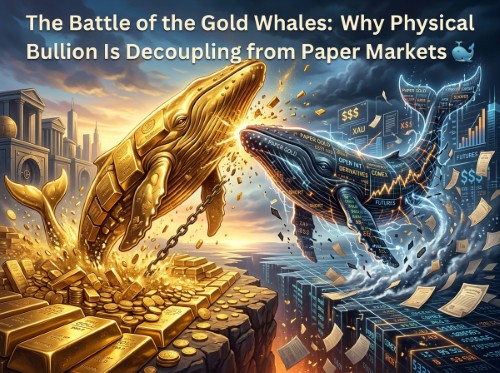
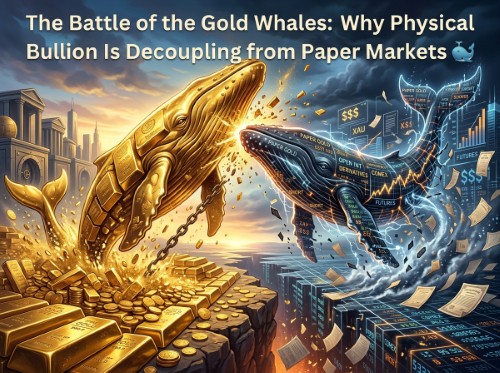
One of the most compelling revelations in the market is the developing friction between two massive legacy market participants: JPMorgan and Jane Street.
Historically, concentrated institutional desks shared a somewhat symbiotic presence in paper derivative markets. However, market intelligence highlights growing tension as Jane Street has expanded its footprint into Treasury market-making and options positioning—directly encroaching on JPMorgan’s core primary dealer domain.
In response, JPMorgan appears to be actively defending its franchise while leveraging its strategic integration into physical gold delivery networks. This rift carries massive implications for precious metals pricing:
While Western derivative exchanges attempt to paint technical chart patterns, physical market reality is being dictated by the East. The launch of direct physical delivery rails between Hong Kong and the Shanghai Gold Exchange (SGE) has established an alternative, deliverable price benchmark.
Contracts backed by physical delivery (such as Hong Kong’s H-AU contract) regularly command substantial premiums over London spot prices. This price disparity creates a powerful arbitrage mechanism:
Short-term volatility continues to confuse retail traders, but a look beneath the surface reveals a clear pattern. Financial institutions periodically engineer paper-driven sell-offs—often around non-farm payroll releases or by pushing prices below key moving averages—to trigger automated stop-losses on leveraged retail long positions.
However, these speculative rinses no longer trigger sustained downtrends. Instead, every synthetic dip is immediately met by aggressive, unleveraged buying from central banks, sovereign wealth funds, and institutional stackers.
Official figures show central banks continuing multi-month buying streaks, with the People's Bank of China routinely adding to its declared reserves alongside estimated unreported holdings that reach tens of thousands of tonnes. Paper liquidations merely transfer contracts from weak, leveraged hands into strong, unleveraged physical holders, creating a progressively higher price floor after every wash.
With speculative froth repeatedly cleared from the market and underlying physical demand continuing to outstrip available supply, long-term price projections remain firmly intact.
The rationale supporting a year-end target near $8,000 per ounce for gold, alongside silver targets between $100 and $140 per ounce, is anchored in physical supply and demand realities rather than speculative mania:
The overarching message for bullion stackers and long-term investors is simple: physical location, direct custody, and unencumbered ownership matter more than ever. Synthetic paper claims, unallocated bank accounts, and leveraged derivative products carry expanding counterparty risks in a fragmenting global financial system.
As physical price discovery in Asia steadily overrides legacy Western paper markets, pullbacks offer tactical opportunities to exchange fiat currency for finite, safe-haven physical metal before the broader paper debt bubble rebalances.
The Battle of the Gold Whales - Live From The Vault - Episode: 289
"In this week's Live from the Vault, Andrew Maguire reaffirms his $8,000 year-end gold target and reveals what he sees as a developing paper versus physical battle between trading titans JP Morgan and Jane Street.
The precious metals expert explores how JP Morgan has rotated into SGE-aligned physical metal, while outlining why he believes Jane Street is using short calls to cap the gold price, leaving it exposed to a self-reinforcing short squeeze."
Timestamps:
00:00 Start
02:52 Stepping back from the noise: the bigger picture
10:46 Charts: gold's historic decoupling from real yields
17:02 Inside the Commitment of Traders report: what the specs got wrong
25:05 The JP Morgan vs. Jane Street derivatives battle
33:56 Silver's breakpoint: the level that could trigger a squeeze
40:30 Hong Kong's gold gateway pulls bullion east
44:05 What the setup means heading into Q4
Source 👉 https://www.youtube.com/watch?v=rQssM74NUrw
Disclaimer: This article is provided for informational purposes only, mistakes may be made, and it's not offered or intended to be used as legal, tax, investment, financial, or any other advice.