x




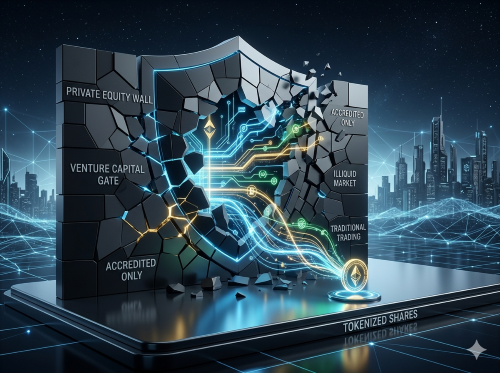
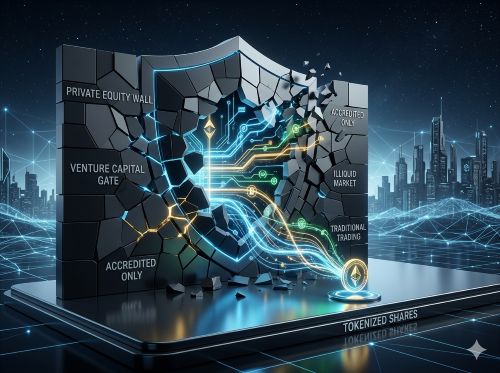
Imagine being able to buy a piece of SpaceX, OpenAI, or Anthropic right now, from your crypto wallet, without waiting for an official stock market debut. For years, these private tech giants have been hidden behind institutional walls, accessible only to elite venture capitalists and accredited investors with hundreds of thousands of pounds to spare.
On-chain tokenization is tearing down those walls, allowing retail investors a shot at the astronomical returns traditionally locked away in private markets. However, a closer look beneath the surface reveals a stark reality. Many investors do not actually understand what they are buying, and a dangerous combination of regulatory hurdles, illiquidity, and structural illusions could turn this financial revolution into a trap.
To understand the sudden boom in tokenized private equity, it is essential to look at how modern markets have shifted. The global private market is immense, managing between £10 trillion and £13 trillion in assets, with projections suggesting it could double by the end of the decade.
Concurrently, the public stock market is shrinking. The number of listed companies in the US has fallen dramatically over the past two decades, and the window for traditional Initial Public Offerings (IPOs) has largely closed. Companies are staying private much longer, capturing the bulk of their exponential growth phase away from public exchanges. Early backers of companies like Stripe or OpenAI have enjoyed historic returns, whilst ordinary retail investors have been systemically excluded by strict financial regulations and steep investment minimums.
Blockchain technology aims to disrupt this hierarchy, but the financial instruments currently being offered to the public are rarely what they appear to be.
The tokenized private equity sector is currently split into two distinct models, and understanding the difference is vital before risking any capital.
The SPV-Backed Model
In this setup, a platform establishes a Special Purpose Vehicle (SPV), typically based in an offshore jurisdiction like the Cayman Islands. This entity purchases actual private shares on secondary markets and then mints tokens on a one-to-one basis to represent a beneficial interest in those shares. When you purchase the token, you own a fractional economic claim on the SPV, which holds the underlying stock.
The Synthetic Model
This approach dispenses with the underlying asset altogether. Instead of holding real shares, the issuing platform provides a contractual note that tracks the price of the private company using secondary market data feeds. You are not purchasing equity; you are purchasing a promise of a future payout from the platform itself, based on a locked reference price.
Both models offer exposure, but neither grants you actual ownership in the traditional sense.
The prominent marketing surrounding these tokens promises "democratised access," but the fine print reveals a significant loss of rights. If you hold a tokenized startup share, you are not a shareholder on the company's official cap table. You receive no voting rights, no dividend payouts, no investor updates, and no audited financial reports. Crucially, you also lack anti-dilution protections, meaning your financial exposure can be quietly diminished during subsequent private funding rounds.
Beyond the lack of corporate rights lies an even greater threat: the liquidity trap. Private company shares do not trade on a continuous, real-time order book like public equities. Valuations are derived from sporadic transactions on private secondary markets. This inherent lack of depth creates severe oracle staleness, leaving on-chain tokens highly vulnerable to violent price corrections when market conditions shift.
We have already seen the danger of this structural weakness. When major AI firms issued warnings stating that unauthorised equity transfers through tokenized instruments were legally void, corresponding pre-stock tokens collapsed by nearly 50 per cent within 24 hours. Investors who rushed to exit quickly discovered that the decentralized liquidity pools were virtually empty, leaving them unable to cash out.
Furthermore, almost all private companies maintain strict "right of first refusal" clauses in their shareholder agreements. This gives them the legal authority to void SPV transfers at will, potentially rendering an investor's tokens worthless with a single corporate decision.
The infrastructure supporting this market is also facing a tightening regulatory landscape. Regulatory bodies globally are increasingly unified in their stance: tokenizing an asset does not alter its fundamental legal status. If a token mirrors a security, it will be regulated as one.
Whilst some jurisdictions are exploring temporary innovation exemptions with strict volume limits, regulatory enforcement is looming. In the European Union, comprehensive frameworks have allowed platforms to offer private market exposure across dozens of countries, yet central banks are already questioning whether these products are genuine shares or merely complex derivatives in disguise. The current market thrives on jurisdictional arbitrage, utilising complex offshore structures, but this legal window could shut abruptly if major regulators decide to intervene.
Despite the substantial risks, the underlying economic case for tokenization remains incredibly powerful. The ability to trade historically illiquid assets 24/7, with minimal entry requirements, represents a massive paradigm shift. Major institutional players are already building the foundational plumbing, with massive tokenized asset funds expanding and key settlement institutions launching pilots for tokenized traditional assets.
The true test for this nascent sector is fast approaching. With major private enterprises filing confidential documentation for public listings, the market is moving toward its first major settlement events. How these tokenized instruments handle actual corporate liquidity events will determine the long-term credibility of the entire narrative. If payouts and cash settlements clear smoothly, a wave of retail capital is likely to follow. If they fail, the sector faces a severe crisis of confidence.
For now, tokenized private equity remains a compelling but highly speculative frontier. Investors should treat these assets as volatile, synthetic derivatives rather than secure stock certificates, manage their position sizes with extreme caution, and always remember the vital distinction between market exposure and true legal ownership.
Coin Bureau - The Dark Side of Tokenized Startup Shares
"The boom in tokenized pre-IPO markets means you can now get on-chain exposure to private giants like SpaceX, OpenAI, and Stripe years before they list. But it’s not real equity. These tokens are risky wrappers that can swing 40% or more in a day.
See how the SPV-backed and synthetic models work, what you actually buy, and why the real risk might be the lack of liquidity and control. Watch before you jump in."
~ TIMESTAMPS ~
0:00 – How to Buy SpaceX and OpenAI Before the IPO
1:48 – Private vs. Public Markets: Why the Gap is Growing
4:13 – SPV-Backed vs. Synthetic: Two Ways to Tokenize Equity
6:30 – A Deep Dive into Buying Tokenized SpaceX Shares
8:55 – The Liquidity Trap: Hidden Risks of Pre-IPO Tokens
10:40 – The Ownership Illusion: Why You Aren't a Shareholder
11:50 – New SEC Regulations for Tokenized Securities
14:03 – The 100x Growth Potential for Tokenized Private Assets
15:43 – The SpaceX IPO: A Massive Test for Pre-IPO Crypto
Source 👉 https://www.youtube.com/watch?v=eiso4UTsyKM
Disclaimer: This article is provided for informational purposes only, mistakes may be made, and it's not offered or intended to be used as legal, tax, investment, financial, or any other advice.