x




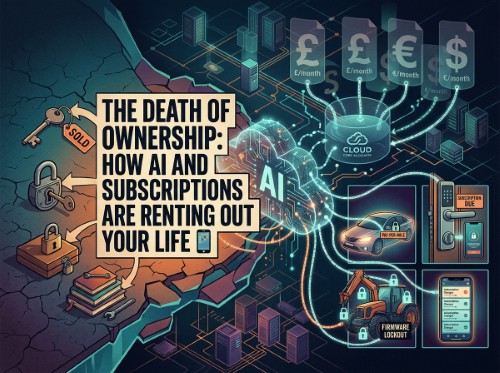
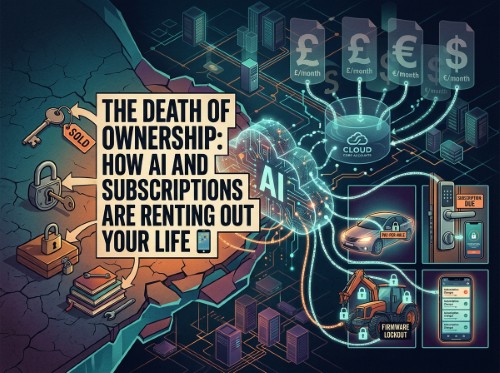
For generations, the financial foundation of the middle-class household relied on a simple premise: when you bought an item outright, it was yours. Whether it was a car, a lawnmower, a set of power tools, or a boxed software suite, the item depreciated in cash value, but it kept working without sending you a monthly bill. You owned it, and that ownership created long-term stability.
Today, that foundation is quietly being dismantled. Corporate business models have shifted from selling products to selling permissions. Through cloud updates, artificial intelligence integration, and hardware lockouts, big tech and manufacturers are turning physical possessions into perpetual subscriptions. You pay the full sticker price at purchase, but the company retains the master key—and the right to charge you month after month just to keep your own belongings working.
The transition from physical ownership to perpetual rental did not happen overnight. It began with consumable models—selling hardware like printers at cost and recovering profit on supplies like ink. However, tech companies have taken this logic several steps further by embedding internet connectivity into basic physical goods, creating the ability to remotely disable products whenever it suits their balance sheets.
Consider what happened to Spotify’s "Car Thing", a dedicated hardware accessory designed to control streaming music in automobiles. When Spotify decided to discontinue support, it did not simply stop updating the software—it permanently deactivated the devices, turning functional hardware that consumers had purchased outright into instant electronic waste.
Even more concerning is when this remote architecture affects essential living spaces. In smart housing developments, payment disputes between manufacturers and distributors have resulted in residents being locked out of their own front doors when app authentication servers were abruptly severed. Elsewhere, landlords are mandating connected smart locks and environmental sensors as lease requirements, giving property managers remote control over tenant access. When a company thousands of miles away retains the ability to disable your front door lock or your car controls, true ownership ceases to exist.
Another aggressive tactic in the subscription economy is selling a complete piece of physical machinery, only to lock pre-installed components behind digital paywalls. Automobile manufacturers have led the charge in this arena:
Alongside hardware paywalls sits the war on self-repair. For decades, home owners and farmers took for granted the ability to service their own machinery. In recent years, companies like John Deere implemented software locks that prevented farmers from repairing their own tractors without proprietary dealer code. It took extensive class-action litigation and regulatory intervention from competition authorities to secure binding agreements that restored basic repair access to equipment owners.
Similarly, printer manufacturers have rolled out dynamic security firmware updates designed specifically to identify and block third-party ink cartridges. Despite heavy regulatory fines across Europe and ongoing consumer lawsuits, millions of hardware units remain locked into manufacturer-sanctioned ecosystems.
Why is this subscription push accelerating so rapidly right now? The answer lies in the massive capital expenditure surrounding artificial intelligence.
The major cloud giants and tech conglomerates are spending hundreds of billions of pounds on data centre expansion, high-performance GPUs, and energy infrastructure to power generative AI. A vast portion of this funding relies on off-balance-sheet commitments and extended debt financing—financing built on computing hardware that depreciates at a staggering pace.
To service these astronomical commitments, technology companies must generate consistent, recurring revenues from end users. Because artificial intelligence models run on external cloud servers rather than your local device, products are systematically being redesigned as "thin clients."
This transition allows vendors to justify continuous price increases:
The economic pressure of the subscription model does not operate in a vacuum—it coincides with structural shifts in the labour market. Recent economic analyses of workforce data indicate that entry-level employment in roles heavily exposed to artificial intelligence automation has contracted compared to unexposed fields. Younger workers entering the job market face stiffer competition and reduced early-career earning potential.
As entry-level incomes stall, recurring subscription overheads across software, personal electronics, entertainment, and transportation consume a larger fraction of monthly earnings. This leaves significantly less capital available to save, invest, or build real equity.
This pattern reaches its ultimate expression in the housing market:
When you combine landlord-controlled smart doors, corporate-owned housing developments, paywalled vehicles, and cloud-dependent appliances, a distinct pattern emerges. Wealth concentrates with the entities that own the computing power, algorithms, and real estate, while ordinary citizens are funnelled into a permanent renter class.
The erosion of ownership is rarely presented as a loss. It is routinely marketed under the banner of convenience, seamless cloud updates, and lower upfront costs. However, when buying no longer means owning, consumers lose both financial resilience and personal autonomy. Protecting the right to own, the right to repair, and the right to run hardware offline remains one of the most vital consumer rights battles of the digital age.
Finance Bureau - AI Is Turning EVERYTHING You Own Into a Subscription
"Big Tech’s AI boom means hardware and software you ‘own’ may stop working unless you keep paying. From printers to smart locks and car features, companies are turning ownership into endless monthly bills.
Find out how remote-only access, shadow borrowing, and AI-connected devices could make tomorrow’s middle class a permanent renter class. The most ordinary purchases may soon be on a subscription. Not because you want it, but because you have no choice."
~ TIMESTAMPS ~
0:00 – The Death of True Ownership
1:20 – The Remote Kill Switch Inside Your Products
4:44 – Paywalls For Features You Already Paid For
6:05 – Why Tech Companies Stop You From Fixing Your Own Gear
9:12 – The Hidden $3 Trillion AI Debt Bomb
12:02 – How Tech Giants Force AI Bills Onto Your Subscription
13:10 – The AI Threat to Young Workers' Careers
14:17 – The Rise of the Permanent Renter Class
Source 👉 https://www.youtube.com/watch?v=JZBnTqCO3Yk
Disclaimer: This article is provided for informational purposes only, mistakes may be made, and it's not offered or intended to be used as legal, tax, investment, financial, or any other advice.