x




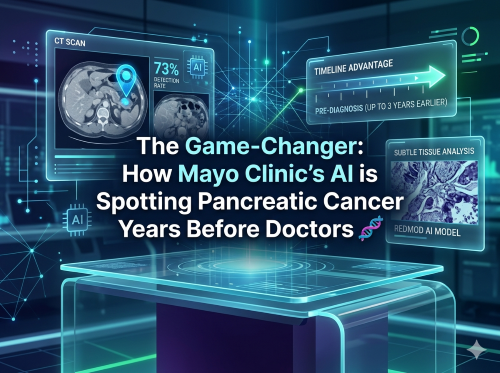
Let’s be real for a second - pancreatic cancer is one of those diagnoses that sends a shiver down anyone's spine. It’s notoriously sneaky, often staying hidden until it’s reached an advanced stage. But what if we had a "crystal ball" that could see what the human eye misses?
Well, the future is officially here. The folks over at the Mayo Clinic have developed an AI model that’s doing something pretty mind-blowing: it’s detecting pancreatic cancer up to three years before a human doctor can.
Here’s the deal: when you get a routine CT scan, radiologists look for clear signs of trouble. However, there are tiny, microscopic changes in tissue that are basically invisible to even the most experienced specialists.
That’s where REDMOD (the name of Mayo Clinic’s AI model) comes in. This AI doesn't get tired, it doesn't have "off days," and it can spot patterns in imaging that humans simply aren't wired to see. In a recent study, researchers fed the AI nearly 2,000 CT scans that were originally labeled as "normal."
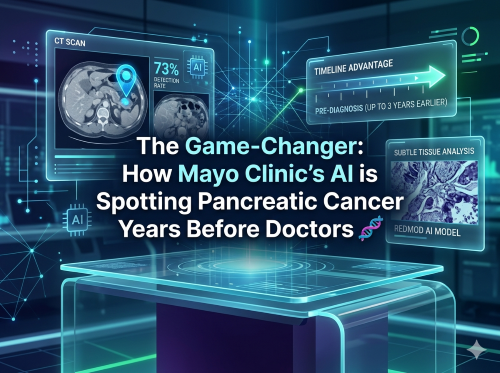
The results? REDMOD flagged pancreatic cancer with a 73% detection rate at a median of 16 months before a clinical diagnosis was ever made.
To give you an idea of how much of a leap this is, let’s look at the numbers. When specialists (the human pros) reviewed those same "normal" scans, they were able to spot potential issues about 39% of the time. While that’s still impressive, the AI’s 73% success rate is nearly double the human capability.
Imagine having an extra year or two to start treatment. In the world of oncology, that time isn’t just a "head start"—it’s a potential lifesaver.
You might be wondering, "Cool, but can I get this scan at my local clinic tomorrow?"
We’re getting there! The Mayo Clinic isn't just letting this tech sit in a lab. They’ve launched a new study called AI-PACED. This is a prospective clinical study where they are actually testing how doctors can use these AI insights in real-world patient care, specifically for people who are at a higher risk for the disease.
The goal is to move from "this works in a computer simulation" to "this is how we save lives in the hospital."
Pancreatic cancer has long been a "silent killer" because by the time symptoms show up, it’s often very late. By turning routine CT scans—the kind you might get for a completely unrelated stomach ache or injury—into a powerful screening tool, we’re looking at a massive shift in how we handle early detection.
AI isn't here to replace your doctor, but it’s becoming the ultimate sidekick. It’s like giving a radiologist a pair of X-ray goggles that can see into the future.
Stay tuned, because this is just the beginning of how AI is going to rewrite the rulebook on healthcare.
Want to dive deeper into the technical details? Check out the full story at Decrypt:
👉 Mayo Clinic Says AI Can Detect Pancreatic Cancer Years Before Human Doctors
Disclaimer: This article is provided for informational purposes only, mistakes may be made, and it's not offered or intended to be used as legal, tax, investment, financial, or any other advice.