x




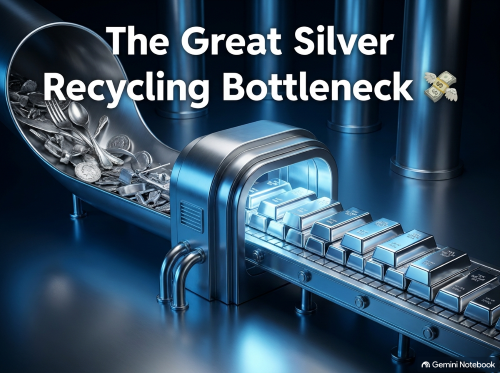
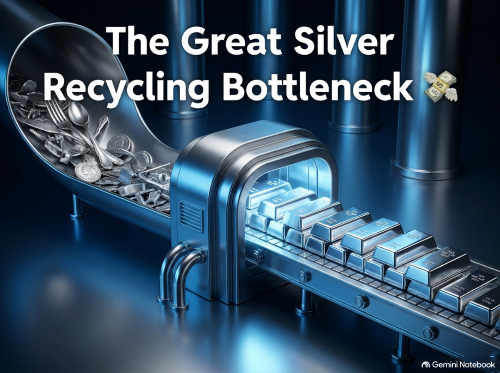
While financial headlines routinely focus on exchange vault inventories and primary mining production, secondary scrap flows form an essential pillar of global physical silver supply. From vintage silverware and estate jewellery to 90% silver coins and industrial offcuts, recycled metal normally acts as an immediate release valve when physical demand surges. Yet, across 2026, the secondary market has hit an unprecedented wall.
Far from being a smooth windfall for the recycling sector, recent metal market volatility has triggered a severe cash-flow squeeze for scrap aggregators, pawn operations, and local bullion dealers. Understanding why this secondary market bottleneck has occurred reveals a fascinating structural breakdown between paper pricing and physical liquidity.
At first glance, soaring or volatile precious metal prices ought to generate record profits for scrap aggregators. High prices encourage the public to liquidate unwanted silver items, sending a wave of raw material through recycling channels. However, the operational reality for aggregators is grounded in cash flow and turnaround times.
When a retail customer walks into a shop to sell silver, the aggregator pays cash on the spot. To lock in a profit and eliminate price risk, the aggregator must promptly hedge the transaction and send the scrap to a refinery for melting, assaying, and payout.
Under normal market conditions, this refining cycle takes a matter of days. In 2026, however, payout timelines from major refiners stretched to 10–15 days or longer. For an aggregator purchasing substantial volumes of street silver daily, a multi-week settlement delay ties up immense amounts of working capital.
Compounding this capital lock-up is market volatility. As highlighted in the October 2026 silver price outlook, sudden shifts in speculative positioning and macroeconomic expectations can cause sharp price drops within days. If an aggregator holds unrefined inventory without an affordable hedging mechanism, even a modest price pullback can wipe out their profit margins entirely.
The cash-flow crisis for recyclers has been further intensified by a dramatic spike in financing costs. Traditionally, refiners and large dealers use silver lease markets to borrow metal and hedge processing inventory at modest annual rates of 1% to 2%. Over recent months, silver lease rates exploded to extraordinary levels, occasionally topping 100% per annum.
At these rates, holding unrefined scrap in a processing queue becomes financially ruinous. Refiners can no longer afford to carry client material while it sits in backlog. Consequently, refineries have been forced to tighten payment terms, demand higher processing fees, or suspend buybacks of complex feedstock altogether.
Smaller aggregators, unable to finance their inventory afloat or absorb astronomical lease costs, have simply stopped buying lower-purity silver from the public.
Why have refineries allowed scrap backlogs to build up? The answer lies in operational triage.
Processing lower-purity retail scrap—such as sterling silver or jewellery—requires intensive chemical refining, primarily reliant on nitric acid. Global supply chain disruptions and export restrictions have created severe shortages of essential chemical reagents, raising refining overheads.
Faced with chemical scarcity and overwhelming industrial demand, refiners made a strategic pivot. They diverted available throughput towards processing clean mine doré and high-purity industrial scrap. These materials can be rapidly melted into Good Delivery bars required by high-tech manufacturers in solar energy, microelectronics, and AI hardware.
This operational shift has created what industry analysts term the Silver Liquidity Paradox of 2026. While demand for industrial-grade silver remains extraordinarily strong, consumer-grade scrap has become functionally illiquid. Local dealers are forced to quote buyback offers well below spot prices—or decline purchases entirely—because the bridge between raw scrap and pure bullion has broken down.
For aggregators and investors wondering when silver refineries will catch up, the resolution depends on three key developments: easing lease rates, the stabilisation of chemical reagent supply chains, and incremental refining capacity expansion.
Until refining queues clear and working capital can cycle freely, scrap aggregators must maintain strict capital discipline. Navigating this bottleneck requires working with well-capitalised refining partners and prioritising higher-grade material. While physical silver's long-term industrial fundamentals remain exceptionally robust, the current recycling squeeze serves as a stark reminder that liquidity is defined not just by price, but by the physical capacity to refine and settle metal.
Disclaimer: This article is provided for informational purposes only, mistakes may be made, and it's not offered or intended to be used as legal, tax, investment, financial, or any other advice.