x




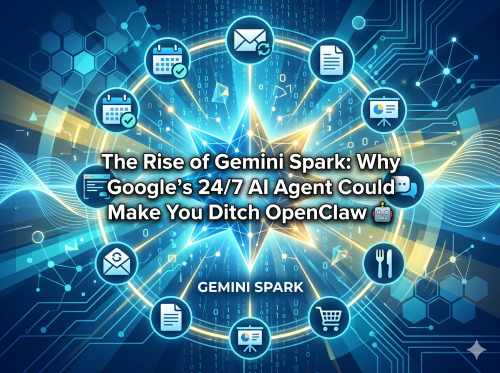
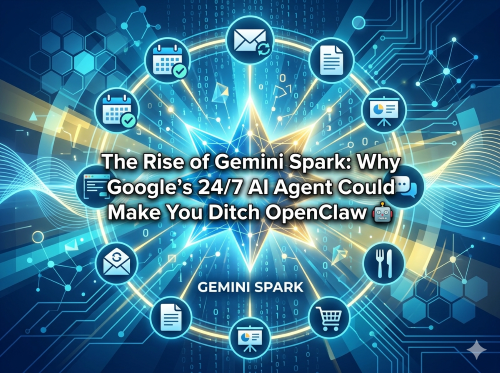
The tech world has just witnessed a massive shift. For the past year, AI enthusiasts and productivity hackers have been obsessed with building autonomous workflows. Open-source frameworks like OpenClaw and self-improving agents like Hermes have dominated GitHub, capturing the imagination of developers willing to spend hours tinkering with terminals and setting up local environments.
But at Google I/O 2026, tech giant Google decided to completely rewrite the rulebook.
Say hello to Gemini Spark, Google’s most ambitious AI feature to date. Moving far beyond the constraints of a traditional, passive chatbot, Spark is a fully autonomous, cloud-based personal agent powered by the brand-new Gemini 3.5 model. Operating 24/7 in the background, Spark is designed to manage your inbox, structure your calendar, and execute complex workflows without you ever needing to lift a finger—or even keep your laptop open.
With Google’s Gemini app boasting over 900 million monthly users, this launch is a clear sign that the era of the casual AI chatbox is officially over. The age of the proactive, ubiquitous AI assistant has arrived.
Until now, deploying a truly autonomous AI agent required technical know-how. Tools like OpenClaw have been incredibly powerful, but they often require your phone to be unlocked, your laptop to remain awake, or a complex local server setup to keep running.
Gemini Spark changes everything by living entirely in the cloud. Running on dedicated Google virtual machines, Spark is built on Google's sophisticated Antigravity harness—the exact same infrastructure the company relies on for its own internal automated workflows.
Because it is cloud-native, Spark never sleeps. It works around the clock, continuously processing information, flagging urgent matters that require your attention, and ticking off repetitive tasks while you are fast asleep or enjoying time away from your screen.
Out of the box, Gemini Spark seamlessly handles the tedious, everyday micro-tasks that consume hours of our weeks. Instead of waiting for a prompt, it proactively looks for ways to assist you.
Here are just a few workflows Spark can manage natively:
Furthermore, users are not restricted to rigid pre-set templates. Google allows you to teach Spark custom skills, effectively programming the agent with your unique preferences so it approaches specific professional and personal tasks exactly the way you want them done.
While native integration with Google Workspace (Gmail, Docs, Slides) is a massive advantage, Google knows that real productivity happens across multiple platforms.
To bridge this gap, Spark utilises the Model Context Protocol (MCP). From day one, it boasts connections to massive external platforms including Canva, OpenTable, and Instacart. This means Spark isn't just drafting an email about booking a table for an anniversary dinner or ordering groceries for the week; it can actually connect to those services and execute the actions for you.
And Google's roadmap for the rest of the year suggests this is only the beginning. Over the summer, the company plans to introduce:
The prospect of a 24/7 digital clone is incredibly exciting, but it does not come without risks. Keen developers who spotted references to the project (internally codenamed "Remy" or "Gemini Agent") in recent Android beta builds also uncovered an important disclaimer that Google has retained for the official launch.
The warning states that Spark "may do things like share your info or make purchases without asking." While Google assures users that Spark is hardwired to request explicit permission before executing high-stakes actions—such as moving large sums of money or sharing highly sensitive data—the company strongly advises users to supervise their agent. Striking the perfect balance between seamless autonomy and absolute digital security will undoubtedly be the biggest challenge for users adopting this new technology.
For months, the momentum behind AI agents was driven entirely by the open-source community. Self-improving agents went viral on GitHub because tech-savvy users wanted tools that could act, not just talk.
Gemini Spark is Google’s direct counter-offensive to the open-source movement. It offers a zero-setup, zero-terminal solution that requires absolutely no coding knowledge. By instantly making this technology accessible to nearly a billion existing users, Google has democratised autonomous AI overnight.
Trusted testers are getting hands-on access immediately. For power users in the US, Google is lowering the price of its Google AI Ultra subscription from $250 to $200 a month, with beta access rolling out next week.
Whether Gemini Spark will completely replace customisable tools like OpenClaw remains to be seen, but one thing is certain: the bar for what we expect from artificial intelligence has just been raised permanently.
For more insights, full release details, and breaking updates on this AI revolution, read the original report on Decrypt:
👉 Google Launches Gemini Spark: A 24/7 AI Agent That Wants to Make You Ditch OpenClaw
Disclaimer: This article is provided for informational purposes only, mistakes may be made, and it's not offered or intended to be used as legal, tax, investment, financial, or any other advice.