x





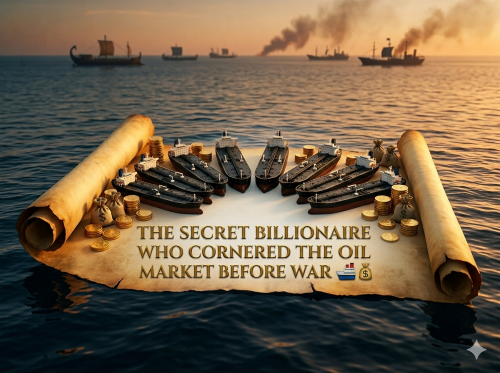
Ever wonder how the world’s most successful investors always seem to be one step ahead of a global crisis? While most people were winding down for the holidays back in December, a secretive Korean billionaire named Gahun Chung was busy doing something absolutely wild. He wasn't just buying stocks or real estate; he was quietly amassing a massive fleet of oil tankers—faster than anyone else could sell them.
It turns out, his timing was more than just "lucky." It was a masterclass in market preparation that turned his shipping company, Sinocore, into a multi-billion dollar empire right as the world fell into chaos.
Gahun Chung isn't a name you’d usually see in the headlines, but in the world of logistics, he’s a legend. Sinocore actually has deep roots, launching the first Korea-China container service way back in 1989. Chung spent decades building the relationships and the platform needed to pull off a move of this scale.
By early 2026, he had positioned himself perfectly. Through a series of aggressive purchases and charters, Sinocore controlled roughly 120 Very Large Crude Carriers (VLCCs). To give you some perspective, these are the giant workhorses of the ocean, each capable of hauling 2 million barrels of oil.
What makes this story truly fascinating is the timing. Chung started buying up these tankers in mid-December 2025, well before the Iran war officially broke out. While the rest of the market was distracted, Sinocore was snapping up nearly 80% of the available secondhand tanker deals.
By the time the conflict in the Strait of Hormuz flared up, the supply of "clean" (non-blacklisted) tankers had vanished. Suddenly, if you wanted to move oil without dealing with sanctions or shadow fleets, you had to talk to Chung.
When the war officially started, freight rates didn't just go up—they went vertical. Daily earnings for these massive ships jumped from around $50,000 to over $400,000. In some cases, ships were making half a million dollars a day just sitting still and acting as floating storage for desperate refineries.
At one point, as the Strait became a literal war zone, there were only a handful of empty tankers visible in the entire Persian Gulf. Most of them belonged to Sinocore. This wasn't just a shipping trade anymore; it was the ownership of a private global choke point.
As the profits started rolling in, the world's largest shipping firm, Mediterranean Shipping Company (MSC), decided they wanted in. They agreed to buy a 50% stake in Sinocore, essentially validating Chung’s massive bet.
Think about the numbers for a second: moving a single cargo of oil from the Middle East to China used to cost about $2.50 a barrel. After the squeeze, Sinocore was reportedly asking for $20 a barrel. On a full tanker, that’s a $40 million payday for a single voyage.
While these billionaire moves might seem like they're happening in a different world, the impact hits home pretty fast. When the cost of moving oil stays this high, it ripples through everything—diesel, aviation fuel, plastics, and even your grocery bill.
Whether you see Gahun Chung as a brilliant visionary or a savvy opportunist, there’s no denying that his play is one of the most incredible market bets in history. He saw the bottleneck coming, bought the machinery to control it, and waited for the world to catch up.
Source 👉 https://www.youtube.com/watch?v=N_qxSjvuseo
Disclaimer: This article is provided for informational purposes only, and mistakes may be made, and not offered or intended to be used as legal, tax, investment, financial, or any other advice.