x




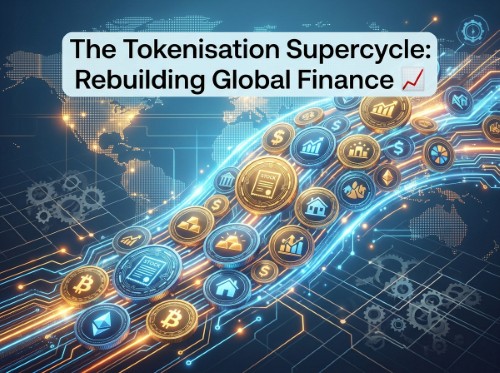
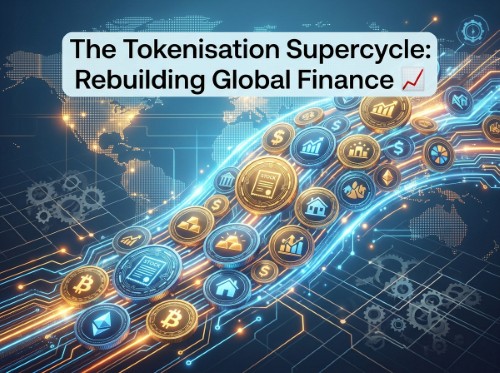
The global financial system is standing on the precipice of a monumental shift. As Vlad Tenev, CEO and Co-Founder @RobinhoodApp, recently highlighted, what began as an intriguing experiment in digital asset distribution has gathered momentum into an unstoppable freight train: the tokenisation supercycle. Financial infrastructure is undergoing a foundational rewrite, moving away from fragmented, legacy clearing systems towards open, programmable, and globally accessible blockchain networks.
Vlad Tenev published these 2 posts on X: Tokenized Stocks in America, and Tokenization: On Issuer Consent.
Nowhere is this transformation more evident than in the rise of tokenised real-world assets (RWAs). From fractionalised public equities to programmable yield instruments, financial primitives are being rebuilt so that value can travel across the globe as seamlessly as information moves across the internet.
Yet, as onchain equities gain traction across international markets, critical questions emerge. Why are tokenised stocks necessary in mature markets like the United States? How will modern regulations adapt? And crucially, who holds the ultimate authority over whether a company's stock can be tokenised?
Here is a deep dive into how tokenised stocks are redefining ownership, solving decades-old structural vulnerabilities, and setting the stage for the future of capital markets.
At their core, tokenised stocks are digital representations of traditional equity securities hosted on a blockchain. Rather than holding shares strictly through traditional brokerage entries, investors can access tokenised wrappers backed 1:1 by the underlying assets. These tokens deliver direct economic exposure to the financial performance of the asset, including dividend distributions.
While international investors outside the US have historically faced barriers accessing American capital markets, tokenisation provides democratised entry to high-quality financial instruments. However, viewing tokenised stocks merely as an alternative access point misses the broader picture.
Tokenisation is not about putting stocks on a blockchain for its own sake. It is about upgrading the underlying plumbing of global commerce to unlock fundamental operational advantages that legacy technology simply cannot support.
1. Real-Time Settlement and Risk Elimination
The fragility of legacy clearinghouse infrastructure was laid bare during the meme-stock volatility of early 2021. The trading restrictions experienced across major platforms during that period were largely driven by outdated clearinghouse risk-management rules applied to multi-day settlement cycles (historically T+2, now T+1).
During periods of extreme market turbulence, brokerages are forced to deposit massive amounts of collateral with clearing houses to manage counterparty risk during the multi-day gap between trade execution and settlement.
Blockchain infrastructure eliminates this structural friction by enabling real-time, T+0 settlement. When a tokenised stock trade executes onchain, the transfer of ownership and atomic payment occur simultaneously. By eliminating the settlement window, systemic risk melts away, capital efficiency rises, and brokerages are no longer subject to liquidity crunches caused by archaic settlement delays.
2. Built-In 24/7 Native Trading
Modern global events do not adhere to a traditional Monday-to-Friday, 9:30 AM to 4:00 PM market schedule. Geopolitical announcements, earnings reports, and macroeconomic shifts routinely occur over weekends or outside standard trading hours, leaving retail investors exposed while institutional desks deploy complex off-hours hedging strategies.
Stitching together traditional after-hours trading requires a messy web of alternative trading systems (ATS) and market makers. By contrast, public blockchains like the Robinhood Chain feature 24/7 trading capability natively. By embedding round-the-clock liquidity and fractional ownership into the base layer, onchain equities ensure that retail investors possess the exact same risk-management capabilities as large institutions.
3. Unprecedented Portability, Self-Custody, and DeFi Integration
In traditional finance, moving stock portfolios between brokerages via legacy transfer rails (such as the ACAT system) remains a tedious, multi-day process during which assets are held in limbo.
Tokenisation introduces true asset portability. By holding tokenised equities in self-custodied Web3 wallets, investors retain full sovereignty over their holdings. Assets can be transferred instantly across platforms, cross-border, or integrated into decentralised finance (DeFi) protocols. Investors can utilise their tokenised shares as collateral for peer-to-peer lending, build automated yield strategies, or trade across automated market makers (AMMs)—forcing traditional platforms to compete on service quality rather than customer lock-in.
As tokenised stocks gain traction, a crucial legal and architectural debate has surfaced: Should public companies possess the authority to veto or approve the tokenisation of their stocks?
To answer this, market participants must distinguish between an issuer's corporate rights and an investor's personal property rights. The debate resolves around three foundational principles:
Determining whether issuer consent is required comes down to product design:
Going onchain should not grant a corporate board a veto power over secondary market usage that it never possessed off-chain.
Sceptics of tokenisation often argue that existing electronic book-entry systems are "good enough." History tells a different story.
During the late 1960s, Wall Street suffered a catastrophic "paperwork crisis." Trading volumes overwhelmed the physical delivery of paper stock certificates, causing back offices to flounder and forcing markets to close early on Wednesdays just to clear the administrative backlog.
The industry solved this crisis by immobilising paper certificates and creating the central depository system (giving rise to "street-name" registration). It was a brilliant, necessary step forward for the technology of that era.
However, street-name ownership separated beneficial owners from registered owners by stacking layers of intermediaries between investors and their assets. Blockchain technology represents the next natural phase of market evolution. Just as the industry moved from physical paper to centralised book-entry in the 20th century, the 21st century demands a shift to transparent, programmable, and instantly settled onchain ownership.
While overseas markets are rapidly adopting tokenised financial products, the United States risks falling behind due to regulatory uncertainty. Securities rules framed over a century ago were built around the physical and technological constraints of a bygone era. While these rules were designed to preserve investor protection and market integrity, their rigid application threatens to lock American retail investors out of modern infrastructure.
Public equities are only the starting point. Establishing robust onchain liquidity and regulatory clarity for public stocks lays the groundwork to tokenise historically illiquid private assets, including pre-IPO venture investments, real estate, and private credit.
The global tokenisation supercycle is well underway. If policymakers move swiftly to modernise regulatory frameworks, they can preserve robust market protections while unleashing a far fairer, faster, and more transparent financial system for everyone.
Disclaimer: This article is provided for informational purposes only, mistakes may be made, and it's not offered or intended to be used as legal, tax, investment, financial, or any other advice.