x




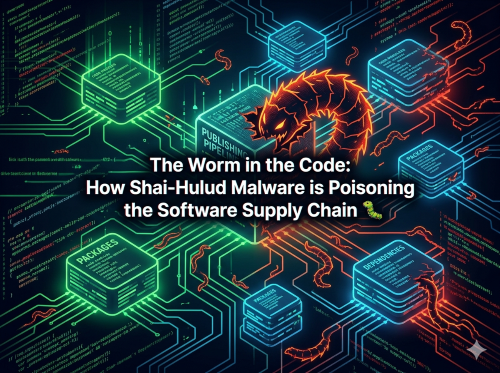
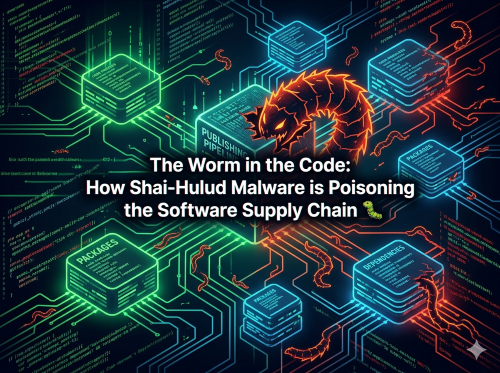
The modern digital world relies on a foundational truth that most everyday internet users take for granted: the software we use is safe because the developers who built it used trusted tools. However, a sophisticated and predatory malware campaign known as “Shai-Hulud” has completely upended this assumption. By targeting the automated software pipelines that developers trust implicitly, this campaign has infected critical infrastructure and raised alarming questions about the security of the global software ecosystem.
Named after the monstrous, subterranean sandworms from Frank Herbert’s classic sci-fi epic Dune, Shai-Hulud is proving to be just as destructive and difficult to eradicate. It does not target end-users directly; instead, it burrows deep into the automated distribution systems of the internet, waiting to be pulled into major enterprise applications.
Shai-Hulud is a highly sophisticated supply-chain malware campaign. In traditional cyberattacks, malicious actors target a specific organisation's firewall or attempt to phish an employee. In a supply-chain attack, hackers bypass these outer defences by compromising the third-party open-source libraries and automated publishing workflows that companies use to build their software.
Security researchers have already linked Shai-Hulud to roughly 320 malicious package entries across Node Package Manager (npm) and PyPI (Python Package Index). These two platforms are the absolute bedrock of modern software development, serving as the primary repositories where developers download JavaScript and Python packages.
To put the scale of this threat into perspective, the affected packages collectively account for more than 518 million monthly downloads. Because developers build software by layering libraries on top of other libraries, a single compromised package can ripple outward, poisoning thousands of downstream applications.
The core issue driving the Shai-Hulud crisis is how modern code is produced. Software development is no longer about writing code from scratch. Instead, it is an assembly process that relies heavily on automation platforms like GitHub Actions to test, build, and deploy software automatically.
When a developer installs a package, they aren't just downloading static text—they are executing code. If that library is malicious, it inherits the full permissions of the developer or the automated system running it. It can steal credentials, access secret keys, and modify project code.
Cybersecurity experts point out that this creates a leverage problem for attackers. If a hacker compromises an obscure, deeply buried open-source package, they gain a direct path into every single downstream project that trusts it. The software supply chain has effectively transformed from a linear chain into an interconnected, automated propagation network.
The sheer reach of the Shai-Hulud campaign became undeniable when some of the world's leading artificial intelligence and technology firms disclosed recent security breaches tied to the malware.
The mechanics of Shai-Hulud are particularly unsettling because they exploit automated trust. Traced back to a cybercriminal group known as TeamPCP, earlier variants surfaced late last year before launching a massive attack against TanStack, a popular open-source JavaScript framework used heavily in web and cloud applications.
The malware operates by poisoning shared build caches. When a software pipeline runs an automated update, it quietly pulls in the malicious code. To the developer supervising the system, everything appears entirely normal. The software originates from an established, trusted source, carries valid digital signatures, and passes standard automated security checks.
Once inside a developer's environment, new variants of Shai-Hulud act quickly to exfiltrate sensitive data. Security firms have reported the malware actively stealing:
In some instances, the malware even attempts to quietly recruit the infected developer machines into Distributed Denial of Service (DDoS) botnets. Worse still, the threat is multiplying. Following a recent source code leak of the malware, copycat cybercriminals are now deploying un-obfuscated clones of Shai-Hulud, creating a chaotic environment for security teams to monitor.
The Shai-Hulud campaign proves that the traditional attack surface has shifted. Cybercriminals are no longer just looking for a vulnerability in a company's public-facing website; they are targeting the open-source infrastructure that powers corporate development workflows.
When a compromised npm dependency can step inside a company's Cloud Application Programming or Multi-Target Application environment, it ceases to be an isolated "developer laptop issue." It becomes a direct, automated gateway into productive enterprise systems and critical corporate operations.
To combat this evolving threat, organisations must adopt much tighter dependency controls. Relying on automated trust is no longer viable. Development teams must implement exact version pinning, introduce rigorous multi-person publishing safeguards, and actively audit third-party libraries rather than letting automated pipelines fetch updates blindly. Until the industry shifts towards this zero-trust approach to open-source software, the worm in the code will continue to turn.
For a deeper look into the technical breakdown and the ongoing investigation into this supply-chain threat, read the full report on Decrypt.
👉 Shai-Hulud: What to Know About the Malware Spreading Through Software Pipelines
Disclaimer: This article is provided for informational purposes only, mistakes may be made, and it's not offered or intended to be used as legal, tax, investment, financial, or any other advice.