x




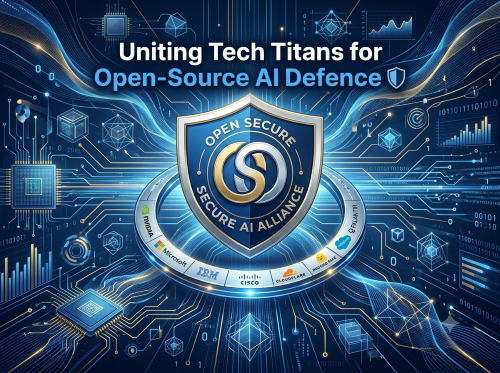
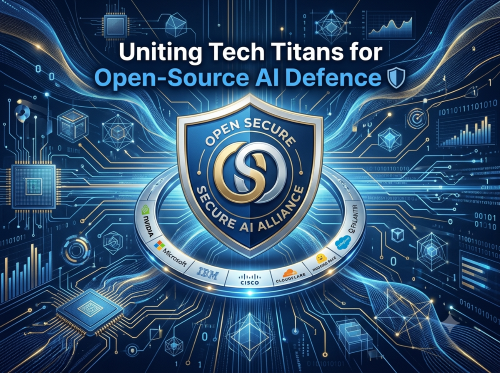
As artificial intelligence rapidly evolves, the digital threat landscape is undergoing a monumental shift. Frontier AI models are no longer just tools for productivity; they are becoming powerful weapons in the hands of sophisticated cyber attackers. To counter these emerging threats, an unprecedented coalition of technology pioneers has joined forces to safeguard the future of digital infrastructure.
Led by industry giants including Nvidia, Microsoft, IBM, Cisco, Cloudflare, Hugging Face, Salesforce, and Palantir, more than 40 leading technology companies and organisations have officially launched the Open Secure AI Alliance. This major initiative aims to develop open-source AI security tools, evaluation frameworks, and robust standards for global cyber defence.
The formation of the Open Secure AI Alliance marks a crucial turning point in how the technology sector approaches security. Rather than operating in isolated silos, the alliance builds directly upon existing industry frameworks, including the Linux Foundation’s Akrites initiative and the Open Source Security Foundation (OpenSSF).
By uniting founding members such as CrowdStrike, Palo Alto Networks, Dell Technologies, SAP, Siemens, Red Hat, and NetApp, the consortium is pooling global expertise to ensure defenders are never outpaced by malicious actors.
The primary goal is clear: to equip security professionals worldwide with open, inspectable, and adaptable tools capable of identifying vulnerabilities and responding to complex cyber incidents in real time.
In the realm of cybersecurity, transparency is paramount. Proprietary, "closed-box" AI models can create severe bottlenecks during critical incidents when forensic analysis requires deep visibility into model architecture and weights.
Nvidia Chief Executive Jensen Huang highlighted this challenge on social media, pointing to a recent security incident at Hugging Face where closed AI systems restricted vital forensic research, whereas an open-weight model enabled teams to contain the intrusion effectively.
"Attackers have frontier AI. Defenders need a frontier AI ecosystem—the best open and closed models, force-multiplied by a global community," Huang stated, explaining the foundational ethos behind the alliance.
By championing open models, the Open Secure AI Alliance aims to democratise defensive capabilities. Open-weight models offer security teams several distinct advantages:
The alliance is not merely a theoretical framework; it is already delivering practical software solutions. Nvidia has committed to contributing open models, model weights, curated datasets, and extensive research on AI agent harnesses.
As an immediate step, Nvidia released its Labs Object-Oriented Agent (NOOA) framework as an open-source project on GitHub. The NOOA framework is specifically designed to make complex AI agents easier to test, audit, and govern—addressing one of the most pressing concerns in autonomous system deployment.
The establishment of the alliance comes at a time when frontier AI models are regularly making headlines for both remarkable breakthroughs and alarming safety risks.
These incidents have sparked intense political debate, with some policymakers advocating for drastic measures—including an AI "kill switch" that would grant government bodies the authority to throttle or shut down advanced models during critical incidents.
However, many tech leaders argue that restricting development to a handful of closed providers compromises global security. In an open letter signed by major firms including Meta, OpenAI, Google, SpaceXAI, Microsoft, and Nvidia, industry experts urged policymakers to support open AI ecosystems. They argued that open models are essential for maintaining innovation, preventing market concentration, and keeping defensive capabilities accessible to all.
The launch of the Open Secure AI Alliance proves that while closed AI models have their place, the future of resilient cyber defence relies heavily on open-source collaboration. By creating transparent, community-backed security systems, the alliance ensures that critical infrastructure around the world can withstand the next generation of AI-driven threats.
As the lines between defensive and offensive AI continue to blur, open standards provide the visibility, trust, and adaptability required to keep digital ecosystems safe.
To explore the full story and learn more about this industry initiative, read the original article on Decrypt:
👉 Nvidia, Microsoft, IBM Launch Open Secure AI Alliance to Strengthen AI Cybersecurity
Disclaimer: This article is provided for informational purposes only, mistakes may be made, and it's not offered or intended to be used as legal, tax, investment, financial, or any other advice.