x




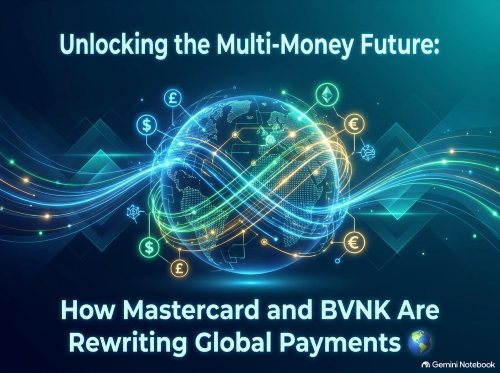
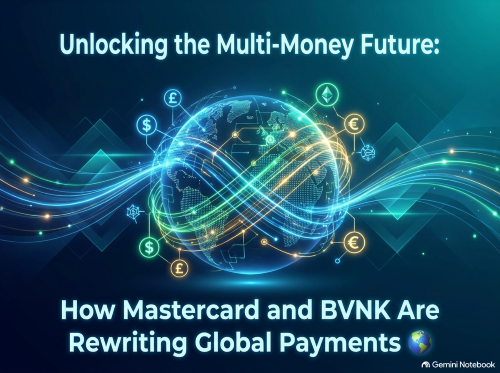
Moving money across borders has historically felt like navigating a maze of disconnected systems. For decades, traditional banking rails and modern digital assets operated in completely separate silos. Businesses managing global payroll, international suppliers, or cross-border e-commerce faced a constant balancing act: dealing with high conversion fees, managing disparate vendor platforms, and keeping pre-funded capital trapped in accounts around the globe.
That operational friction is finally giving way to a far more unified financial architecture. Mastercard and BVNK have officially launched the Mastercard Global Money Platform, creating a single, connected operating layer that bridges traditional government currencies and digital stablecoins. Following Mastercard’s acquisition of BVNK in August 2026, this integration marks a major milestone in modernising international payments, as detailed in the official Mastercard press release.
To understand why this launch matters, consider how a modern global business operates. A software marketplace might collect payments in US dollars, British pounds, and euros from customers worldwide, while needing to pay remote developers or merchants in local currencies or stablecoins like USDC.
Historically, handling these transactions meant stitching together half a dozen single-feature vendors, managing fragmented regulatory licences, and relying on clunky third-party off-ramps. Every hop between traditional fiat and blockchain rails added cost, latency, and security risks.
With stablecoin payment volumes surging well beyond hundreds of billions of dollars annually, businesses no longer view digital assets as speculative novelties—they view them as essential liquidity tools. Yet, receiving money on-chain offers little practical value if an organisation cannot easily convert it into local fiat or spend it in the real world. As explored on the BVNK insights blog, bridging this gap requires a unified layer where all forms of money coexist effortlessly.
The Mastercard Global Money Platform solves this fragmentation by uniting BVNK’s dedicated stablecoin engine with Mastercard’s expansive global payment network through a single Application Programming Interface (API). Rather than forcing companies to build complex financial plumbing from scratch, the platform delivers a full-stack, modular toolkit focused on three core operational capabilities:
The arrival of a single infrastructure layer for multi-currency management has generated swift enthusiasm across the financial technology sector. Payments giant Nuvei and modern card issuing platform Marqeta are among the first industry leaders integrating the platform, alongside innovative firms like Ontop, Bolt Group, and Almond FinTech.
Phil Fayer, founder and CEO of Nuvei, highlighted that the future of global commerce depends on money moving as freely as businesses do across borders and currency formats. Meanwhile, Chris Harmse, Chief Business Officer at BVNK, emphasised that this joint platform gives enterprise clients the power to scale financial products globally without having to piece together fragmented vendor networks themselves.
The widespread impact of the announcement has drawn significant attention across mainstream news outlets, including coverage on AOL News, reflecting how rapidly digital asset infrastructure is becoming part of everyday commercial life.
As international trade continues to evolve, business resilience will increasingly belong to organisations that can adapt to any form of value movement. The Mastercard Global Money Platform is specifically engineered for this adaptable future, with planned support for emerging innovations such as agentic commerce (automated transactions driven by AI agents) and tokenised bank deposits.
By combining the speed and programmability of blockchain technology with the trust, security, and global reach of Mastercard, this collaboration establishes a new benchmark for cross-border finance. The multi-money world is no longer a distant concept—it is here, and it is making global money movement faster, simpler, and far more connected.
Disclaimer: This article is provided for informational purposes only, mistakes may be made, and it's not offered or intended to be used as legal, tax, investment, financial, or any other advice.