x




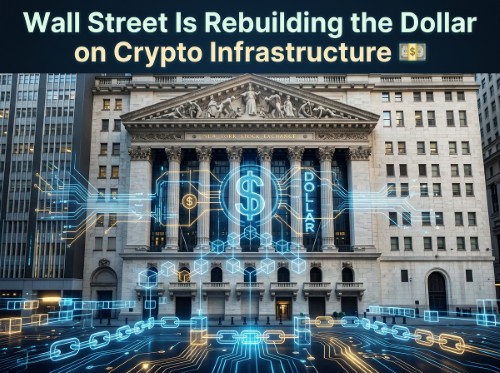
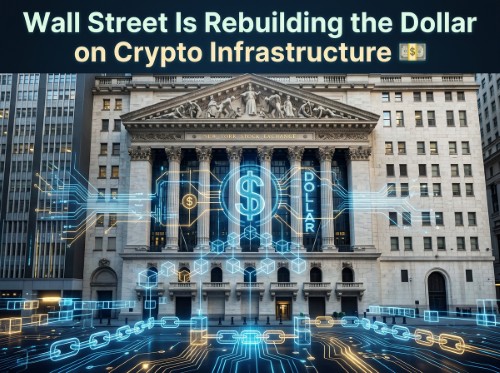
For over a decade, a dominant belief in financial circles was that if cryptocurrency ever grew into a substantial asset class, traditional institutions would eventually step in, absorb the technology, and sell it back to retail investors as a packaged financial product. However, recent developments reveal a completely different shift: traditional finance is not replacing its core products with cryptocurrency; instead, Wall Street is actively migrating the United States dollar onto blockchain infrastructure.
Financial institutions including BlackRock, the Intercontinental Exchange (ICE), Visa, and Mastercard are operating validator nodes on blockchain networks engineered specifically for digital fiat settlement. The global reserve currency is being systematically moved onto public and permissioned distributed ledgers.
To understand why this transition is occurring, it is essential to examine the mechanics of traditional international money transfers. When a dollar is sent from one country to another, physical currency does not travel. Instead, the transaction relies on a chain of correspondent banks, each maintaining individual ledger accounts, conducting manual compliance checks, and passing payment messages along.
This system is burdened by significant operational frictions:
This framework was never intentionally designed as a cohesive global network; it simply accumulated over decades of bilateral banking arrangements. Blockchain technology solves this structural inefficiency by enabling continuous, 24/7 peer-to-peer settlement at a fraction of the time and cost.
For years, widespread adoption of digital fiat by major institutions was hampered by regulatory ambiguity. That changed significantly with the introduction of landmark legislation in the United States, most notably the GENIUS Act passed in July 2025.
The GENIUS Act established the first clear federal regulatory structure for dollar-backed stablecoins in the US. Key mandates under this framework include:
With the Office of the Comptroller of the Currency (OCC) finalising its official rulebook ahead of an enforceable compliance deadline in January 2027, operating outside authorised channels will become illegal in the US. Combined with ongoing legislative progress on the Clarity Act regarding crypto market structure, clear regulatory boundaries have provided institutions with the certainty required to deploy capital at scale.
Rather than relying on unpermissioned networks, institutional giants are building and controlling their own blockchain rails. Circle’s launch of the ARC layer-1 blockchain serves as a prime example. Among its founding validator node operators are some of the largest entities in global finance:
Concurrently, a major joint venture formed by 21 leading global banks—including Goldman Sachs, Citi, and Bank of America—is preparing to launch a regulated dollar stablecoin targeted for the first half of 2027. Alongside collaborative initiatives such as OpenUSD supported by Stripe, Coinbase, Visa, and Mastercard, global institutions have clearly signalled that they intend to own the settlement infrastructure rather than rent third-party systems.
From a macroeconomic perspective, the proliferation of dollar stablecoins represents a significant expansion of American monetary reach. Because compliant stablecoins are backed by short-dated US government debt, every digital dollar held globally creates direct demand for US Treasuries.
For instance, Tether’s Treasury exposure exceeded $141 billion in early 2026, placing the issuer among the top 20 largest holders of US sovereign debt globally—ranking above nations such as Germany, South Korea, and Saudi Arabia.
By enabling individuals in developing or high-inflation economies to hold and transact in digital greenbacks directly on mobile devices, stablecoins extend the global footprint of the dollar without requiring formal bilateral trade agreements. Policy analysts and US Treasury officials anticipate this trend could generate trillions of dollars in new structural demand for US Treasuries, helping keep long-term domestic borrowing costs lower.
The rapid global adoption of digital dollars has alarmed international central banks and foreign regulators. In Europe, concerns regarding "digital dollarisation" have prompted defensive countermeasures.
A consortium of 37 European financial institutions across 15 countries created Quivalis, a joint initiative headquartered in Amsterdam designed to issue a euro-denominated stablecoin under the Markets in Crypto-Assets (MiCA) regulatory framework. Official warnings from the European Central Bank highlight growing anxiety that European citizens and businesses could increasingly transact in foreign digital currencies, potentially undermining domestic monetary authority.
The debate over whether traditional finance would accept cryptocurrency has reached a definitive answer. Traditional finance has not adopted cryptocurrency as a substitute for fiat money; rather, it has co-opted blockchain technology to modernise the infrastructure underpinning the United States dollar. Blockchain architecture is rapidly becoming the core settlement layer for the global reserve currency, delivering unprecedented speed and efficiency to international finance.
Coin Bureau - Wall Street Is BUILDING the Dollar on CRYPTO Infrastructure
"Wall Street isn’t swallowing crypto. The dollar is moving onto crypto rails—with BlackRock, NYSE, Visa, and Mastercard now running validator nodes on a purpose-built blockchain. Stablecoins are set to become the main vehicle for the world’s reserve currency, changing who controls the system.
See how a single US law triggered a new financial race, why banks and tech giants are scrambling to issue compliant stablecoins, and what this shift means for the power behind your money. The fight over the future of finance just got real."
~ TIMESTAMPS ~
0:00 - Wall Street is Moving the Dollar to Crypto Infrastructure
0:55 - Why the Traditional Global Banking System is Failing
2:03 - The Genius Act & Changing US Crypto Regulations
3:58 - Major Institutions Launching Their Own Blockchains & Stablecoins
6:01 - How the US Government Benefits From Global Stablecoin Expansion
Source 👉 https://www.youtube.com/watch?v=3-dbnsXZnic
Disclaimer: This article is provided for informational purposes only, mistakes may be made, and it's not offered or intended to be used as legal, tax, investment, financial, or any other advice.