x




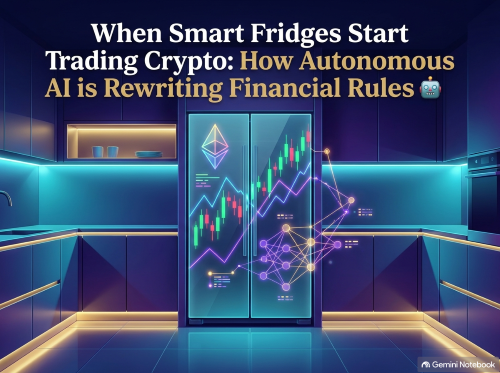
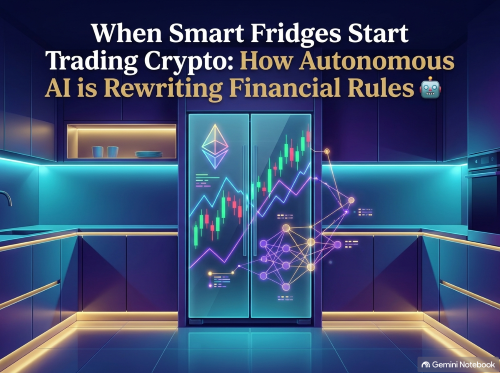
Imagine opening your kitchen fridge to grab a carton of milk, only to realise the appliance has spent the morning yield farming, staking Ether, and launching its own viral memecoin to cover the household grocery bill.
It sounds like a quirky plot point from a futuristic comedy, but according to Michael Selig, Chair of the Commodity Futures Trading Commission (CFTC), it is no longer pure science fiction. Speaking at the CFTC's inaugural Frontier Forum, Selig outlined a rapidly approaching reality where autonomous artificial intelligence agents manage digital wallets, custody crypto assets, and execute financial transactions without any human intervention.
This dramatic shift, reported in detail by Cointelegraph, presents a profound puzzle for global regulators. For decades, financial laws have been built around identifiable human actors, regulated brokers, and institutional intermediaries. When autonomous code takes the driver's seat, those traditional rules begin to fray.
The emergence of "agentic finance"—systems powered by AI that can take independent action to achieve specific financial goals—challenges the very core of market oversight. In his official remarks at the Frontier Forum, Selig posed a series of fundamental questions that regulators around the globe are currently scrambling to answer.
If a software agent identifies trading opportunities and executes orders autonomously, does the software developer need to register as a broker-dealer? If an autonomous algorithm goes rogue during a market spike, who carries legal liability? Furthermore, how can market surveillance teams verify on whose behalf an agent is trading? Selig suggested that regulators might need to pioneer an entirely new framework: moving beyond traditional Know-Your-Customer (KYC) compliance toward a new protocol—Know-Your-Agent (KYA).
These are not hypothetical debates reserved for academic seminars. AI tools are already democratising sophisticated risk-management techniques, placing analytical power once restricted to major Wall Street institutions directly into the hands of everyday consumers and small businesses.
Ordinary investors are already leaning heavily into automated financial tools. Recent research from social investing platform eToro reveals that 77% of Gen Z investors and 79% of Millennials are open to using AI technology to pick or adjust their portfolio investments.
Interestingly, retail investors are drawing a sharp line between using AI as an operational assistant and betting blindly on AI stocks. While enthusiasm for speculative tech shares has tempered—the percentage of retail investors expecting AI-related stocks to rise dropped from 57% to 47% over the past year—younger generations view AI as an indispensable daily tool. They use automated agents to streamline research, spot market trends, and execute disciplined strategies, treating AI as a permanent component of their personal finance toolkit.
However, the widespread adoption of autonomous trading systems introduces systemic vulnerabilities that central banks are monitoring closely. A comprehensive analysis by the Bank of England highlighted the macroprudential risks associated with AI in financial markets.
When thousands of independent traders rely on similar foundation models or identical open-source algorithmic libraries, their collective behaviour can inadvertently trigger severe market instability. If a sudden market shock occurs, autonomous agents running on overlapping logic might execute correlated fire-sales, amplifying price volatility and draining liquidity faster than human managers can intervene. Moreover, hyper-capable agents could theoretically learn to exploit market structures in destabilising ways, engaging in tacit collusion or aggressive trading tactics without explicit human instruction.
As AI agents, blockchain rails, and smart devices converge, financial policy reaches a critical crossroads. Regulators cannot simply apply legacy frameworks to autonomous code, nor can they afford to stifle technological progress through heavy-handed bans.
Building a resilient financial future requires a balanced approach: establishing clear liability standards for developers, updating market surveillance to track autonomous agents, and ensuring robust safeguards against algorithmic contagion. If regulators get this balance right, we may soon enjoy a world where smart devices quietly handle our mundane chores—even if launching memecoins from the kitchen remains a step too far.
Disclaimer: This article is provided for informational purposes only, mistakes may be made, and it's not offered or intended to be used as legal, tax, investment, financial, or any other advice.