x




The global macroeconomic landscape is undergoing a fundamental regime shift. After roughly four decades dominated by disinflation, effortless globalisation, and unencumbered economic expansion, the world economy is transitioning into an era defined by geopolitical friction, monetary realignment, and severe resource scarcity.
Renowned natural resource investor Rick Rule highlights how central banks and sovereign nations—most notably China—are fundamentally re-evaluating their reliance on foreign fiat debt and shifting their reserves towards physical hard assets.
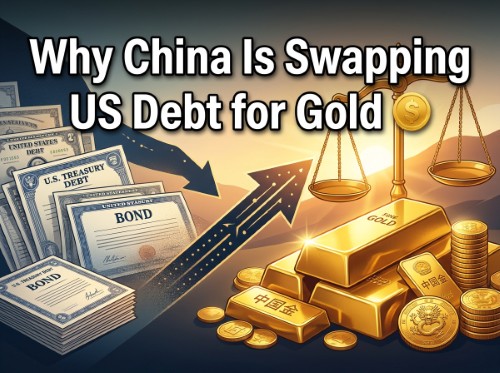
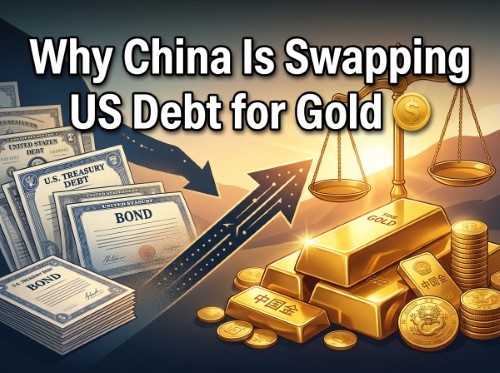
The decision by eastern sovereign powers to reduce their holdings of US Treasury securities is not merely a tactical trade; it is a strategic realignment. The turning point arrived when western nations froze over $300 billion in Russian foreign exchange reserves held in US Treasuries.
This move delivered an unmistakable lesson to governments worldwide: holding wealth in paper obligations issued by foreign powers carries existential counterparty risk. Irrespective of diplomatic disputes, sovereign nations realised that foreign-held fiat assets could be rendered inaccessible overnight.
In response, China has systematically trimmed its exposure to US debt. Rather than maintaining massive reserves in fiat obligations subject to extraterritorial jurisdiction, the Chinese state has aggressively reallocated capital into physical gold. This sovereign accumulation is further reinforced by domestic cultural factors:
Contrary to popular commentary, the ongoing bull market in natural resources is not primarily driven by short-term political posturing or technological hype. Its primary driver is systemic, structural underinvestment.
Between 1982 and 2022, the global economy benefited from abundant capital and cheap resources. Consequently, capital expenditure in primary exploration, mine construction, and sustaining infrastructure plummeted. Years of starving primary producers of capital have created a multi-decade supply constraint across essential industrial commodities.
This sustained lack of investment directly creates structural supply deficits. Because demand for core resources remains inelastic, these supply constraints inevitably force commodity prices higher across the board.
Among base metals, copper stands out as a critical vulnerability in global infrastructure. The metal faces a severe structural supply deficit due to several compounding demand drivers:
Grid Modernisation and Power Transmission
The electrical infrastructure in major economies requires comprehensive overhauling. Upgrading the antiquated electrical grid in the United States alone is estimated to require trillion-pound investments. Furthermore, transitioning to renewable energy sources demands massive copper inputs to transmit power from remote generation sites—such as offshore wind farms or desert solar arrays—to urban consumption centres.
Global Energy Poverty Alleviation
Over one billion people globally still lack reliable access to primary electricity. Bringing these populations into modern standards of living requires vast quantities of conductive metals to construct transformer stations, localised power lines, and household wiring.
Artificial Intelligence and Data Centres
While technological expansion and AI data centre buildouts require substantial power infrastructure, this demand represents an added bonus rather than the core thesis. The foundational demand rests on basic human demographic expansion and grid reliability.
Current projections suggest humanity may need to consume as much copper over the next 25 years as has been mined in all of human history. Because new copper deposits take over a decade to discover, permit, and construct, supply cannot quickly respond to rising prices.
Energy markets are experiencing a parallel shift away from globalised reliance towards localised energy security.
Hydrocarbons and Capital Discipline
The oil and gas sector continues to suffer from a capital expenditure deficit estimated at nearly one billion dollars per day in sustaining investments. Encouraged by institutional investors, energy companies have prioritised short-term capital returns—such as share buybacks and dividend payouts—over long-term reserve replacement. While temporary geopolitical truces can ease immediate supply fears, they cannot resolve a structural lack of productive capacity. Without substantial capital reinvestment, structural shortages will inevitably push energy prices higher.
The Nuclear Renaissance and Uranium
Geopolitical instability in key shipping corridors, such as the Strait of Hormuz, has refocussed national policies on energy security—echoing the lessons of the 1973 Arab oil embargo. Nuclear energy offers an unmatched energy density advantage. For instance, a single warehouse of uranium can store enough fuel to power an entire industrialised nation like Japan for up to five years—a physical impossibility with coal, gas, or renewable storage.
Nations are accelerating reactor restarts and investing in small modular reactors. Because existing nuclear plants can be refuelled and restarted without the decade-long delays of new construction, uranium demand is poised for sustained structural expansion.
Navigating a transition from an era of abundance to an era of resource scarcity requires realistic self-assessment from investors.
During previous inflationary cycles, exceptional stock pickers like Warren Buffett managed to generate compounding returns by investing in businesses with extraordinary pricing power. Similarly, top-tier technology creators can outperform broad inflation through pure innovation.
However, for the vast majority of market participants who do not possess specialised technological foresight or elite corporate valuation skills, physical gold serves as essential financial insurance. Gold protects capital against currency debasement, sovereign debt overhangs, and broader systemic friction.
The world is shifting from an era of paper-based asset inflation to a tangible regime governed by physical constraints. As sovereign powers trade foreign debt obligations for tangible reserves, individual investors would do well to take note. Securing exposure to real assets, essential industrial commodities, and monetary precious metals offers a prudent strategy for preserving wealth in an increasingly complex global economy.
GoldSilver - Why China Dumped Treasuries For Gold
"When the West froze roughly $300 billion of Russian assets held in US Treasuries, it taught every government with a policy dispute with Washington a lesson. Rick Rule's read: Beijing asked itself whether it could trust the US government, and the answer came back no. So it began disposing of Treasuries and buying gold.
Maggie Lake continues her conversation with Rick Rule, founder and CEO of Rule Investment Media, on why the commodity bull market has far more to do with thirty years of systemic underinvestment than it does with politics, and why the forty-year stretch of cheap abundance from 1982 to 2022 is over."
~ Timestamps ~
0:00 A World That Fundamentally Changed
0:21 How Important Is China To The Gold Price?
1:10 The Lesson Washington Taught Beijing
2:43 Where Else Is There Opportunity?
2:50 Copper: Thirty Years Of Underinvestment
3:58 Oil And Gas, And The Shortage That Hasn't Happened Yet
5:37 AI Is The Icing, Not The Cake
6:26 The People Still Living Without Electricity
7:15 The $8 Trillion Grid Problem
8:21 Uranium: The Easy Money Has Been Made
9:12 What Nobody Noticed About Energy Security
10:49 A Commodity Bull Market Across The Board
11:59 Isn't That Too Bearish?
13:07 Buffett Owned No Gold
14:47 Who Actually Doesn't Need To Own Gold
15:33 Rick's Free Portfolio Review
Source 👉 https://www.youtube.com/watch?v=FceprX74Kvs
Disclaimer: This article is provided for informational purposes only, mistakes may be made, and it's not offered or intended to be used as legal, tax, investment, financial, or any other advice.