x




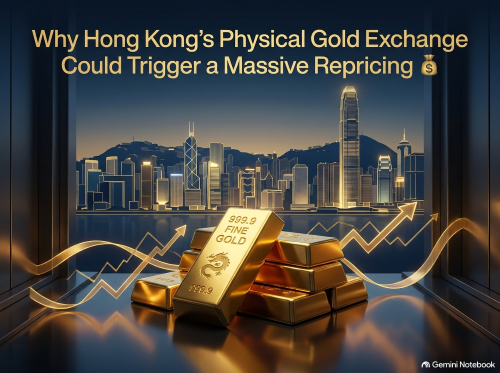
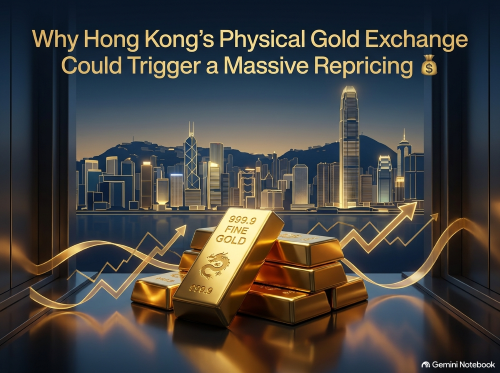
In the latest episode of Live from the Vault (Ep 298), host Andrew Maguire sits down with Ivan Bayoukhi of Wall Street Bullion to dissect the shifting dynamics of global precious metals markets. Against a backdrop of volatile paper markets and political uncertainty following US midterm results, the discussion shines a light on a structural revolution taking place behind the scenes: the launch of Hong Kong’s new physically settled gold exchange and its profound implications for global pricing.
The precious metals landscape has faced significant turbulence in recent months, with aggressive price swings in both gold and silver confusing many retail observers. As Maguire and Bayoukhi note, this volatility must be viewed through the lens of leverage and institutional positioning rather than pure physical supply and demand.
A divided political environment in Washington, combined with shifting margin requirements across futures exchanges, triggered an intense flush of speculative paper positions. Institutional liquidity providers leveraged these mechanics to clear out over-leveraged long and short speculators. This cleansing process, while painful for short-term traders, serves a crucial purpose: removing excess froth from derivative markets ahead of a major structural shift in physical trading.
At the heart of the conversation is the impending global launch of Hong Kong’s physically settled precious metals exchange in early 2027. Unlike traditional over-the-counter (OTC) markets in London or futures contracts on the Comex, which rely heavily on unallocated paper derivatives and fractional backing, the Hong Kong venue enforces strict physical settlement.
To sell gold or silver on this dollar-centric, international exchange, market participants must possess physical bars vaulted in approved facilities. Buyers, in turn, must pay in full to take delivery. By removing paper leverage and synthetic rehypothecation, Hong Kong creates a transparent mechanism for true price discovery. Major refiners and institutional market makers are already establishing vaulting capacity, signalling a migration away from paper-heavy western hubs toward physically backed eastern trading centres.
Maguire draws a compelling parallel between today’s market setup and the lead-up to the Bank for International Settlements (BIS) Basel III reclassification of gold in early 2023. Ahead of that regulatory inflection point, major bullion banks and international monetary authorities quietly squared up over 500 tonnes of legacy gold swap positions.
Once those derivative obligations were cleared, gold embarked on a historic rally, surging by roughly 250 per cent as physical market realities took hold. The institutional position-clearing observed today appears to be a mirror image of that pre-Basel III behaviour, as major players front-run the transition to Hong Kong's physically settled regime.
The discussion also turns to monetary policy innovations, specifically proposals surrounding gold-convertible US Treasury bonds. Championed by economic thinkers like Judy Shelton, a gold-backed Treasury trust bond could help arrest foreign central bank dumping of US debt amidst growing global de-dollarisation.
However, implementing such a mechanism requires confronting a stark mathematical reality: America’s official 8,100-tonne gold reserve remains severely mispriced against outstanding foreign-held debt. Historically, gold holdings backed between 40 and 60 per cent of foreign-held Treasuries. To restore that balance and offer credible convertibility, gold would need to be revalued to between $10,000 and $20,000 per ounce. Such a repricing would reflect real monetary backing rather than artificial paper price caps.
Ultimately, Maguire and Bayoukhi emphasise a fundamental lesson for precious metals investors: stop viewing gold and silver strictly through the prism of paper fiat currencies. A fine gold bar or silver coin retains its exact weight, purity, and intrinsic value over centuries. What changes dynamically is the purchasing power of fiat currencies like the US dollar, British pound, or euro.
As central banks expand national debt burdens and continue currency debasement, nominal prices rise not because gold is changing, but because fiat money is losing value. For long-term stackers and wealth preservers, physical precious metals remain the ultimate hedge against monetary debasement and paper market fragility.
"In this week’s Live from the Vault, Andrew Maguire is joined by Ivan of Wall Street Bullion to examine the US midterm results, the recent selloff in gold and silver, and the implications of Hong Kong’s new exchange for global precious metals pricing.
The two experts compare today’s market with the lead-up to gold’s Basel III reclassification in 2023, a shift that was followed by a strong rally, before turning to a proposed gold-convertible US Treasury bond that would force America to reprice its gold."
Timestamps:
00:00 Start
01:31 US midterm results and the reaction in gold and silver
03:48 Hong Kong’s physically settled gold market and its planned global launch
06:14 The parallel with gold’s Basel III reclassification
11:54 The search for a real gold and silver price
17:44 Foreign-held US Treasuries, Judy Shelton and gold repricing
24:41 Why gold and silver should not be measured in dollars
28:31 What other silver and gold analysts are doing
Source: 👉 https://www.youtube.com/watch?v=p5hPk_4jBZc
Disclaimer: This article is provided for informational purposes only, mistakes may be made, and it's not offered or intended to be used as legal, tax, investment, financial, or any other advice.