x




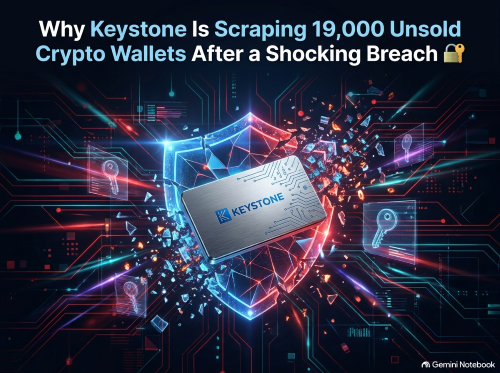
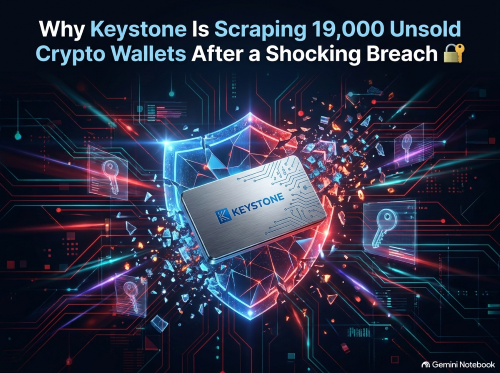
In the hardware wallet sector, physical security and cryptographic proof are paramount. That is why the recent security incident involving Keystone, a prominent Bitcoin hardware wallet manufacturer, sent ripples through the crypto community. The firm revealed that attackers managed to compromise a factory attestation key and expose thousands of customer records, prompting Keystone to take the drastic measure of destroying nearly 18,835 unsold devices.
If you are wondering how a digital breach could force a hardware maker to scrap physical inventory, the details reveal a fascinating look into supply chain integrity, automated data retention failures, and the ruthless realities of crypto security.
The trouble came to light on 20 October 2026, when Keystone’s security monitoring systems detected unauthorised access to its official website. Investigations quickly established that an attacker had exploited a flaw in a third-party data monitoring tool to escalate privileges.
While website intrusions are bad enough, the attacker walked away with something far more damaging than standard web data: Keystone’s WebAuth device authentication key.
This specific cryptographic key is burnt into hardware wallets during the manufacturing process and cannot be rewritten or erased. Its sole purpose is to allow a fresh device to prove to Keystone’s online authentication portal that it is genuine and untouched. With this key in hand, rogue actors could theoretically manufacture counterfeit hardware wallets or alter existing ones, sell them to unsuspecting buyers, and pass official online verification checks with flying colours.
Recognising the catastrophic risk of fake devices entering the market, Keystone took swift action. In a comprehensive statement published on X (formerly Twitter), the firm confirmed that it immediately halted factory production using the compromised key, suspended all website shipments, and committed to physically destroying 18,835 units currently in inventory.
Unfortunately, the stolen attestation key was only half the story. The intrusion also exposed customer order records managed through Keystone’s Shopify store.
In total, 51,083 order records from 2024 to 2026 were stored in the database. Keystone’s corporate policy dictates that customer personal data should be permanently erased after 180 days. Out of those records, 25,119 had already been anonymised as intended. However, 25,964 buyer records still contained sensitive personal information, including full names, contact details, order histories, and shipping addresses. A further 12,873 abandoned checkout records were also exposed.
How did data that should have been long gone remain sitting on the server? Keystone admitted that the automated tool it built to perform bulk data deletion failed quietly in the background without triggering an alert. As reported by CoinDesk, Keystone took full accountability for the oversight, acknowledging that its monitoring fell short of its data retention commitments.
In response to the leak, Keystone has slashed its data retention window from 180 days to 90 days, requested Shopify to execute immediate manual purges, and pledged to build stronger operational safeguards to ensure future deletions actually happen on time.
Amid the alarming headlines, there is one critical silver lining that every crypto holder needs to know: seed phrases and private keys were completely untouched.
Because Keystone’s air-gapped devices generate and store private keys locally within secure hardware components, the website breach had no access to wallet credentials, recovery phrases, or private keys. As detailed in coverage by Decrypt, existing users who received their devices before 20 October 2026 do not need to move their funds or reset their seed phrases solely because of this event. Their devices remain secure, provided they passed authentic validation upon initial setup.
While existing wallets remain safe, the exposure of customer shipping details creates a secondary hazard: phishing and physical targeting.
When home addresses and phone numbers leak, fraudsters often target victims with sophisticated phishing campaigns or fake "recall" notices. Scammers might contact affected buyers claiming that their device must be sent back for inspection, or urging them to click a link to "migrate" their tokens to a new wallet.
Keystone has issued a strict warning to all customers: the company will never ask you to return your device or request your recovery phrase. Anyone reaching out under the guise of an official recall, asset migration, or security check should be treated immediately as a fraudster.
Scrapping nearly 19,000 units is an expensive pill to swallow for any hardware manufacturer, but in the crypto security space, trust is everything. By choosing to nuke millions of pounds worth of physical inventory rather than risk a single counterfeit device landing in a customer's hands, Keystone is attempting to draw a firm line under the incident.
Moving forward, Keystone is transitioning to a pre-order model while new devices equipped with fresh, uncompromised factory keys are manufactured. For the wider crypto community, this episode serves as a stark reminder that true security requires vigilance across every link in the chain — from physical supply chains and factory keys to website tools and background database cleanup scripts.
Disclaimer: This article is provided for informational purposes only, mistakes may be made, and it's not offered or intended to be used as legal, tax, investment, financial, or any other advice.